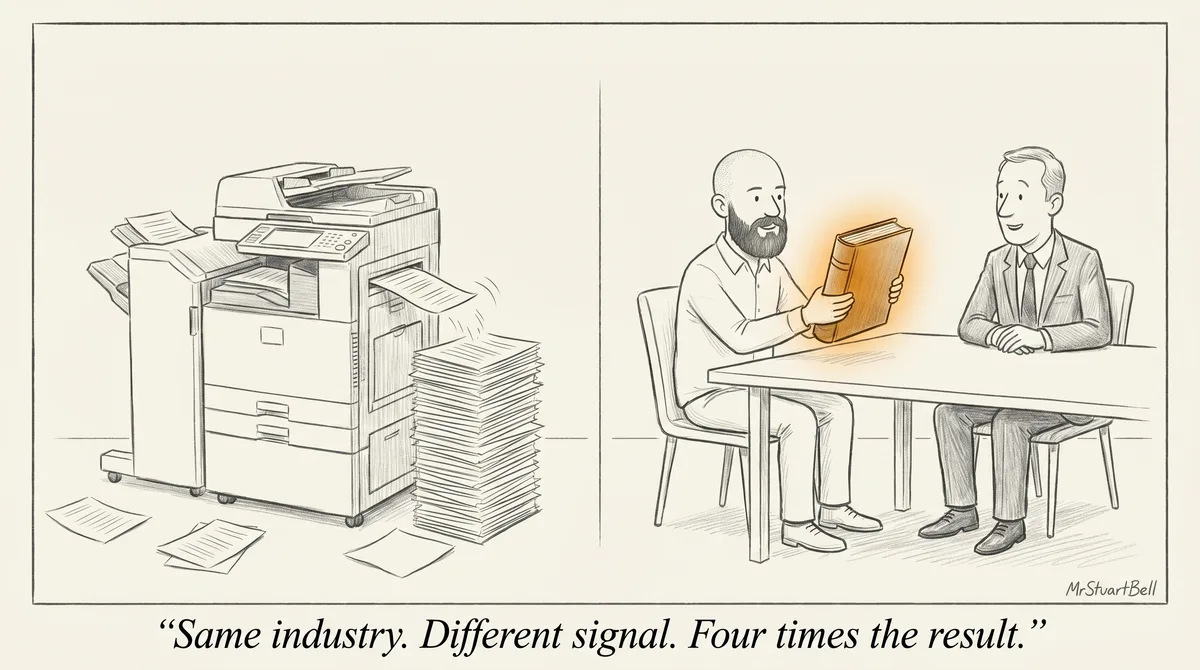
The firms winning at thought leadership aren't producing more content. They're producing proof.
TopRank Marketing and Ascend2 just surveyed 797 senior B2B marketers across the US and UK for their 2026 "Answer Engine" report. The headline finding: top-performing firms report nearly four times the marketing ROI of everyone else.
That's not a marginal edge. That's a different league.
And the gap isn't explained by budget, team size, or how much content they publish. The difference is in what kind of content they produce. The top performers invest in original research and experience-based insight. The rest rely on the same recycled frameworks, the same AI-drafted blog posts, the same "7 tips" content that fills every search result.
A huge 97% of the marketers surveyed said thought leadership is essential. Nearly all of them agree it matters. But only the ones producing something original are seeing the return.
The firms getting 4x ROI aren't louder. They're saying something only they can say.
AI content isn't the problem. Undifferentiated content is.
93% of marketers using research-based content say it drives engagement and leads. That's because research-based content does something AI-generated content can't do: it proves you've done the work, and you know what to do when things go sideways.
AI can draft a perfectly competent blog post about estate planning or HVAC maintenance or financial advisory best practices. But it can't tell the story of what you learned after working with 500 clients in one niche. It can't share proprietary data from your practice. It can't articulate the pattern you've noticed that nobody else has written about, because nobody else has your vantage point.
That's the gap the research is measuring. Not "content vs. no content." It's original thinking vs. recycled thinking.
You already have original research. You just haven't packaged it.
If you've been doing this work for any number of years, you're sitting on a library of original insight. You know which questions clients always ask in the first meeting. You know which mistakes they make before they find you. You know what separates the clients who get great outcomes from the ones who don't.
That's original research. Not in the academic sense, but in the sense that matters most to your prospects: it proves you understand a specific problem better than anyone else. And it's the one thing AI can't replicate, because AI doesn't have your client conversations or your pattern recognition built over hundreds of engagements.