Chapters
Show Highlights
- Each of Regan's four books served different business goals as his company evolved from clinics to training programs.
- Healthcare professionals can use books to attract both patients and other practitioners in their field.
- Your first book doesn't have to be perfect because you'll learn what works and can write another.
- Books open unexpected doors you can't predict when you're writing them.
- The progression from patient care to teaching others creates multiple revenue streams in healthcare.
- Starting your book beats waiting for the perfect idea because opportunities reveal themselves after you publish.
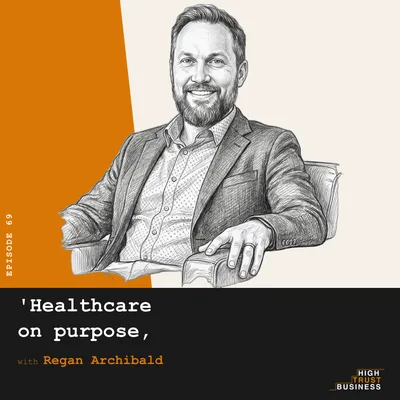
Regan Archibald didn't stop at building successful clinics in Utah. He went on to create Go Wellness, where he trains and mentors acupuncturists, chiropractors, and doctors who want to grow their practices.
What makes this conversation different? Regan's on his fourth book. Each one served a different purpose as his business evolved from treating patients to teaching other healthcare professionals.
You'll hear exactly how he's used books to attract both patients and fellow practitioners. The progression is fascinating, especially if you're wondering whether your book should target customers or other professionals in your field.
Regan's path shows there's no single right way to use a book. Sometimes the opportunities that matter most are the ones you don't see coming.
Transcript
AI transcript provided as supporting material and may contain errors.
Stuart: Foreign. Welcome to another episode of the book More Show. It's Stuart here and today instead of Betsy, we have with us one of our authors, Regan Archibald. Regan, how you doing?
Regan Archibald: Really good. Thanks for having me on, Stuart.
Stuart: It's a pleasure. I was just saying before we started recording that I don't always get the opportunity to speak to people as they're coming through the system on a day to day point of view, but kind of see everyone's name. So it's always great to put a voice to a, to a name and the opportunity to catch up. Reagan's actually on his fourth book with us now, so pretty prolific in the, in the system. We've got a couple of people who have really jumped on board with the first one, but then seen the benefits and the ideas have exploded from there. So have really taken the system and run with it. And Brigan's definitely that falls into that category. So I guess the best place to start is can you give the guys a background on who you are and what you guys do and we can move into what brought you to writing a book.
Regan Archibald: Yeah, of course. So my background is I've got four health clinics in Utah called East West Health. I'm the founder of those. I've got training in Chinese medicine, acupuncture, functional medicine and stem cell therapy. And so what I've done is also created a group called Go Wellness where I consult and train and coach other practitioners and their teams in growing larger practices where they can help more people and make a bigger difference in healthcare. And so I've used the books primarily just as a communication tool and to get the word out. Because when you're reading something, it's that one avenue where you've got someone's attention and if you can keep their attention for about five minutes, then it's amazing.
Stuart: Right. And in a world where there's lots of other demands on attention, it's actually surprisingly difficult to get even that amount of focused attention. I think the opportunity that you've identified and really run with is finding that thing that triggers someone's interest. It's engaging enough and kind of on message enough to keep their attention for the duration. And then of course, the strong call to action towards the end for them to take that next step.
Regan Archibald: Right.
Stuart: The two sides of the practices, the clinic and the coaching side of the business, did they. Was there much of a time difference between those? How soon after the clinic business did the coaching business come up?
Regan Archibald: You know, I actually, I was just talking about this with one of my friends Last night at dinner and my Go Wellness practice, that's my coaching side of things, that came up about 12 years after this. And so now I started Go Wellness three years ago because of the need for something more innovative in the healthcare space. So I decided, well, I'm going to start doing what I'm doing. I'm going to start training other practitioners on how to build better teams, how to collaborate more, how to look at their community and provide better value, better service. And that just happened three years ago. My clinic, East West Health, I founded that four years ago, always with the vision that Eastern and Western medicine can work side by side. I grew up on a farm in Idaho and so I ended up having multiple autoimmune diseases and exposed to a lot of chemicals. And so I was almost forced to find a new method of healing and healthcare. And so instead of going into Western medicine because of my own experience with it with antibiotics and steroids, I decided I've got to find another path. And so ended up going to school in Hawaii, where Urubakin was the founder of my school, the inventor, the pacemaker, and lived in Hawaii for four years and then came back to Utah and set up East West Health. And we've grown very, very well over the last 15 years.
Stuart: Wow, that's quite an interesting story. People often talk about business being a passion project, but to have such a kind of strong personal connection to it before getting into the business, it's quite a different story from someone who just goes to school and falls into a job that then turns into a career. There's a strong personal connection there.
Regan Archibald: Yeah, definitely.
Stuart: I mentioned just as we started, we're on the fourth book now as we're recording this, the first one a couple of years ago, that conversation that brought you to writing a book in the first place, was it something that you'd been thinking about for a while and we just happened to cross the radar at the right time or. Or was it not an idea before you saw the 90 minute book process, but you thought that was something that was straightforward and easy to do with your experience?
Regan Archibald: Well, two things is, one is I've got another book called you'd Health Transformation and I worked with a great publisher on it, but it literally took me probably 300 hours to write the book and go back and forth and it just sat there and then published that book. And then I started my second book and then as I'm still working on that second book, by the way, and I've been working on it for two years, but in the meantime, I saw a 90 minute book and I've got a contract with them, so I've got to fulfill it. But 90 minute books. And I said, holy cow, can you really do it in 90 minutes? And then when Susan and I got on the phone, I was like, this is so easy. All I have to do is, is talk about the things that I talk about all day long, every day, the things I love. I can reference my research in these books and they literally are done. I mean, my next book on brain health, you know, that's going to be published in less than about two months versus a two year process. And I had to move. I took my family, did a little sabbatical in Hawaii for a month just to finish that first book because I couldn't get enough focused attention on it. And the 90 minute book process is just, it's made my life 10 times easier.
Stuart: I feel I'm happy for you and sad for the family, happy for you that you got them done so quick now. Sad that the family now miss out on Hawaiian vacations while you try and
Regan Archibald: get well, now we can go on vacation and I just don't have to work on my book, wake up at four in the morning and try and
Stuart: get it finished off. Do you know, we hear that story so often of people who potentially come with something started at various. And that whole drag and the challenge of getting something written, the kind of the, the slog, the long slog of getting through it, it really is one of the things that resonates with anyone that started trying to go through this process already. And I think as people are listening to this, the thing that really stands out to me is not only the process which we've now got pretty refined and it's pretty smooth the way that we can extract the kind of outline in the first place and that turns into the words. Particularly for people who are in your situation where you've got some great knowledge, you talk about the subject all day, every day anyway, so just to be able to extract that, that from you. But, but I think in addition to the actual process side of things, there's almost the freedom of the books being typically smaller and targeting that single target market that we talk about having a very clear purpose and function so that you don't get this kind of scope creep problem. I was listening to someone on a podcast, it was probably six months ago now, and they were talking about the book writing process and they'd written something like 120,000 words and they were having to cut it down to about 80,000. So of that wasted effort and all of that stuff that ended up coming out of them because it was important at the time, but it didn't quite fit the parameter. So there was all of the culling in order to make it into this contractual, edited, more traditional book version that they were having to write. So I think that element is not just the process, but that element of the focus being a lot more specific. Excuse me, specific. It, I think it gives that mental freedom so that it doesn't become such a baggage so that it's not such a problem even before you kind of, you start. It just makes it seem more achievable.
Regan Archibald: Right. And so Stuart, do you know the statistics? I mean, I've heard that the percentage of people who actually finish a book cover to cover, if the book's longer than 60 pages, it's like maybe 8% of people. Do you remember that statistic? I can't remember if I heard it from Dan Sullivan, Dean Jackson, I can't remember which person was talking about that. Do you know that?
Stuart: I think it's about aids? I can't remember off the top of my head. We've got, I think we had, I'd referenced it a little while ago. There was some, there was an article written, it was couched in terms of the move to Kindle and digital publishing. So it was some statistics that were in there. But you're right, that number super, super low, sub 10%. And the interesting thing there is that's even on fiction books. So books where people are buying them for the sole purpose of being entertained by the thing that they've bought. Not necessarily being educated or given additional information or answering a question, but things where there's in theory 100% motivation for completing it. It's still that low. The, the whole premise of what we try and get to in the 90 minute book setup is this concept of kind of like a coast to coast flight. So by the time you've kind of boarded and sat down and been offered a drink and the turbulence has settled down a bit, you've maybe got kind of two to three hours of reading time in between where you can go through and digest some information and eat some pretzels and drink some bad coffee, but by the time that you're coming into land, you've consumed all of this thing and that, that size book that you just mentioned, the kind of 50 to 80 pages on the single subject where it's all dialed in, you're answering a question, providing value, the read rate of Those, although obviously we don't have. This is mainly offline stuff, so we don't have statistics to back it up. But anecdotally at least the read rate is far, far higher. And even if it's not cover to cover, word by word by word, at least to the point of getting the concepts out and someone being motivated to take next step, which, which is really the thing that we're interested in kind of guiding people towards improving their, their knowledge and understanding and, and having a further conversation. But yeah, it's, it's an embarrassing truth. I was listening to another podcast. When I'm working, I tend to listen to podcasts a lot, so I get through quite a few. But it was a. I can't remember whether it was a crossfit one or a technology one, but the guy was talking about having written the book and, and the fact that it's now sat on the shelf because in the time it took to write, some things had moved on. So it was slightly out of date, hit their own business had pivoted slightly. So it wasn't necessarily the book that they would choose to write today if they were starting again just because this process took so long from start to finish that the relevancy or the specificity of it kind of had died off and they'd spent all of the time and money creating something and it was an asset that was then just sat there really not being used. Which is the biggest disappointment.
Regan Archibald: Yeah, no, I love it. I think people look at books as the end result is I want to write a book so I can get an idea out. And my books are meant to get a person to take action and do something to get healthier and to get their life back or as a practitioner, how to, you know, cultivate a more sustainable practice where we can actually transform healthcare. And the last thing I'd want is for them just to read the book and say that was amazing, I loved it. And then it sits on the shelf and they do nothing. So. Right, yeah, I'd rather have 60 or 80 page conversation with somebody and if they like the conversation that I'm having. Because your books are conversational. Because I just have a conversation with Susan or one of the coaches there and if they like the conversation, then it's so easy for them to look on the back cover and there I am and it's so easy to find me. And we have people who call from all over the international calls and it's been amazing. So really love the process.
Stuart: It's interesting. You talk about that scope and that reach. The good friend I work with back in the UK is a osteopathic and they do shockwave treatment as part of the practice and that he'd already established, had a good reputation establishing the business because he was one of the early movers and worked with one of the big manufacturers, is one of their ambassadors. But they see exactly the same, they see quite a wide scope worldwide from people researching the subject, coming across it in the same way that people do for your books because it's available as a digital download on the site, start in that conversation. But they're out of area. So we've had this conversation a couple of times with people because they talk about. There's almost a fear sometimes of people not wanting to put something out there and, and coming across an audience which is geographically irrelevant because they're in a certain place. And it's always an interesting conversation because what I saw with Paul is two things happen. One is if people out of area do come across it then that's just an inevitable part of being out there as a thought leader. So just because some wider people, some I'm going to use the word irrelevant but irrelevant in the sense of they're not going to walk into the clinic and get treatment because they're overseas, but the people who are going to walk into the clinic still fall into the same funnel, it's part of the same campaign. So we talk quite a lot about this two stage approach of Step one is, is identifying the people who are possibly interested and that's the job of working the book. The book does a great job of all of the population of addressing those ones who are interested. But then there's a second stage of sifting and sorting and that sifting and sorting stage can be through follow up emails or even if people are calling into the office having some kind of sifting and sorting check and balance that separates out the five star prospects from the non five star prospects. But trying to make the point to people that it is two separate stages. The collecting of names on stage one and the sifting and sorting at stage two. If you try and combine those and sift and sort at the first stage the risk is that you kind of thrown away five star prospects because they get caught up in the sifting and sorting rather than collecting them all in the first place and then moving on. And the second thing that we saw as a kind of side effect of that or byproduct is that Paul's credibility and his kind of global presence increased even further because of this kind of non restricted view of getting the information out there to as many people as possible, not just trying to restrict it to people who would, who were more likely to ultimately turn into clients. So with your footprint, the kind of breadth that you've now got across the three and soon four books, I don't know if you'd seen anything similar in terms of kind of the reach.
Regan Archibald: Yeah, oh, definitely. And we actually have patients that fly in from all over there. I just had a patient who received my book, I'm in Utah and I had a patient who called from Calgary and said, hey, I read your book. It was your sister who gave her the book and she said I loved it. When can I come out and get treatments? And so that happens at least once a week. You know, we get, we have patients here in Utah and they know patients all over the country. They'll give the book away or people will hear me on, you know, my podcast or in a blog that I've written or, you know, place I've been interviewed and they will go to my website and they'll download the book, they'll read it and they'll enjoy the book and give me a call. So yes, it's been great. And then we can create videos around it. We have, we've created YouTube videos around the content in the book that we can send as an educational tool before a patient ever comes in. They get the book physically. If I'm doing a presentation to a group of people, then I have something physically to hand it out. And it's because it's a smaller book. It's, you know, it's basically a two dollar business card that someone's not going to throw away. They're not going to like walk out and see a garbage and just toss it in there like they would your business card. But they're actually going to say, well, let me read this book. It was a gift. And so I want to take some time to dive in. I enjoyed what the presenter said, but now let me get kind of my own head wrapped around these concepts and then I'll decide for myself. But if they've got that book there, then they can really make an educated guess or an educated decision on if they want to work with you or not.
Stuart: I think that point you made about the book, just the physical, the actual thing itself, the fact that a book has in society at the moment, or I mean really ever since the printing press was invented and it's probably going to continue for some time, there's an authority and A kudos and a, and a presence that a physical book has that the very other few things, if anything actually carries the same weight. And we often talk about the, the whole concept of the 90 minute book. This is a marketing strategy to start a conversation with people who are likely to benefit from the service and become a customer. The fact that it happens to be a book is irrelevant, isn't the right term, but it's kind of the quirk of fate. It's the ease in the fact that we've got a process now that makes it easy to create. The production costs are lower because of technology, but all of the benefits of the old world of printing still stand. And it's completely agree that if you go to a present a, a what's what I'm looking for like a workshop expo type place and come home with a bag full of business cards and brochures and a book, the book is going to be the last thing that ends up in the trash as you kind of filtering and, and sifting things out with the bag to, to pick up on some more interest once you, once you get home and the moment's died down. It's the medium itself I think has some extra. Although it's not the most important thing, it definitely has a lot of extra. It juices the system a little bit more because of what it is. The point you touched on there about referrals and people giving away to people, passing the books on to other people. Do you find that happens a lot either physically with the books or people will contact the office because they're trying to get hold of one because someone else had mentioned it?
Regan Archibald: Yeah, we find that all the time we have new patients who come in, they sign up for a plan of care and we ask them if they have anyone in their life that they think could use some help with the types of services we provide. And they say absolutely. And we say how many people? What are their names? And so we write down the names and the people and so in the book they, you know, we have a nice little, you know, gift for the person they're giving the book to pre consultation and then we just follow up with that individual. So when they come back for their next visit we just say, hey, were you able to give this book to your dad and how did he like it? Would you know, would you like us to reach out to him? So it's just a nice, a nice way of giving some value to somebody. And then when that person, what I find is when the person reads the book then They've already created a relationship with me. So that's the difference between a business card and a book is a book. If it's not an intimidating big old 500 to 1000 page book, someone can pick up a 60 page book and your brain is already thinking, I can read this, I can really dig in. It's a way you can start, like you said, the conversation and then when that person actually comes in, it's as if they know me already. And so there's no breaking the ice. They understand where I come from on health. And it's just really been a great entryway for getting people to make a better decision when it comes to chronic disease and getting rid of pain.
Stuart: That element that you were talking about in just the referrals, the psychology of being given a book by a person that you know like or trust already and they kind of pass through, pass through credibility or pass through edification of you because you've been introduced, even if not personally, but you've been introduced by a friend, someone that they know, know, like and trust already. I think that has quite a, it's a much stronger position rather than a book turning up in the post from you that maybe appears to be unsolicited. Also, I think for the person making the referral, it's much easier for you to give the book to your, your patient and let's say here's the package to pass to the friend rather than asking the patient to kind of give up their, their address book and the name and address details of someone else. Because there's a reluctance there. In a, in a kind of world at the moment where there's a lot of the marketing activity that's done out there and the kind of darker side of the web and tracking, there's a very much, it used to be a low barrier of entry of getting someone's email address because everyone was perfectly willing and happy to do so. But increasingly these days, getting someone else's contact details are more and more challenging. So the way that you do it in passing the book to, to the, the, to the patient to pass to the third party and then following up with them to see, far more effective, I think, than trying to do it the other way around of just saying, are we, can you give us a refer details of someone that you know will get this out to them?
Regan Archibald: Yeah, yeah, exactly. Yeah. And it makes it an easier conversation starter for that person too. Instead of kind of the awkward like, hey, you know, you've got this knee issue that you probably ought to get addressed. Here's a place to do it. Well, they can, they can start the conversation, but why don't you read this book and see if maybe they've got some answers for you.
Stuart: There's the whole psychology around that gift giving and being the kind of leader in the pack that makes the great referrals. So if you're the person in the group that always refers a good movie or talks about a good restaurant, then that almost builds your standing within the audience. So there's kind of little endorphin hits all the way down of the most effective way to do it. When we finish up today, I'll shoot you a copy of the broker breakthrough report that we've got that is specifically targeted at the realtor customers that we work with. So that kind of sub out the context. But it talks about this psychology and I think 99% of it you're doing already. But I'll shoot the report across because it might be interesting. As you people are listening to this, you should grab a copy of it. It's at a website called getting referrals.com I'll put a link in the show notes as well as I say it's written specifically for our real estate community. But just sub out your own industry because the psychology around it and the psychology of those referrals is really quite a different way of thinking than most people. And it's really interesting to hear you talk that you're already thinking down that route. But I'll get a copy of that across to you. The other thing you mentioned in that conversation, which I think is a little thought of element but super important, is it almost preconditions the people who are reading to understand the elements that you guys believe are important and use the language and kind of the premise and the setup. And it almost predisposes them to be dialed in to the way that you're ultimately going to be talking to them when they do walk through the door. So I think that positioning piece that the book does as well is, is again something that's not really. I mean it's rarely thought of as the, the main reason for writing, but it's definitely quite a strong benefit. Just before they even walk through the door, it really gets people dialed in or starts to get them dialed into to the channel at which you're. You're talking and the language you use and the direction that you want them to go.
Regan Archibald: Right? Yeah. And I think the last thing I'd want to do is to have somebody show up at my clinic. And they say, well, I want surgery on my knee or my back or just a medication to mask some of my pain. And that's not the type of people. That's not the services we provide. And so it saves them time and saves us time. And. And the people who really are looking for a true experience and a health transformation, those are the people that I want to come in. So I find that it's out of respect for the person as well, because we've spent a lot of time with people who are not in the right place at the right time. And since I've had a book, it's been able to narrow that focus down to the people who we can really help.
Stuart: Yeah, it does. That element of. It gets past all of those initial sets of questions that I'm guessing often come up anyway. And the people that then follow up are those ones that are more dialed in.
Regan Archibald: Yep.
Stuart: You talked about writing in the first place and how the process was straightforward, because this is stuff that you talk about day to day. In terms of the. So the way that we structure the chapters and get people from the title on the front cover, that kind of identifies the problem or the challenge to the next step on the back cover, that gives people a place to follow up and take on more. The chapters in the center, we really look at kind of structuring those around either common issues or common questions or a mindset change that they need to have. So you're on the fourth book now in terms of structuring the book. The content was the. Did you go into it with a particular. Knowing that you wanted to cover a particular topic, or did that come out as part of the conversation with Susan and our guys? Quite often we'll get people who come on board who say, okay, I've been in business for a number of years, but I can't think of what to write about particularly. And then a lot of the time is then spent dialing people in on what the most valuable idea is. But from your perspective, was that already dialed in, or was that something that came out in the process?
Regan Archibald: You know, it was. In my case, the majority of the books I've written is where we've had a new breakthrough in science or medically in our clinic. And I'm doing massive amounts of research on it. And then I do a presentation. I'll have people from the community and my patients, and I'll do weekly presentations just to see how the content is resonating with them and see how well I can communicate it. And then what I'll do is once I've got that presentation fine tuned, then that's where I will record it and then I send it to Susan and we have conversations around that. So I think my process certainly is different than probably the majority, but I like it because then I know I've got a message now that resonates with people. And I've gone through it a few times in front of several audiences to see what works and what doesn't work.
Stuart: What a refined process. And this is what I love about talking to people kind of on the coal face, the kind of cutting edge of doing these. That process you've now got dialed in. So it might not have been as smooth on the first book, but you're the fourth one in now. The audience that you've got, or the ability to speak in front of a audience, to kind of just begin to dial in that message, as you said, to see what resonates and then commit it to the page. That's such a fantastic process. And I think out there, people listening are going to have those opportunities. Maybe not in exactly the same way, but the opportunity to. Here's a subject that has some traction at the moment, either because this is a kind of like a evergreen topic that people always ask about. We're always getting calls about this, in which case that kind of audience testing has already been done because people are asking the questions in the first place. Or it may be that they've got opportunity to speak at a school or they might come on a podcast or. I think there's often people skip over those things because they don't necessarily think about it in the. In the bigger funnel. It's not necessarily something that falls into the. There's a book silo over here that they're thinking about and there's a speaking silo over here that they're thinking about. And they don't necessarily make that connection as you've done to really get that process refined through. Interestingly, with a couple of people we've worked with, it's almost then gone the other way around. And they've used the book writing process to do the brainstorming and the dialing in. And version one of the book has been their kind of their starting position. This is what they've assumed. It's then been out there for six months. They've got some feedback from the people who are reading it. They've done a version 2 that's then dialed it in even further just to kind of highlight a point. Or they may have missed a particular subject the first time through. And then they've used that refining type work to then turn that into a speech or perhaps video content online. And they've used the book as kind of the testing field and then created other stuff. You're doing that as well. You mentioned before some of the after unit stuff that you're doing, the after book stuff that you're doing. But you've got the opportunity to do that testing first in front of an audience. And it's really interesting to hear people come to the process. Kind of the same building blocks, the same structure, but just with different pieces in place to actually get it done.
Regan Archibald: Yeah, great.
Stuart: I think when people have that opportunity to kind of leverage what they've got, there's no kind of one size fits all. We've got a framework that, that guides people through and gets things created. But it's definitely a framework. It's not a prescription. It's, it's. It does vary person by person. There's lots of opportunity. I think that is in. In fact. So we do a lot of work with the strategic coach guys and we create a lot of school card books for them. And that's the, that's the difference in. Or one of the differences in. Did I lose you for a second?
Regan Archibald: Okay, I got you now.
Stuart: Hey. So that might be my voice cracking out a little bit as well. I was just saying we do a fair amount of work with the strategic coach guys. They've, over the last couple of years, they've been working a lot on scorecard books. So we've got a lot of authors who've written both kind of a manifesto book, a 90 minute book in the first place, and then have followed up with a scorecard. And that's one of the differences in the process of the products that we've got in. The 90 minute book is definitely a framework and it's pretty flexible no matter what type of book that you want to write and how you come to it. Whereas the scorecard books, we treat much more of the product because the framework has already been done by the coach guys where they've set up their scorecard in the first place. So the variations that they go through in order to create it has already been done. So we structure the scorecard book as a product that's very prescriptive to get it done in a particular way because we've over time have refined that to be the most effective way of creating it. Because all of that, that variable work, that thinking about work has been done. So people often are thinking about the 90 Minute Book as a, as a product, as you've got to do it in this particular way. And it's usually based on the way that they've seen their first book, but, but it's very flexible and I think you've seen that as well as the, as it's, as it's developed. So really, it case of no matter how you come into the process, what the, what the background is of the information that you want to get out there within the framework, there's a way of being able to easily create that. Yeah, okay, that was a bit of, a, bit of a tangent there. Just as I was thinking about it, one of the things I wanted to talk to you about was how you're using the books. So you mentioned that it's on the website as a digital download for all of that passing traffic or traffic that you want to point to it. But just before we started recording, you were talking about physically using the copies of the book at events and that type of thing. Do you want to run through a couple of the examples of how you're actually using them out in the real world?
Regan Archibald: Yeah. So that's where we just were at the Mindshare Summit, JJ Virgin's program there. And one of the things they asked is if you've got a book or some type of product you'd like to introduce to all the Mindshare members, then send those out. So we were able to send hundreds of books out, and I saw people carrying them around, opening it up. There were people who were seeking me out because they had the book. That's what we do on the professional level, or whenever I go to an event, I just put several books in my backpack and I will meet people and I'll say, oh, let me give you a copy of my book. It's a conversation starter. And then as far as it goes, in our clinics, each of our clinics, we have books. We have massive quantities that we order every month, and we have people who come in for educational seminars every week. And of course, they get the digital download before they come in. And then when we're giving them their notes and their surveys, as they're getting seated and ready for the seminar, they also get a copy of a book. So it's a gift that we give them. So it's a law of reciprocity. And, you know, it creates some credibility, some authority with us because, yes, here's the author of the book now speaking. And then it also, like I mentioned before, we give people the bookware that we ask them who has got someone else out there who could use some help? And then they raise their hand and we get the names and give them an additional copy of the book. So it's just a way of multiplying our message and our reach in a way that's very thoughtful and non aggressive, but in a way that that person can really add value to someone else's life, which makes their day too. So it's a win win.
Stuart: That idea of looking at the end product is two slightly different things, the digital version and the physical version. And looking for the ways to kind of maximize the. Maximize the medium if you like, maximize the way that you can use the different versions of it to achieve more. I like the way you were talking about the people coming into the clinic have the digital version already because they've probably read it before coming in. But then following up with the physical copy because it does take all of those other psychological boxes of the reciprocity and the, the authority, but the gift giving as well and the setting up the. It almost sets up the relationship on a, on a, on a giving hand rather than a taking hand, even to the point where they're, they've become a customer. It's not like you just using them for leads on the outside, it's kind of building that relationship on the inside as well.
Regan Archibald: Yep, exactly.
Stuart: What about in terms of challenges or areas that you feel could be amplified? Definitely take some opportunities, kind of brainstorm some ideas to. Given the experience that we've got with how other people are using them, is there anywhere that you feel that it's not that you haven't quite cracked the code on it or it's not making as much of a impact as you like or a new idea about getting the books out into people's hands. Is there anything that we can run through on the call now that would be actually useful for you day to day?
Regan Archibald: You know, I think on one of the things I would like to see in the books are some images. And so in my next book we're actually going to pilot that where there's some images because, you know, everyone learns different. Some people, they just, they don't learn while reading words and they need visuals and then people need audios too. So I think one of the things I've looked at is having an audio version of the book and then having some images in the book so that you can target all the different types of learners. I think that's kind of an obstacle we're trying to overcome. And then the other Obstacle for me is just, you know, I have, you know, I've already got my next book. It's already right there in my brain. And so, yeah, I don't know if you'd. If you have like a kind of like a monthly check in for a guy like Reagan where you're just like, okay, Reagan, what's next? And. Or if you have any advice on getting more books out there. Yeah, that would also be helpful too.
Stuart: So it's interesting that you talk about the kind of the frequency and the keeping things moving. We've had a couple of people the last couple of shows. We were talking, I was talking to Betsy and she was just doing a check in on who she'd been talking to recently. And there were a lot of people who seem to have popped back up again who maybe had raised their hands a year ago, but then a year had gone by and before they realized they hadn't got started. So that regular check in process, perhaps we were looking at it more for unconverted people rather than people we're actually working with. But that definitely seems to be an issue at the moment of life coming up and getting away and then time moving on. I think a couple of people, we hear it's quite funny, you see the notes come through sometimes and a couple of people say, because the first step in the process, as you know, obviously is getting in touch with Susan and scheduling those initial calls. So quite a few people will kind of buy in advance and say, okay, that's great, I've done this now, but I'm actually not ready for three months because of, of X, Y and Z coming up. But let's definitely schedule a call in there. So a number of people kind of pull the trigger almost given that as a, as a motivating reason to follow up. And then once people are in the system and we've got kind of outstanding books to create with people, then obviously we've got that regular check in process. I was talking to someone a little while ago about having a kind of like having an informal Q and A type of call. So the lines that we used to record can have multiple people on them as well. And we've got another conference call system where it's possible for people to raise their hand and just kind of structure a Q and A session a little bit more. So I was talking to someone a little while ago about setting that up and having a monthly kind of just office hours open call session where people can dial in and ask anything. That would be something that we would email out about just as a reminder. So I don't know whether that would be enough of a trigger to kind of do that check in above and beyond that. I mean, particularly for yourself, maybe more than other people listen to, because we've got a pretty close relationship now being four or five books in. But we can definitely utilize Betsy's skills of staying on top of things as well and can get her to schedule a check in with you as well, just to see how things are going.
Regan Archibald: Yeah, yeah. For the people who are listening to this, if you, if you've not done it, there's something liberating about it. When you have the book, when it's complete, then it clarifies your mission and your purpose. And so, you know, my mission, I want to change the lives of a million people by 2025 and pain and chronic disease. And so there's lots of different types of pain and different types of chronic disease. And I, I want to create books on all the major types that we help. And so that's where it becomes very important for me to get that message out as quickly as I can.
Stuart: And what a fantastic goal that is as well, because using the knowledge and experience, this is what you say to a lot of people particularly, we pick on the financial services sector quite a bit because it's, it's like it's an easy target sometimes. If some of those guys, and it's absolutely not all of them, but a couple of the guys particularly, you really get the feeling of holding back information because they don't want to divulge some stuff until people come through the door. But in this day and age, the exact opposite is true information. There's very little that you've got in your head that doesn't exist out there. And with some kind of diligent Googling around, people couldn't find it. So why not be the message carrier and share all of that knowledge?
Regan Archibald: Right.
Stuart: Increase people's awareness and particularly from a health point of view, the opportunity to. To allow them to make a difference that has a very real physical impact on their life.
Regan Archibald: Yeah.
Stuart: The images and the audio you were talking about adding in images, I think you're talking to Betsy about the images in, in the latest one. So that's definitely no problem at all. The broader issue on or not broader to be aware of is just kind of the resolution. And we get so used to seeing things on screen where the resolution can be quite low because you've got the color saturation and the screen resolution isn't really an issue. So Sometimes if people try and put complex images in there or images that turn out to be pretty dark, there's just that kind of resolution and challenge to be aware of. So I think the simpler the better. In fact, one, I'm in the office this week down in Windhaven, and one of the books that came in, the guys who created that actually had a whole kind of image suite already created for a lot of the stuff that they do. So they had stick figure drawings created that they reused in the book. And because that was relatively simple and straightforward and they were created kind of on message, those images worked fantastically well in the book because they stood out. They weren't over complex. They. They illustrated the point they were trying to make because it was kind of. That combined the image was created specifically for the point they were trying to make. The flip side of that, I mean, we occasionally see people who have obviously just grabbed screenshots off the Internet from somewhere, and that's usually the least likely to work because it's. Because a. It's not fit for purpose, they probably don't have the right permissions to use it. And just the quality isn't there for it to come out on the page. And it almost distracts because it becomes a distraction to the content as opposed to this other example of it being perfectly aligned. So in the bigger picture, because you do have such a big suite of books now, and there's the desire to create even more to the library having that. That if there is the opportunity to get something kind of thematically created, almost like a visual identity, like a brand identity, almost where that particular figure or character or shape or style represents what you're trying to make. Because, you know, looking at creating such a broad suite, having that set created that illustrates things might be worthwhile, because then you've got the opportunity to not only use it in the book, but reinforce that point that you're trying to make about a particular thing across all of the other assets. So on the website, on material, on presentations, so you can get that kind of visual identity flowing through. And with the amount that you're doing, that might be a worthwhile investment. The audio side of things. As part of the pro production book, there's a. We talk about an audio version in that that's definitely not the produced soundboarded type audiobook. But what we do is free up one of the conference call lines so that people can read through there. Well, actually it works in two ways. Either the initial recording that you do is if that's good enough to Use as the audio and use that as a kind of behind the scenes position it as the raw content as this idea came together and provide that as the audio. That's one way that we do it. Or if the initial recording is a little too choppy and not quite fit for purpose, then the other suggestion, the wished edited version of the book to be complete. Either record it locally and send it through to us and we can clean it up and package it or we can free up one of the conference lines and then just record a read through into the conference line and use that as the version for the audio.
Regan Archibald: But
Stuart: that's super easy to do as well. Again, sticking with the idea of the 90 minute book publishing versus traditional publishing. The idea is to easily and quickly get something out there that can engage people. So that recording option is far better. I mean we have had Mike Mack who was on the show a little while ago, they did actually go into studio and record it as a professional audiobook with. With all of the chapters and everything like that. But that had a. That had a big price tag associated with it and it was a great end product but did come at a cost. So yeah, there's definitely options to do it easier. The thing I haven't seen anyone do yet particularly is then kind of provide additional supporting audio information to go with things. So there is the option. What's the best way of. My kind of hands are gesticulating in front of me as I'm kind of drawing a funnel in the air but. So stick with me for a minute. But if you can imagine the book funnel, the book sits usually towards the top of the funnel, but that funnel steps through towards someone taking a buying decision at the end. So with your examples, the first, the second one, sorry, the acupuncture blueprint and the following one was about stem cell. So each of those funnels are pretty disconnected. There is a crossover but they're targeting very different groups. The book at the top of the funnel is the way of introducing the subject and bringing people in. But further down the funnel there's the opportunity to add elements in that either a reinforce the message that you're trying to make. So it's additional information to back up someone that joined at the top of the funnel. Or there's the opportunity to inject people partway down the funnel because they resonate with one of these sub assets if you like. So using either audio or video or presentations to support one of the chapters as a new asset as a way of either reinforcing the message with People that have come in at the top. So the acupuncture book as an example, actually. So let's use healthcare on purpose because I actually happen to have that in front of me at the moment. So of the chapters that go through that book, talking about the different mindsets that people need to understand the different elements, recording pieces of audio that kind of just given a more in depth explanation of each of those chapters, kind of the expanded version of one of those points. Using audio, I think for most people is one of the easiest ways of creating it because it's very easy to record something. I mean, you can even do it into your phone and end up with an audio file that you can just. Just put on a website somewhere.
Regan Archibald: Right.
Stuart: Recording something that expands it and goes deeper and gives people that behind the scenes look I think is a great opportunity that not that many people are doing at the moment because. Well, I'm not sure why, but it's definitely not something we see. But I think it's easy for almost everyone to create. So that for you I think is another fantastic opportunity. And that maybe leads then into the podcast type method which, which we were talking about on the show last week as we record this might be two weeks ago as these actually get released. But we were talking about the book as a way of getting people to raise their hand. But because it's only the 10 to 20% of people who raise their hand who are ready to move in the short term, the rest of them are ready to move in the long term. It's having a way of engaging with those people, of being able to continually send them an email with a super signature that talks about. Here are three ways that you can get started today. Just constantly reminding people like you were saying, being reminded about the writing process in the first place, reminding people that this is something that they were interested in, audio might be a great way of pushing that out there. And whether or not it's a long term commitment as far as the podcast goes, or whether it's just pushing out shorter audio snippets. Yeah, I think that's a good, a great opportunity to kind of increase that understanding.
Regan Archibald: Beautiful.
Stuart: That was a lot of words. Some of the, some of the tools that there might be an option for you there. There are services like Anchor, which is a very easy to record podcast distribution type platform. I think they're still free at the moment. There's obviously like the social channels like Instagram Stories and, and Snapchat, although I mean, maybe it's not the right audience mix There there are services like Orphonic that do a lot of audio cleaning. So if you record something into your phone and then push it into orphonic. Orphonic is an automated way of cleaning up the audio and actually distributing it to certain places as well. So there's a lot of tools where you can quickly kind of get these things out there and then it's just a choice of deciding, okay, well how do you want people to kind of receive it? Are you expecting them to subscribe to something or do you want to back something up with an email? Which is probably the recommendation. Back something up with an email announcing the release of the thing that you just recorded. But the main job of the email is to include that super signature which has got the reminder of, by the way here, whenever you're ready to get started. Here are three ways that we can help you and give people almost reiterate the three steps on the back of the book that give people those ways to take the next step. So that did we. I think we covered the things that. Images in the books definitely a thing, but it's. The thing with images is just be aware of the quality the audio. There's a couple of ways of getting the audio for the book recorded. I'll shoot you an email later on today when we're finished finished and just put a few reminders in there and give me a shout about any of these specifically and we can follow up. But there's definitely ways of getting the audio of the book, audio snippets or the kind of. I think is a great way of staying in touch with people and giving them, adding to that value. And then once you've got this, this library of. Of additional deep dives, then you can always turn those into individual assets and have those as introductions to the funnel as well referrals we were talking about. You kind of hit that, hitting that out of the park already. The only other one that might be interesting that we haven't talked about is this kind of idea of complementary non competing businesses. So is there anyone, anyone that you're either working with or aware of or part of a community where you can add value to their community by sharing the books with them, but then by virtue of you sharing them, you also get an access to that audience as well, that is maybe a group of people that you wouldn't otherwise have access to? Does that ring any bells? Is there anything that anything kind of complementary, non competing that is in your world already?
Regan Archibald: Yeah, I mean, yeah, there's a lot of different groups, you know, as far as professionally, you know, there's orthopedists, there's other medical clinics that are non competing. They do a completely different type of service than we do here. Yeah, those are some great groups for sure. Yeah, I think there's a lot of great applications with this, Stuart. And yeah, really appreciate the evidence that you go in on this.
Stuart: It's such a great, it's so great to be talking to someone who is really grabbing it and running with it. I just, I've been walking around the office as we were talking. I've just got back to the community and realize the time. So we should probably wrap up and I'll let you get, get on with the rest of the day but I'll follow up with you with, with an email. Just before we did go, I just wanted to give people who are listening the opportunity to check in with the stuff that you're, you are doing. What's a good place if anyone's listening and wants to learn more about what you guys do across there in Utah, what's a good place to, for people to head across to?
Regan Archibald: You know, the, the best way is they can call us at 801-230-1611 or they can easily email me at infoowellness.com fantastic.
Stuart: Well make sure those connections are in the show notes as well. It's been an absolute pleasure. I'll follow up with you with a couple of the things we talked about in email. Definitely give me a shout if there's any more. If you've got any more questions, we'll touch base with Betsy as well and just follow up on a few of the specifics. But it'd be great to have you back on the show in a little bit down the track and just touch base and see how it's going.
Regan Archibald: Would love to do that, especially once I get the book with the images and just really appreciate you guys and everything you do. We'll be in touch.
Stuart: Fantastic. Well, thanks for your time. Thanks for your time listening everyone. As always, head over to 90minutebooks.com podcast for the show notes and if you're ready to get started and race Reagan to creating 10 books then the challenge is down. So follow the get started links and get the first one started. So Regan, thanks again for your time. Thanks everyone listening and we'll catch you
Regan Archibald: in the next one on Take care everybody. Bye bye.
Stuart: Thanks.