Chapters
Show Highlights
- Write your second book broader than your first to capture more prospects you can qualify later
- Get your book featured in high-visibility locations like Times Square to create instant credibility
- Use your book as a credential to secure speaking opportunities at major venues like NASDAQ
- Turn recent media appearances into leverage for booking even bigger opportunities
- Your book opens doors to prospects you'd never reach through traditional marketing channels
- Media attention compounds when you can reference previous TV appearances and speaking engagements
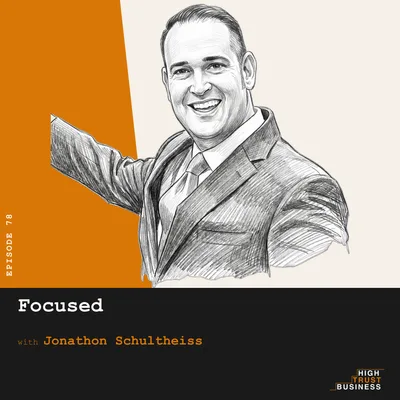
Jonathon Schultheiss wrote his second book to cast a wider net. His first was laser-focused on his ideal clients. "Focused - The Financial Freedom Formula" targets a broader audience because he knows he can sort the right prospects later.
The results? In just weeks since finishing the book, he's appeared on TV, spoken at NASDAQ, and got his book featured on the Times Square Jumbotron. Not bad for a financial advisor from outside New York.
Jonathon breaks down exactly how he's getting media attention and turning his book into social proof that opens doors. Your book's primary job is still connecting with prospects directly. But once it exists, there are ways to make it work harder and reach people you'd never access otherwise.
If you're wondering how to get more mileage out of your book beyond the obvious marketing, Jonathon's got the playbook.
Transcript
AI transcript provided as supporting material and may contain errors.
"Foreign."
Stuart: Welcome to the Bookmore show. And we've got a great show today because we've got one of our authors. Always my favorite shows to do today is going to be no exception. And really excited to share what Jonathan's been doing. So welcome Jonathan Schulthouse.
Jonathon Schultheiss: Yeah, thanks for having me.
Stuart: Pleasure, pleasure. We'll get into this as the show goes on, but I was just saying to Jonathan before we started recording that it's always interesting for me to see obviously all the names coming through as the books are created and get to speak to some people in the early stages, but nowhere near as many as I'd like to. So it's always super exciting to see. The first time people come across the radar is when I'm seeing the TV stories and big billboards of people's books being created so that it's really messy. So, Johnson, let's start by giving everyone else a bit of a background you want to share if your story and what you guys do up there.
Jonathon Schultheiss: Yeah. So I'm a partner in a firm called Gate City Advisors. And Gate City Advisors is a financial advisory firm. We're an independent investment advisory group. And we really have two core focuses. We have a wealth management division and then we have a corporate retirement plan division. And so I'm the partner in charge of our corporate retirement plan division.
Stuart: And is that something that you started straight out of school or is it a career that kind of crept up on you?
Jonathon Schultheiss: Well, you know, it's interesting. I actually started out in the insurance business and then went from the insurance business to the investment business. And. And as I started specializing and trying to figure out what my niche market is going to be, I started to gravitate towards corporate retirement plans. And probably the last 10 or 12 years that's been exclusively my core focus is adjust corporate retirement plans.
Stuart: It's always interesting, isn't it, how you kind of start the career in one path and then either through interest or experience or expertise, it really kind of blossoms into something that once you get that level of expertise and you've been in the game for a few years, it's really, you can start seeing the code and it's almost like the matrix. As you're working in there, you kind of see what's happening below the surface and that ability to share that with people is what comes out.
Jonathon Schultheiss: Absolutely. And I look at this as me growing as much as anything else too. And you know, it's interesting. You know, I love Dan Sullivan and he always says that, you know, as long as your Future is brighter than your past. You know, you're constantly growing. And I feel like that's how I have been even through, you know, starting out, you know, in the insurance business and even here, as I get ideas and I start to implement things. And you've seen some of the stuff that we've done just with the book. It's like, it just. My question is, is why not me, right? Why can't I do that? Why won't they have me on? Why can't I have my picture on the jumbotron in Times Square? You know, it's like it just keeps growing.
Stuart: It's such a fascinating paradigm shift. You kind of. Before looking at any of these things, it's easy to imagine that that's something that happens to someone else, or there must be some other big machinations going on in the background to make that work. But once you kind of break into that area in even a small way and you've got any interest in it, it's really something that you can drill down to and amplify.
Jonathon Schultheiss: Oh, totally, totally. You know, it's funny, you sit back and you see that other people have done it, and you go, wow, that's got to be hard to do it and then doing it and you start asking questions and you start, you know, calling people, and it's so easy that everybody wants to book you. And it's like, wow, really? You really want the book? Me? That's pretty cool, you know?
Stuart: Yeah, the same. The same psychological elements there. I guess, in writing a book at all. It's. It's still. Even. Even today, with all of the technology that makes it much more straightforward and much more accessible for people. It's still seen as such a thing to have something in print inbound within a book with a cover and your name on the front, that psychological anchor that. That is there, that gives us the benefits when we're dealing with. With customers, because it really starts the conversation on a good. On a. On a good footing. But people thinking about creating it, they think it's. It's a big thing, which, which you've proved. It's. It's definitely accessible and something that anyone can do.
Jonathon Schultheiss: You know, what's interesting is when I tell people this is my second book, it's almost like people go, wow, how in the world did you find time to wr. And you just go, I'm a busy guy.
Stuart: That's interesting, isn't it? Because the credibility of 1 is kind of from 0 to something quite significant. But 2, 3, 4, it almost even amplifies more and more because I think in people's minds, a lot of the time they think about economies of scale and the second one being easier than the first one. But a book is still something that has that ground level of expected effort that people don't drop below. So they think that two people have written two is almost more than twice the effort rather than less than half the effort.
Jonathon Schultheiss: Oh, absolutely. I will say my second book was probably 10 times easier than my first.
Stuart: Right.
Jonathon Schultheiss: Because everything, you know, it's interesting and everything like what you're saying is it's about how do you create that kind of being a celebrity in your prospect's mind? Right, right. And so they perceive people who write books as, oh, man, you've got to be better than me because I can't write a book and I haven't written a book and you've written two books. Wow, that's amazing. So it almost puts you in a kind of a higher status.
Stuart: Yeah. That's interesting because we talk a lot. I think the last show that we were talking about some of the specifics also the one before last, we were talking about some of the specifics of getting things done and it not being very much the nuts and bolts of it, not so much focusing on the softer psychological side, but that benefit. It's, it's not that you'd necessarily go into this, particularly when we talk about lead generation, we're trying to tie into quite specific campaigns. So you wouldn't necessarily go into it just for the point of view of the, of the status or the, the psychological elements that come along with it. But that as a benefit, if you could put 100 units into doing anything, 100 units into writing a book is way more, you get way more of the softer benefits that come along with it and the opportunities that you wouldn't get putting those same hundred units into something else. Someone was asking me the other day, how long with people getting more familiar with self publishing and platforms making it more accessible, how long is that still going to be the case? How long is it still going to have this psychological extra, extra bang, the, the, the positioning piece that you were talking about. But I really think that's going to carry on well, belong our lifetimes because Absolutely think so.
Jonathon Schultheiss: It's, it's, it's like anything else. It's like, you know, if everybody thought it was easy, they would go do everything, whatever. Right. But it's. Right, it's that book thing. And I mean, everybody has that idea, but nobody really takes the Initiative to start it. And I think that's the problem. You know, in our minds, we tell ourselves, I'm too busy to do that. And really, it's just that procrastination that kind of creeps in and says, no, I'd rather be sitting here watching tv.
Stuart: It's almost unfortunate deniability. There's enough there that people say, oh, it's too much hassle, therefore, it must be too much hassle, and I don't need to worry about it anymore. I can kind of, oh, well, I'd love to if I had the time, without actually looking at what time it might cost, but, yeah, you can kind of sleep well at night not having to think about it. I'm glad we're here smashing that myth and not giving people the excuse to sit back and watch the TV show.
Jonathon Schultheiss: Yeah. Well, I will say you guys made it super easy, so fantastic.
Stuart: Well, I mean, that's the. Yeah, that's definitely the aim and what we're trying to do, to kind of bring it into more people's realm of possibility. There's so much as the. We can take for granted a little bit the process side of things and the relatively straightforward way we have of working because we do it day in and day out. But the thing that stands out to me, particularly being more involved towards the end of the process rather than the beginning. So Susan and Christy and Betsy are absolutely stellar at kind of people and helping them crystallize that into what turns into the pages. So seeing the. Seeing people's ideas end up on a page and knowing that that information is getting out to people in a way that can really make a difference. That's. That's one of the main kind of buzzes that I get from looking at them and seeing those completed ones, knowing that without that, the information wouldn't be getting into people's hands in quite the same way.
Jonathon Schultheiss: Well, I think, too. And the other thing to think about is, in my mind, it's like, you know, just. Just do it doesn't have to be a hundred percent perfect. And that's what I told him through the process was like, I just. I just want to get something. You know, my first book, it's like, oh, I got to change this. Oh, I don't like the way this says that I want to. I kept wanting to change it and just drug out the process so long.
Stuart: Yeah.
Jonathon Schultheiss: And this process with you guys, I was like, hey, just give me something. Right? If I get it, then I know that I can keep adding to it. And that was really my intent was get something as quick as I can and then keep adding to it. And one of the things that I learned from my first book is not everybody's gonna read it. Right. You get a lot of people who will request it just because you have a book.
Stuart: Yeah.
Jonathon Schultheiss: And I say I learned a lot from my first book. But in the second book I started doing all this pre launch and pre marketing and that's all the stuff that you saw. But you know, I've got probably, you know, 40 people who requested the book and it just hit Amazon last week and I just got the PDF electronic version of it last week. And so, you know, it's all about marketing these things. And to me, it's not about if, you know, somebody reads it, I would prefer them to hire me to, you know, implement these things. Right.
Stuart: And that's the interesting thing, isn't it? Particularly when we're looking. We talked so much a show a couple of weeks ago, we were talking about slightly different types of books, legacy books which were slightly built more around stories and with those ones where the distribution is far less. It's more about getting a book to the family members where reading is important. But you hit the nail on the head. The job of work of the books that we're talking about, lead generation books and books to compel people to take the next step. It's much more that the book exists in the process. Very few people honestly end up reading because they want the outcome, they want the solution that's promised by the title. And if they could have that through osmosis by just touching the book, then why would I want to read anything? I just want the. I just want the solution. And if the solution is the call to action on the back page, which is to take the first step or the next step in the process, then it's done its job. And if there is some valuable information within it that if they happen to thumb through to they get something called value, that's a benefit. But it's, it's different in that it's not the, the book isn't the product, the, the outcome or the next step or what it does in the process is the product that, that probably leads us onto your book specifically then. So Donna, give a quick, a quick overview to I guess both the first book and the second book just to give people a bit of context of where you went in the journey.
Jonathon Schultheiss: Yeah. So my first book was really written to HR managers and, and CFOs and benefits managers that are responsible for making decisions and basically hiring me for managing their company's 401k program. And, you know, I started to get involved in all these book marketing groups and things like that. And one of the things that I realized is with my first book, the audience was very small, right. It didn't have as. As wide of an appeal as I would like. And so I thought, you know what? I really should do another book that is relevant for anybody. Right. And so my first. And it's interesting that the titles even come kind of as a series. The name of my first book is called Distracted, and the name of my second book is called Focused. And so, so my second book was really written for individuals, right? And so it's designed to give individuals a process that they can follow to create financial freedom. So the subtitle is the Financial Freedom Formula. And so I go through kind of a formula in the book and how people can create financial freedom. And so it's really got a much broader appeal. And so that's one of the things that I've been doing is I've taken a lot of the stuff I learned and I tried to do my first book, I started applying that to the second book, and I've gotten so much more traction off of it because it has such a wider audience.
Stuart: Right. So that's interesting. Let's dive into that for a little bit more. Quite often people be. Philip, have hear me talk about it, but we talk very much about that single target market and getting things dialed in to begin with. And what you're talking about slightly is going the other direction and becoming more broad. I think both of those are. Are absolutely valid. And the important thing is thinking about where it sits in the funnel and the campaign and how you intend to use it. So rather than one. Rather than the book, a book being an answer. A book is an answer to a question that sits within a funnel or a campaign. So the first one you're talking about targeting this particular group of people, which I'm assuming is 100% focused and effective within that group. It's just that that pool is a pretty small pool of people. And the second one being so much more broadly applicable. But what I'm guessing is that the way that you use it in a funnel is going to be. Is going to be relatively specific. There'll be a broad background opportunity, but still using it in a specific context. It's just the subject is of the. Of the thing itself, of the book itself is broader.
Jonathon Schultheiss: You're spot on. And it's almost like I Look at the first book, which is written for the HR manager and the benefits manager. But then what I do is I say, hey, I also have a book that is written for your employees, and this is a book for your employees. And let me give you a copy of my book for your employees. You can read it. It can probably help you with some of your personal finances, but it could really help your employees. And here's my first book that's really written for you on how to manage and how to create a better 401k program. I totally look at those as kind of that series, right? One for that benefits manager and one for those employees. So, but then I got to thinking, great, this is for employees, but what if I used it to cast a wide enough net right, for individuals? And so my thought process is, how do I give the electronic version of the book away just to anybody, but try to lead that to a referral back to their HR manager to have a conversation about their 401k program, which is my ultimate goal anyway. So I look at the second book, really, like I said, that series that can help lead to the first book, which leads to me getting the 401k program and getting in the door at the company. So that's my whole thought process.
Stuart: That's fantastic. And looking at those assets as they work together and back each other up in both directions. If the HR managers come in first, you've got something that can further that relationship and compel them to take the next step with you. Because you're offering the employee book and going direct to the consumer, but then having a funnel and a path that leads people, you're orchestrating that journey. You know where you want to end up. It's not that you just wrote the book to get out there and provide the value. You've got a very specific path in mind that leads back to the corporate HR guys. So the way that they work together is such a fantastic example of that, of that synergy. Interesting enough, the show that we recorded, I recorded with Betsy the other day, it's going to go up probably later today. We were talking about the smaller campaigns. So again, oftentimes people will come with, like, a primary reason for wanting to write the book. They've got a target group in mind. They kind of know what that first primary campaign is and how that will get to market. But then over time, there's the opportunity to fill in those big major campaigns with lots of little tiny ones. So you've got the book created already, but what little campaigns can Be just fill in the gaps because you've got the book already, they're already created. So if there's a cost effective way of doing small things to cast a wider net, you've just taken that to the next level.
Jonathon Schultheiss: Yeah, but here's the other thing too is even though it's not my core focus to work with individuals, we also have a wealth management division. And if I can generate leads and feed those leads to the wealth management division, then, you know, my book is actually feeding the whole company. Right. So leads are going there and then I'm trying to convert those leads to referrals back to get into their HR managers. So I'm working it at both angles. And not only that, but so I've taken the concepts from the book and I've started creating videos on each of the concepts.
Stuart: Fantastic.
Jonathon Schultheiss: And so my thought process is, is that, you know, when somebody requests a free download of the book, then my next question is going to be, hey, would you like, would you like the audio version of the book for $10 or would you like the video version of the book for $20 or would you like to have them both for free? And you get them both for free if you refer me your HR manager.
Stuart: Right.
Jonathon Schultheiss: So what that does is that generates a lead for wealth management and a referral for me to call on for 401k services.
Stuart: Yeah, the funnel afterwards. So in the kind of the beyond the book, elements of the book blueprint scorecard where we're looking at, okay, what to do now once it's created, we talk there about the initial campaign. What happens when people raise their hand over the first seven, 20, 30, 90 days, whatever that initial period is and then what happens after that as they go into what we typically call like the flagship broadcast element where they've got out of, they've come to the end of the normal funnel, they're not quite ready yet to raise their hand and do something. So then they just fall into like a regular contact session, a contact sequence rather. So for you guys, do you, when people raise their hands, do you have an idea of a very specific follow up sequence over the short period that for those people who are immediately wanting to likely to raise their hand, do you have that already dialed in?
Jonathon Schultheiss: So that's kind of a work in progress and that's where, you know, I'm looking at how do I try to. It's almost like when you buy anything else in the funnel, it is, you're interested in this and even Amazon. Oh, people who are interested in this were also interested in this and they also like this. So that's going to be my thought process. And let's say they opt out of all of my offers and they just keep the book, Then the other idea that I want to do is I want to be able to market with little videos on YouTube and things like that. So maybe even promoting the YouTube channel where we might take a concept from the book and do a quick little, you know, one minute, one minute, you know, financial focus or something like that. Just talk about a tip from the book or talk about, you know, how we've helped somebody. One of the things that I think is more important than anything, and this comes from Dan Kennedy said, this is more important how you market what you do than what you actually do.
Stuart: Right.
Jonathon Schultheiss: And so when I look at that and you think about all the traction that I've gained by, you know, TV interviews and different things like that, is I want to start doing, you know, more blog posts and more little, you know, videos. And I think it would be great to say, hey, listen, I helped the client this week do this and just a short little, you know, one minute video on that. And so what's happening is everybody who's got the book will keep getting those emails that say, hey, here's how Jonathan's helped somebody else. And so it'll be constantly trying to convert them to jump back into the fold to say, hey, I think I should probably have a review or, or maybe I should look at getting that free video series. Maybe I should refer my HR manager, you know. So, yeah, it's one of those things that we want to just constantly be dripping on them to see if we can't convert it.
Stuart: Yeah, I think that that twin approach of we know how they're opting in, so we want to orchestrate a specific campaign so the ones that are the hottest, the warmest, the most likely to do something over the next period, whatever that period is. Here's a campaign of seven emails. It really orchestrates that journey and provides them with some more value, provides them with some more social proof, and constantly presents people with the opportunity to take the next step. And then having them drip out of the end of that, if they haven't raised their hand yet, into those more regular things is the perfect combination of trying to capture or compel those people who are most likely to take action now to do so, and if not, still keep in touch because they're more likely than the general population to make that decision over the next 12 to 24 months. And still be able to stay in front of them once. You've got to be client base as well. That idea that you were talking about at the end of just referring back to the ways that you've helped other people, that gives almost a limitless source of information. I talk about on the podcast talk about Jim hacking quite a lot. He's an immigration attorney that we work a lot with and their model is they. If I could kind of define a path that everyone would take and follow without question, it would be almost what Jim's done because they're just great examples of. Of so many things that we talk about and exactly that. They have a big YouTube channel, 3, 400 videos I think on there now. They're all pretty short. They come from the immigration questions that come into the office. So they just, they've got a room set up. It's just got the recording equipment in there. So they can jump in at any time to. So it's to execute easily. A question comes in if it's interesting or that they haven't answered it before, they'll just quickly shoot a video that goes up on the YouTube channel. The newsletter that they send out weekly refers to some news stories and obviously there's no shortage of immigration based news stories at the moment. They'll refer back to a video, they'll refer back to a particular success story that's happened recently and that reinforcing point outside of the initial funnel. So we've got several campaigns where people can opt into particular things for different types of visas or different types of immigration problems. So the follow up sequence for that specifically is five or six steps long. But then when they fall out of the back of that, they just go into the regular contact. And I think for you guys that's even. That's just as apparent or just as likely to be successful because anyone that raises their hand has that immediate interest, even if they're not at the point of executing. But there's an immediate interest, but then there's an ongoing opportunity for that conversation. Such a fantastic idea. We're jumping around a little bit. I don't want to lose the. Or bury the lead too much. The main thing that I wanted to. One of the main things I wanted to talk to you specifically about is what you've been able to do in the marketing side for the book or the audience that you've been able to get in front of. And that's really talking about some of the TV stuff and the speaking opportunities and the billboards and all that type of Thing. So trying to give people a bit of background as to what's been happening in the last couple of months on that front.
Jonathon Schultheiss: So just in the last, golly, probably two months, I've probably had six TV interviews about my book. I've given a speech at the NASDAQ about my book. And I actually have my book and my. My picture and a picture of the book featured on the Jumbotron in Times Square. The NASDAQ Jumbotron. And a lot of that really began with my first book. And that's what I was saying earlier is, you know, I was joining a lot of these author groups and in learning how to promote your book. And. And that's when I thought, you know, what if I had a book that had, you know, a little bit more relevance to a wider audience? You know, I wonder if I could. If I could do more of these things. And so with the book, the one thing that I started doing and I learned this, I went to a media training class. And one of the things that was interesting is they taught us. They said, these producers who book guests on the morning news, these guys have air time to feel. So they're constantly looking for stories for guests, for different people. And, you know, you hear that and you go, yeah, but why would they ever book me? Right? And so I started calling those people, and when I would say, hey, I'm an author and my books not come out yet, but I want to promote it. And it's about financial literacy and it's about this. All of a sudden they have a lot of interest, and they're like, when can you come? And the first time they said, when can you come? I was like, really? Are you serious?
Stuart: So I can imagine those things that you anticipate. You said, gone to the training, heard someone say that. It makes sense. I'm going to give it a try. But then when it actually works, you always want to say, oh, no, sorry, maybe you've misunderstand. I actually want to come on the tv. Yeah, that's fine.
Jonathon Schultheiss: Me. You're talking to me. And so. So I started booking. I started booking shows. And the funny thing is this morning I was actually calling producers because we're headed to go down to Myrtle beach for my son to play in a baseball tournament next week. And I thought, you know, while I'm there, I'm gonna have some extra time. I wonder if I can book myself. I spent this morning producers trying to get booked at Myrtle Beach. So, you know, it's. It's funny. And you just kind of have fun with it. And once you start to have some success, it changes your mind. It goes back to how we kind of started this conversation right as you start going, wow, this is working, you know, I'm starting to see traction. And the interesting thing about my book is I think I had pretty close to 40 requests for the book even before the book came out. And so I remember going into you guys process and talking to, talking to Betsy and she says, normally we don't do the COVID until the inside is done. And I said, yeah, but I don't think you understand. I want to market this book before it's done. You know, I want to start marketing this thing. I want to create interest before it's even available. So you guys let me kind of get out of order. And you created my cover first. And so I took that cover and that's what I started using for marketing. And when I would send, I created kind of a segment proposal for producers and I would put a, you guys made this really cool JPEG picture of my book and a little thing across the front that said coming soon. So I put that on my proposal and I started sending it out to TV producers and started to gain a lot of traction. And I would say, hey, you know, this is my second book and you know, this is what it's about. And here's some industry awards that I've won and I'd love to be on your show. And so people started to book me. And then the thing was is, you know, it's so much fun when you go and you actually, you know, you get on the news and I've done some live shows and I've done some pre recorded shows and man, I gotta say that the live shows are always fun as long as you have something, you know, funny to talk about or, you know, whatever else. So I just started sharing five tips from my book. You know, hey, I got five tips I want to share for my book to either help you make money or save money in the new year and get your finances back on track. And so then I would just show up and share my tips.
Stuart: And let's break that down a little bit for. Because the orchestration of what you're doing there I absolutely love. And as people listening to this, thinking about this is something that they might want to do. These tips you share and I think are going to be key for their success. And I don't know how whether this, you hit the ground running and did this from the start, whether this is refined over time, but a Couple of things you talked about was calling into them, understanding that they've got air time to fill. So you're actually helping them out. You're not correct, you're not in a. You're not begging them to be on the show, as it were.
Jonathon Schultheiss: That's totally the feeling I have when I call is like, I'm here to help you fill some airtime and I've got some good stuff.
Stuart: Yeah, yeah, yeah. The tips that you're sharing, the information you've got, their audience is going to be super grateful to hear about it. So then after that, the follow up that you've got with them is providing them with some help, background information and some assets like the image, just to kind of reinforce the point you're talking about and give them something they can use on screen as well if they want to. You're giving them the bio information and the background of all the context of what you've done. And then the thing that you're actually talking about, the five tips, you're conscious about what the medium is, you're conscious about what the show is, and it is a limited amount of time and the kind of listicle type approach of here's quickly five things that it's easy for people to conceptualize, but it starts the conversation, starts the journey. Providing that with them and sharing that in the show. It's just really making. You can imagine you calling up with all of that as opposed to someone else calling up and just saying, oh, please, if you don't mind, I'd like to talk about something, but I'm not quite sure what.
Jonathon Schultheiss: Well, here's the thing. The thing that I learned when I went to the media training class was, you know, they talked about, you know, when you're booking yourself on the news, they talked about, you know, things that producers like. Like they like props, they like different things. They like things that are engaging and interactive for the host. Right. And you don't want to be a boring talking head that just gets on there and goes, hey, save your money and invest for the future. Because then nobody cares, you know. Terrible. So I actually had some stories and ideas in the book and I thought, how can I come up with props for these ideas? Right? And so I actually have props for my ideas and different things. Like one of my tips, I talk about saving money is I call it the ebay check. Right?
Stuart: Right.
Jonathon Schultheiss: And so the ebay check is this. And I wear, you know, I'm a suit and tie, I'm a financial guy, I'm a suit and tie every day. And I really appreciate nice dress shoes. And if you wear nice dress shoes, you know, they can be extremely expensive. And so I have probably one of my best deals ever. I bought a $200 pair of dress shoes on eBay for 25 dol. And so I take those dress shoes and I say, hey, you know, my first tip is the ebay check. And I hold up, I hold up one of the shoes and I say, you know, this is a pair of shoes I bought on ebay. These are $200 shoes I bought for $25. And it's so funny because when you do that, the host goes, wow. I literally go to my website, the focused book.com and the as seen on TV and watch some of the stuff. One of the hosts, when I said that, he sits back in his chair and goes, wow, I got to hang around with you. You know, it's interesting that you see that engagement, right? Yeah, that's a tip. I talk about saving money with Starbucks and I talk about, you know, buying a pack of Starbucks at the grocery store. So it's all about saving money tips. And it's designed to be interactive with
Stuart: the host and understanding that context. You doing a lot of the job of work for them in a way that's not difficult for you to do. It's just taking a minute or two thinking about what the, what the experience is and what the medium is and what the context is. And they're making it as effective as possible, both for them. So it's an easy decision for them and for you. So you're getting more engagement with the, with the audience and that they're more likely to take that next step and follow the suggestion to go to the website and learn more, which is expanding the knowledge of what you've already started to do in the context of. People understand that this is a new segment that you've only got two minutes, so they don't expect you to go into the nuts and bolts of all of the details, but it's just enough to take it to the next step.
Jonathon Schultheiss: You gotta keep it high level and you gotta keep it entertaining.
Stuart: Right. I think that's the what we talk about with the books themselves for people. Because sometimes people want to come and they'll want 200 pages worth of stuff put into a book, which is just realistically not going to happen for most people. The amount of people that can actually write that much stuff in a way that is coherent and makes sense is a small minority of the population. But also you'd already identified that a fewer number of people, smaller number of people actually read the book, the 40 or so people who had opted in for the book before it was even released. All of that is backing up what we say, that it's the title is the thing that engages people because it's a subject that they're interested in and they want to learn more. And really what they want to learn is the. Or the outcome that they want is the outcome. Rarely is this an academic or an interest exercise in just learning more knowledge. It's often they want the outcome. So small steps in a TV interview leads to slightly bigger steps in a book leads to slightly bigger steps in the first action to do something to achieve that. I'll link to your website, obviously from the show notes. So as you listen to this and head over to 90minutebooks.com podcast and this is episode 78. So Jonathan's face is almost certainly going to be smiling out from the show as well. So we'll make sure that you link across. I've had the fortune of seeing the videos beforehand, sent them across a couple of weeks ago or earlier, late last week, saw them there and watching the. You've got one particular video that I saw most recently, which is all of the different news appearances were brought together into one short YouTube video. And seeing them back to back like that and thinking about it from the perspective of the author, someone that's looking to get traction, the consistency and the message that you're able to deliver within those short windows, it really stands out as an effective way of continually delivering that same message and bringing people into a funnel in the same way. So was that. Was that orchestrated in the same way? Was that the intention of really having this as a multiplier of the same thing?
Jonathon Schultheiss: Yes, for sure. And here's the thing. I mean, each of those videos are probably four to five minutes. And so I wanted something that was short. And the thing that you're talking about is where it's just a bunch of clips together, it's about two minutes altogether. And the whole purpose of that is if somebody runs across that on social media, they are going to be engaged and they are going to stop and they are going to watch it. Usually that post up above it will say, hey, get your free copy of Focus, the financial freedom formula by coming to the focusbook.com it is really meant to be a marketing tool for driving traffic back to focus. Right now I am getting a lot of traction organically on LinkedIn with that. My next step that I'm going to do is I'm going to actually do a sponsored content using that same thing. I might try to shorten it a little bit. I might try to keep it to right around one minute. So I got a lot to cut out of it. But then I want to start running it on Facebook and do sponsored ads on Facebook and do sponsored stuff on Instagram and try to drive people to the book. So once I kind of get my funnel set up and ready to go, then I'm going to take that little clip like you're talking about, and that's going to become my marketing and see what I can do on Facebook and Instagram because organically I'm getting a good reach right now on LinkedIn.
Stuart: LinkedIn is always super interesting, I think, because it's typically, as far as ads go, more expensive than the other platforms. Although, I mean case by case, but
Jonathon Schultheiss: across the board it usually is, but it's a little bit more targeted. And if you think about my target audience is that cfo, HR manager. And so I can actually specifically target everybody who has CFO or HR in their title. And to me, that's actually a little bit more valuable. Yeah, I understand why it's more expensive.
Stuart: It's. And the interesting thing there is tying those two things together. So if there is a from a broader campaign perspective, highlighting the customer book, the focus book to the audience of the people who are then. So I'm thinking like geographically targeting things, running Facebook ads to people who are likely to be staff of organizations that are in the geographic area for the consumer book, and then a period of time afterwards running the CFO book to the groups of the employers who are in the same area. So there's likely to be some crossover and name recognition and visibility because it won't be the first time they're seeing it. They're seeing something that triggers in their mind that they've already seen a video in the past. Once you've got now multiple assets that you can deploy together to make a campaign that's more effective. That synergistic effect of it and being more effective than they would be just stands loaded by themselves.
Jonathon Schultheiss: Not only that, but then you've got retargeting ads too. So if I run something on LinkedIn where I can be a little bit more kind of that rifle approach, and once they come to my website, then I can actually retarget them back on Facebook or whatever social media that they go to or even retarget them on Google. So it's one of those things that goes, I think I can lead from this more, more narrowed focus on LinkedIn. Once they hit my website then, then I can track them and retarget them anywhere they go on the Internet. So that's kind of my goal too.
Stuart: I guess you can even bridge into the physical world. So you're dealing with from the CFOs, particularly you're dealing with a known group of people. There are lists out there that you can, you can get to who the individuals are. So it's not, you're just dealing with a broad target that you're trying to get as narrow as possible, but you can actually get names and email addresses and physical addresses. So having a campaign that was, that was more broadly pushing across social channels so that there's likely to be some name recognition and then potentially actually physically sending the book to those people because you know who they are, they're not invisible, it's just you don't know if they're interested. So physically sending it to them.
Jonathon Schultheiss: But then having we do that with my first book is we actually pull a list of CFOs and people who are responsible for signing off on their 401k plan. And we're sending out 10 books every single week of my first book. And there's a letter that goes with that that tries to drive them back to my website, not the Focusbook website, But we fix 401k's website and try to get them to download other resources like the Focus Book and different things like that. So we're really trying to target that and drive traffic that way and trying to convert things.
Stuart: That's fantastic. And you mentioned in there that the Focus Book then forms part of the next steps for the first book. So again, another example of where they're working together as another not using the Focusbook as the top of the funnel, lead capture in that particular funnel, but using it as a, as a follow up to compel people to take a next step. Once you've created more than, more than one or I mean to a certain degree, even if you've just got the one book, so people starting a little bit earlier, but maybe they're able to create other assets to go with the book. So you talked about shooting videos and walkthroughs of individual ideas that are held within the book. Each one of those is an asset as well, that's smaller. So for someone who's only got one book can't refer to the other, there's always the possibility of using one of the videos that talks about one of the subjects as the top of the funnel cookie. The way to get people to raise their hand and then have the book as the follow up rather than the other campaign which would be using the book as the cookie and then the videos as the follow up. So as soon as you've got these assets created to be able to mix and match them and use them in different ways to engage people in different ways. Such a fantastic opportunity.
Jonathon Schultheiss: That's totally what we're doing is I don't know what's the right way or the wrong way. And we just keep doing more and tracking what's working. We use Google Analytics a lot to track the traffic and stuff on our website. So I try to say, okay, we sent out 10 books this week. Did we get any more traffic on the website? Even if they didn't come and download something, did it create interest in them coming to my website? And Google Analytics lets me go down to the city so I can actually see what city somebody logged into my website from.
Stuart: Yeah.
Jonathon Schultheiss: And so I go, did we, you know, we mailed 10 books to this area. Did anybody from this area go on and look at my website? So definitely we're trying to track those things and we just keep testing and once we find the right way. You're right. We have all these different assets and we keep using them in different ways. And right now I'm getting a lot more traffic from social media than I'm getting from mailing out the book. So, you know, we look at those things and we're constantly trying to change the message to say, okay, once we find the message that resonates the most, then we'll double down on that message.
Stuart: That not knowing what's having a good assumption, a hypothesis, but not being able to tell until you actually test. You mentioned that right at the start the second book. The aim was to get something out there which was definitely good enough to test the hypothesis. But then you've got the opportunity to develop and add to it and augment it and change it afterwards. Exactly the same with the campaigns you've got, you can have some ideas, but you don't know which one's going to get traction. So by going broad and trying a few different things, then when you see the one that pops, that does get traction, then put some kind of would be handy arrow and kind of double down on that. Exactly the same with the content in the book. There are some great products out there that will allow you to invest 50,000 and create a big heavy book that takes a lot of Time. But just to do that blind, to put all of the eggs in that basket, I mean, that's a. That's a big ask. From our perspective, it's really much better to have, I mean, for the same cost, you can have 20 good, good test ones. I mean, not that I suggest anyone does 20, but you could have 20 good test ones and then find the one or two that really get traction and kind of double down behind that. It's such a fantastic way of, way of dealing with it.
Jonathon Schultheiss: Absolutely.
Stuart: Concert at the time I would just look down at the clock and I think I say this on every show, but joking that we'll kind of pencil in half an hour and go for 45 and then we should be good. So we're just, just going past 50 minutes, I think.
Jonathon Schultheiss: So I know, I feel like there's so much more we could talk about, but.
Stuart: Well, I tell you what, if you're up to, I think we should definitely kind of reconvene in a couple of months and then check back in and see how it's going. Because I'm super interested in what you guys are doing up there and I'm sure everyone that's listening is too. In terms of two things to finish off then. One, if I want to kind of twist you here and if you had to give some advice to someone who's just get towards the end of completing their book and wants to get some leverage outside of something that they perhaps thought of already, would the one tip be to reach out to local TV channels or, or would it be to try and get speaking events? Or if someone could only do one thing, what would you suggest that they did?
Jonathon Schultheiss: I would say where I've gotten the most traction has been my TV appearances. And so I think if you're going to commit time to doing any one thing, that's probably the best. And you have speaking engagements, unless you video that speech, you only get traction with the audience. Where a lot of times when you do these TV programs, they will actually give you the segment and so you have it that you can run on your website and you can do these other things. So I would say if you're going to focus on one thing, I would focus on the TV because that's what's been, what's given us the most traction.
Stuart: Fantastic. Fantastic. Well, I'll be sure to link to the, to the website just with the examples of the shows that you've had, just so people can kind of get a feel for what you've been able to achieve across there. And that leads to the second thing then if people want to find out more about you guys in the book, where's the best place for them to visit?
Jonathon Schultheiss: If you want to find out more about the book and see the marketing stuff that we're doing, Obviously the focused book.com is the place to come and you can see my as seen on TV stuff. I also have created another kind of a niche marketing website called we fix 401ks calm. And so that's really where I try to drive people from my first book. So those two websites and then just our general website that kind of gives an overview on the whole firm is gatecityadvisors.com so sounds like we have a lot of websites. But you know, it's interesting. It's all about, you know, how do we specifically market that, that individual niche. Right, yeah. And that's where I like we fix 401ks because if you come to we fix 401ks, you're there for one. One reason, right?
Stuart: Yeah.
Jonathon Schultheiss: Fix your 401k exactly.
Stuart: I mean it's. It's like having the multiple assets in the. In the books. I mean there's an overhead of having multiple books, there's an overhead of having multiple websites. But that overhead is getting increasingly less and less over time. And particularly once you've done the first one, you've got that familiarity. So the second one's always more straightforward to do and the specificity that it gives to the clients, the people who have got expressed an interest in a subject, allowing them to follow that interest through and not be bombarded with other stuff or stuff that's less interesting. I completely agree. It's the campaign. Focused stuff is the way to go. I can't believe how quickly the time's gone. Let's. I'm definitely going to hold you coming back on in a couple of months and we'll check in.
Jonathon Schultheiss: Please do. Please do. I'd love to come back and I'd love to have some great results to report.
Stuart: I'm sure you will and I think everyone's going to be interested to see what comes of this. Thanks everyone for listening as always. Check out the show notes. I'm definitely going to put all of the links that we've talked about and the links to the videos that we described over in the show notes. So that's 90minutebooks.com podcast and this is episode 78. Jonathan, again, just want to say thank you for your time. Really excited to catch up again in the future and we'll catch you in the next one.
Jonathon Schultheiss: You got it. Thanks.