Chapters
Show Highlights
- Your book title should promise a specific outcome that people actually want to achieve.
- Speaking engagements from your first book can create ongoing business opportunities for years.
- The best books get people to raise their hand, then guide them to a single clear next step.
- Regular workshops based on your book title create a predictable flow of qualified prospects.
- Niche books that target specific groups open more doors than general advice books.
- Your book works best when it becomes the foundation of your entire marketing system.
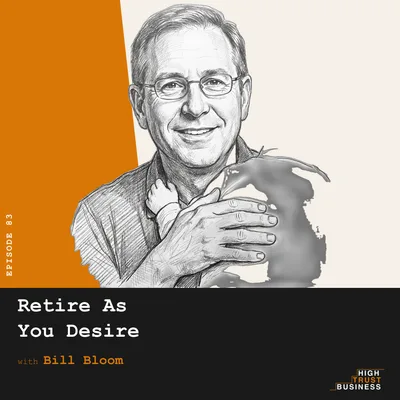
Bill Bloom's a financial advisor from Chicago who's cracked the code on turning books into business. His first book, 'The Yachter's Guide to Early Retirement,' opened doors to speaking gigs that still pay off today.
His second book, 'Retire As You Desire,' is a masterclass in titles that work. It rolls off the tongue, sticks in your head, and promises a specific outcome. But here's the smart part: Bill doesn't just hand out books and hope for the best.
He's built an entire system around the book. People read it, get interested, and funnel straight into his 'Retire As You Desire' workshops. These aren't one-off events either. Bill runs them regularly in his area, and they consistently fill his calendar with qualified prospects.
You'll hear exactly how he structures this system and why his approach works when so many other advisors struggle to get noticed.
Transcript
AI transcript provided as supporting material and may contain errors.
"Foreign."
Stuart: Welcome to another episode of the book More Show. It's Stuart Bell here and today we've got a great episode because we're talking with Bill Bloom. Bill's a financial advisor from Chicago. If you've been listening for any time to the show, you've probably heard me mention him before because it's a. Bill's got a great example of some books that really resonate and it's an example that always springs to mind. We've known Bill for a long time. He wrote his first book with us, which is the Yachter's Guide to Early Retirement a couple of years ago. That really dials in on a niche that he was engaging at the time. A lot of clients in that area. He's got a passion for sailing, so had some connections in that space. And that book really opened some doors to speaking engagements which continue to this day. And that's something that is going to be very interesting to a lot of people. That question comes up a lot. How can you leverage a book into speaking engagement? So that'll be a great story. The second thing that you'll want to take away from this is how it's spun off into something else. And Bill's now written a second book called Retire as yous Desire and has really built a brand around that name and what a name it is. I mean, it really resonates, it rolls off the tongue. There's something humorous about it. It sticks in your mind, but importantly, it delivers on a promise. It does what it says on the tin. It gives the indication of an outcome, of a better solution to people and really is a way of getting people to raise their hand. And once they've raised their hand, that funnel then leads into a meeting opportunity, a speaking opportunity, because he regularly now runs Retire as you Desire workshops in the local area. So Bill's doing some fantastic things up there. It's always a pleasure speaking to him. We've had the pleasure of following up with quite a few strategy calls, kind of one on one stuff to leverage this. This is just another example which I'm super excited to be able to share with you. So I'll let you get into this episode and then I'll catch up with you again after the show.
Bill Bloom: Mr. Bill Bloom.
Bill Bloom: Hello, sir, how are you?
Bill Bloom: Hey, how you doing?
Bill Bloom: Everything's good. How about yourself?
Bill Bloom: Fantastic, thank you. Fantastic. Really excited to catch up today. It's, it's been a while since last week. In fact, I think that you might have even got married and had a baby in the meantime.
Bill Bloom: That is so true. All that's happened, it's been a lot of fun. It's been a lot of work with the little one, but it's been life changing in the best way possible.
Bill Bloom: Fantastic. So exciting. Well, we're going to record the podcast now, so let's dive in with your background and, and then we can dive into a bit of what you've been doing particularly. And I think as people listen to this, you can get a lot from it because there's so many great examples. I know that certainly both myself and Betsy refer back to you as a case study when we're talking to other people.
Bill Bloom: Wow. Well, that's pretty neat. Well, my background is I live in the Chicagoland area. My wife and I live in downtown Chicago and we just had our first son. And I've been in the financial services business for over 10 years now. I started right out of college and it was a great experience because when I was studying in university, I realized that I definitely wanted to work with people. I wanted to figure out solutions for people and I definitely wanted to learn more about money and how money works and how it affects people's life in a positive or a negative way if you don't plan properly. And the way that my brain works, I'm just a planner in general, so I wanted to find a way to incorporate my skills but also have positive effect on others. So that's why I went into this business. And it's turned out to be a lot of fun growing my own business from that, because we're able to do everything from a customized standpoint for clients. Everything is about them. And I've been doing some new marketing tactics. The whole phrase retire as you desire, it always puts a smile on people's faces. Yeah, it's really hard not to laugh when you hear that. But it's genuine. It's very, very genuine. And that's our mission, that's our goal. Because I want to work with people who are 50 to 70 years old and help them not run out of money or plan for them not to run out of money in retirement, because that's the number one fear of retirees. And these are some of the areas that we're really trying to specialize in and focus on so we could help these clients.
Bill Bloom: And was that the plan from the start or it's coming into it straight out of school? I guess you had a certain set of ideas about the, how the business would go. But has that refined itself over the years or do you hit on that straight away? And just kind of run with it ever since.
Bill Bloom: I've been all over the place over the past 10 years. I think any business owner or anyone who is in a service industry will tell you that you have to try different ideas, different concepts, but you also have to figure out what you're really good at doing. And it took me, I would say seven years to really hone in on my skills. It took me a long time to figure that out. I know I loved helping people and working with people. It's just over time I realized that that age demographic, that 50 to 70 year old, is the perfect and ideal client for me. And the things that really helped me figure this out was strategic. Coach, you and I have talked about this before. That's just been a complete game changer for me because it really narrowed my focus down into not working with just anyone because I can't help everyone in the same way. I want to work with a certain group of clientele that need my help, that need what I actually do very, very well. So over the past three years I've really specialized in and really focus my practice in this area so that I can work with the right type of clients and then my skill set will be a compliment to them as well and for what they need for their planning.
Bill Bloom: That idea of picking that specialty because it's such a discipline to understand not who you couldn't help at all, but who you're least well served to help. Or kind of the point of view that every person that you're helping, that you're not best position to help. It is a certain truth that you're then not helping a person that you are in a position to help far more. It's difficult to if you're not used to dealing with that specific target audience. It's difficult to not allow the kind of the scarcity and the idea of turning away business, which absolutely is not the case. You find yourself with even more business once you start specializing. But it's difficult to in the early stages understand that mentality, that mindset switch of everything that I do, if it's within this target group can then be amplified and built on and provide even more value to it rather than trying to be too spread too thin, but less effective. But to a broader group it's definitely a. We hear it quite a lot when we talk about the books and picking that single target market. Trying to be specific and answer one question deeply rather than just kind of superficially trying to answer many questions. But it really does, like you said, make a Game changing difference in terms of how much you can offer and the value can offer to each individual person that meets that criteria.
Bill Bloom: Exactly. I completely agree with you. Because at the end of the day, you can't do everything you have to do who small subset of your unique ability, those things that you're really, really good at, just focus on them. Because there are other people in other areas who will be better than you. And you can't be everything to everyone. So it's okay to say no. And that's true for clients. I mean it's okay for them to say no to us or as business owners, it happens all the time and that's okay. But a lot of business owners, I think they struggle and they fail to say no because they want to please everyone. Yeah, you just can't do that. And once you get to that point, you, it's very powerful because you're able to focus on who you really want to attract into your company, into your business, the right type of customers or clients. And when you do that, you're going to be much happier, you're going to be in a much better place and your business is going to run a lot more efficiently. Yeah, because you have the processes set up.
Bill Bloom: Exactly. It's that the path is laid. There is one perfect path and then every deviation away from that gets less and less perfect. And to a certain point you can then get to a point where it becomes starts tripping over into problematic. Not just less than ideal, it's getting quite a lot less so these days because we're a bit more vocal and vociferous about saying that we can't do it and the reasons why we can't do it and there are ways to do it better. But in the early days we were very often having people come and say, okay, the 90 minute book process is recorded some content and then that gets created into the book. Well, I've actually recorded some content already. I was doing a webinar or I was talking from stage and that's been recorded. So why can't we use that and go forward from there? And although technically it is possible, the outcome every single time is less good for everyone involved, for us and clients. If we try and do it that way, because it's trying to shoehorn something that's not fit for purpose into the model, that definitely works. So you must see exactly the same of as people fall outside of that age group or come with a different set of assets or a different set of retirement outcomes away from what you can really amplify and deliver exemplary service for people. It's not that it can't be done. It's just too much of an overhead and for less good outcomes. So the retirees you desire. I was talking to Dean last night. I've just got back to Florida yesterday afternoon. Dean's just got back from Toronto the day before. So we were just quickly catching up. And I was saying that we were speaking today because obviously you guys have spoken in the past and used the retirency desire line and the same smile came across his face. So that as a concept, was that something that. How did you come about that in the first place? Was that kind of a brainstorming exercise or was it something that you'd been using but not necessarily having it as a hook, but then realized it was. It was really something that resonated with people.
Bill Bloom: So it's a great story. So for those of you who don't know, I did one of the 90 minute books and the title of that was the Yottter's guide to early retirement. Because I work with a lot of boaters and help them with their retirement planning. I do sailing, sailboat racing. So I wanted to use that book as a framework and transfer that over into basically the general public to help people just read a really simple guide as to how to retire properly and with ease and just really simplify the process. So I took the guts out of the Yotter's guide to early retirement and added content to the now retire as you desire. And my uncle and I were brainstorming. My uncle is very, very intelligent. And we were just spitting things back and forth, back and forth. And then that just came out and we both started laughing. It was just like that aha moment that you have a couple times. It's like, yes, that's it, we're done.
Bill Bloom: Mic drop, walk off.
Bill Bloom: Exactly. It's like, okay, we're done. This is perfect. Because the book had already been written at that point. It's just I didn't have a title and I wanted it something to be catchy, something that I could market and use as branding. Because at the end of the day for Bloom Financial, my company people, they could relate to that. But again, it just another financial services firm. If you look at it like that, it's Bloom Financial or Smith Financial or Whomever Financial. Right? Anyone could put their name on a product. But if you create a brand around something, that's why this whole retire as you desire, I'm transferring over all my branding to this because it puts a smile on your face, it's a warm resignation. And then at the end of the day, these people are actually able to conceptualize it's about them. Retire as you desire. Is that how Tom or Suzie or Joe wants to retire? It's all about you. And that's how I run my business. So that's why this is such a great correlation into how I run my practice, because everything is about the client.
Bill Bloom: And as you say, it's taking. It's them taking control. It's not retire as you've got no choice because you didn't plan. It's really forward pacing. That outcome we talk a lot about this kind of does exactly what it says on the tin type book title of it delivers the answer to a problem, a solution and a promise of an outcome. And that title really ticks all of those boxes. It's very clear what it's about. The audience, the group of people who would be interested, can very easily say, that's something I'm interested in, and raise their hand. There's no ambiguity about it. And it delivers the. It promises an outcome both in terms of the technical steps or the steps required and the promise of a better future. It's a positive outcome. There's no negative around it at all. It's. It's kind of all potential. So as far as the thing that gets people to raise their hand because they're the perfect cohort, they're the group of people who are the most interested. It just serves that purpose so well. And then this way, it rolls off the tongue and the smile it gives it, that is an added bonus that just, I think, amplifies it even more. So how's it been? So that was something that came from a brainstorming exercise. It was kind of a dedicated task to find that title. How did that then go down with the people who received it, with the customers? Has there been any surprises or any pleasant or unpleasant on how people have received that as a title? And once they've opted in the kind of rest of the process people feel good about, it delivers on its promise.
Bill Bloom: Well, it's taken sort of a life of its own within my practice and my clients, because I'll call a client and give them a review or just give them an update or say, we're going to make some changes, and they'll say, retire as you desire. And THEY CHUCKLE THEY LAUGH One of my team members, yeah, this is great. One of my team members, her husband always says, retire as you desire. Retire as you desire. Like every time I See him.
Bill Bloom: And it's just.
Bill Bloom: Exactly. It's really hard not to just laugh and not take it so seriously because money is taken extremely seriously. It's an emotional thing. Yeah, it's not. It's not black and white, especially for retirement. I mean, everybody wants to retire at some point. That's the goal. That's society's goal. Society says you have to retire, you should retire. And it's just figuring out how to do that is the hard part. So as far as the life that it's taken on, I just started over the past couple months is hosting retire as you desire workshops. So this is a new concept that we've created. Every single month we're going to be hosting at least two different workshops all around the Chicagoland area. So that way we're able to have potentially prospects and clients, but people who just want to learn what are those simple steps that my book talks about on how to retire as you desire? So that way people can come, spend an hour and a half or two hours in an evening. There's no charge to come to this. It's all complementary, which is the way it should be. But even if they're working with another advisor or they're doing things themselves or they're a current client, they're getting the basics. And that's what I'm trying to preach to everyone in this age demographic is it's really not that difficult to retire as your desire if you follow these steps.
Bill Bloom: Right.
Bill Bloom: Really not rocket science. And the hard part is everyone's scenario is different. So you have to plan for that. And that's why, that's why there are retirement planners. That's why there are investment advisors of people who work in these different areas. So right now with the retire as you desire workshops, they correlate directly with the book. So the marketing is all working together now, I feel, in a much more smoother fashion. And it's had a really warm reception with these workshops.
Bill Bloom: I think that not only is it from your perspective and the organization's perspective that can. Consistency of message all the way through makes it more effective because it amplifies on itself and it makes it easier because it's a common language, but from the, from the customer's point of view as well. In any subject, it's difficult going from that kind of entry level step through the first basics to kind of that, that first threshold of anything meaningful. And in financial circles, it's even more complicated because the nature of the product, the industry intentionally doesn't necessarily make it straightforward. The layers of regulation and what can and can't be done isn't necessarily straightforward. The fact that it's consistently changing and there's a. You're trying to plan for a. Somewhere between a kind of a 20 and 50 year event. But in cycles where things could potentially change every four years. So even the, in even this particular environment is complicated. So I would imagine it's the case that a lot of people don't even take those first steps because they're kind of dissuaded from doing it or they're not inclined to do it or they're scared to take the first steps. So there is a big group of people who would benefit even just being able to get to that basic threshold of something effective. And I think that's where this really sits in. There's always more complicated things down the track. But finding a way of giving people something that gets them to that first stage is such a huge return for them as an individual. But also in the broader sense of helping people get to that first level where it's worthwhile without it becoming overwhelming. And then there's always stuff afterwards if they want to take it further.
Bill Bloom: Correct. And it's really hard for people to take action if they haven't thought about things again. Everyone wants to retire, but how do I do it? How does that work? How would that actually look in retirement?
Bill Bloom: There's so many moving pieces. It's difficult to imagine what that outcome is for something that some parts of your life seems so far away and then it's almost like there's one person second in a person's life cycle where it's the perfect time to think it's too far in the distance to worry about what I'm concerned about. And then immediately, two seconds later, oh my God, it's too late. And what's the point? It really seems like it's one of those things that it's. It's not. Although in actuality there is a kind of long in the middle. But psychologically it very much flip flops from it's a long time in the future. It's how I used to revise for examples. I've got plenty of time. I've got plenty of time. Oh, it's too late now. It's not even worth starting. It's one of the things that. One of the themes that I see in the stuff that you do and that keeping it simple and helping people in a very non overwhelming way, helping to move forward. One of the things that is backed up is the book itself, I mean it's, it's so straightforward. It's such a simple and easy to consume read. It's not intimidating in any way. And even just in its length, I mean the book itself is about 25 pages long. We often get conversations with people who get very fixated on the length of the book, the page count itself. Have you found that the fact that this is a shorter read is beneficial?
Bill Bloom: Well, I was fixated on that page count too. Even when I did my first book, I was like, wow, this looks really short. But to get your point across, you don't have to have a thousand page book. I think that over complicates things, especially when you're talking about retirement. If you could create a repeatable process, and that's what we have, it's repeatable. Everyone goes down the same path. It's not, it's not like we're going to do something different with this person. This person, they're dollars may be invested differently, which is almost always going to be the case, but the process which is key. It's like you look at Marcus Lemonis, he talks about process, the product, the people, you know, your three three P's. Yeah, we have that repeatable process down. So everyone that we talk to is going to be walked down the same path, which I think repeatable. And when you look at the book, you could, if you have a 45 minute flight or an hour flight somewhere, or if you're flying down to Florida from Chicago, you could finish the book and take a ton of notes and then go back to your advisor or call us to help you with these, with this process because it's not meant to be difficult. We want to simplify that because it's already hard enough for people, for their money.
Bill Bloom: And that's so much of the key, I think, to the success that you're seeing is these small incremental steps, the kind of minimum viable commitment as I call it, to move people from one to the next to the next. It's not about. You're absolutely not trying to overwhelm them and show them like make the point that you're clever and more intelligent. Therefore they can't possibly do it by themselves, that they have to work with you. This is the exact opposite end of the spectrum of trying to empower people to take some steps and you being there as their trusted partner to help them through the process. A process that isn't daunting or overwhelming. So the books created, the frameworks in place, everyone comes through the process, the Process is pretty refined organizationally. It's kind of embedded in the organization so that everyone's on the same page and there's a clear path that people follow. So getting people in to that process in the beginning, identifying who would be best suited to get the book in their hands, what have you guys found to be effective in doing that top of the funnel kind of marketing? How do you get the book in front of people for them to then raise their hand and say, yes, this is something I'm interested in and start the journey?
Bill Bloom: Yeah. So speaking engagements, that's been the number one thing, especially with the otter's guide to early retirement. I know we're going back and forth a little bit here, but I've had quite a few speaking engagements from that. And that correlates into retire as you desire. Because now with these workshops and getting, I mean, in Chicago, we have the largest harbor system in America. People wouldn't suspect that because we have terrible weather most of the year, but
Bill Bloom: we have the real hardcore sailors.
Bill Bloom: Oh, my gosh. Yeah. We have a huge boating community here. And that's one of my target markets. So with that book, the first book, I've been able to speak at the Chicago Boat show every year for however many past years and then go to different sailing clubs or different marinas to talk in the off season to help these people. Because when you look at boating, that's sort of a dying breed. There's not a lot of millennials who are buying cars, boats, or even houses for that matter.
Bill Bloom: Right.
Bill Bloom: So that's been a huge topic to. Okay, how can people afford to keep their boat and yachting lifestyle in retirement? That's what the other book talks about, this retire as you desire book, you know, to get people raising their hands. What I'm working on right now, and I know, you know, this is that retirement readiness scorecard or the retire as you desire scorecard. So we're going to be marketing this on Facebook, still figuring out those details. It's not done yet, but everything is progress. There's never perfection in any of these marketing ideas. It's just trying to make progress every day. 1% better get better. So currently working on this retirement or this retire as you desire scorecard is what we're calling it. So that way people can look at it, either download it or do their own simple self assessment, and they're going to say, wow, I'm really ready for retirement. I'm super confident. I'm scoring very high. And I've done a lot of the planning Already, but the majority of others are going to fall on the. You know what, I probably haven't done enough homework or research on this. I could probably use an expert's opinion or a professional's opinion and find someone who really works in this area day in and day out. And that's where I think we're going to see a lot of traction and a lot of, a lot more people to raise their hands to say, you know what, I need some help. Even if it's just for one topic of the retirement planning process or do the whole process, I need assistance.
Bill Bloom: Yeah, I think we should catch up in. We should follow up with another show in a couple of months time and follow up on that scorecard piece. Because talking now about, as I mentioned at the beginning of the show, we're going to be talking offline afterwards. So talking now about it in its early days. And then we can loop back and talk about how it's been implemented and fits into the funnel overall, I think that'll be super exciting, interesting for people. Let me look back though, to what you were saying about the speaking engagements. I was just writing as part of a project we've got with some doctors, kind of a, a white label type project that we're doing. We were just writing a guide. So now that you've completed the book in this particular framework that we're talking about, here's the first five steps that you can do. And one of the points within that is highlighting the opportunity for speaking events and the fact that it opens doors and presents you in a way that without the book, may be not as effective or maybe more difficult to get set up. So can you talk a little bit more about that, the speaking opportunities that have come up? Because I think that's going to be very interesting for people listening, kind of. How did you, with these relationships that you already had or were you reaching out cold to groups with the idea of speaking?
Bill Bloom: So over my career we've done a lot of the seminar type workshops per se, where you come and you have a dinner that was really popular five years ago, eight years ago, because everyone wanted to come have a steak dinner and listen to a presentation. And you know, the whole industry has changed. That might work for some people, but it didn't work for me. I don't, I don't want to have to, you know, offer you a meal for you to come and talk to us again. You have to find the right clients. Right. It's not about everyone. It's. There's a lot of people Who? They call them plate lickers in the industry. I didn't create that, so I can't take credit, but
Bill Bloom: it's pretty discreet.
Bill Bloom: Yeah, yeah, yeah. That's a good way to save money in retirement. Right?
Bill Bloom: But that's a whole other book.
Bill Bloom: Yeah, exactly, exactly. I should create that one. That's a good idea. But right now, it all started with the Chicago Boat Show. I don't know how this happened, but I. I was asked to speak there because I set up a booth the year before just to hand out copies of the book and just. Just be there. It was a spur of the moment type of scenario. I'm a quick start, so if I have an idea, I'm gonna run with it. So that's what I did. It was two weeks before the boat show, this is maybe four or five years ago. And they said, yes, we have a booth open. Here it is. It's 1,000 bucks. I said, okay, let's do it. So I called my wholesalers, hey, can you give me some support? Can you help me with this? And they said, sure. And then the next year they had asked me, why don't you do a presentation on your book? I'm like, oh, that would be great. So I spoke three times at the boat show for the past however many years. And then that has led into these different sailing clubs around Chicago and the different marinas because they want to provide value for their clientele and their customers to keep them engaged. So I've been able to go to these different harbors and different marinas and do these really simple presentations, like what I would do at the boat show, because people in the audience who came to listen to the presentation have invited me to their marinas and to their. To their clubs.
Bill Bloom: Fantastic. Sorry.
Bill Bloom: It's organic. It's organic, right?
Bill Bloom: Yeah, yeah, that. The conversation I was having. It's so funny how coincidences like that happened. The conversation I was having last week with these. The guys followed a very similar path. I was using someone else as an example. But that small seed of a speaking opportunity that then grew into something else organizationally, because it was these sister organizations or complementary organizations that once one person had seen it in a completely organic, non orchestrated way, had just grown into something bigger. And then I was saying that keeping it as authentic as possible, but these opportunities have arisen almost coincidentally, almost in spite of any particular activity that you were taking. But you can imagine orchestrating it a little bit more if that was something that you really wanted to do, if you really wanted to use the book. As an intro into speaking into particular areas, orchestrating it a little bit more so that maybe the content is recorded. And then you can pass that off to other organizations and use that as the example of where you've spoken before. Or reach out to other organizations and invite them to the. To the initial opportunity. Just ways of kind of making the connections and building on the evidence and proof of the work that you've done before. Because the aim is to get in front of more people because you know you can help them. You're not trying to get in front of more people because you're getting paid to speak at these events. And it's the product. Isn't you speaking the product? The value is the fact that you can help all of these people. And I think because that's organic, because it's authentic, organizations appreciate and resonate that it's the message that's important and the value that's given to the members. And I think you're dead right. Organizations these days are looking for ways of increasing the engagement, increasing the value that they're given to their members. So by being able to provide something that's complementary, particularly where it's dialed in. And the Yachter's Guide to Retirement is very specific to that boating community, that group of people that can resonate with the message that's being told. All of that adds to create something that's much greater and much better than just pushing stuff out there in the hope that it will resonate with some groups and just doing a kind of burn and churn type thing, getting through the numbers and hoping that enough people fall out of the bottom that it makes it all worthwhile. It's so great to hear another story about how that has organically came up and been able to get in front of all of those additional people.
Bill Bloom: And that's been fun too, because that's part of my unique ability and that's what I like doing. It's not work. I mean, going on a Saturday morning or a Monday evening for some of the examples that I've done, not work. It's things that give you energy, things that you enjoy doing. And I love doing those things. And that's why that correlates directly into these new retire as you desire workshops. So that's purely educational. It's not product driven. It's all about the process. What is the process that I need to follow to allow me to retire as I desire? Retire as you desire. So that's where, I mean, these other speaking engagements really gave me the idea to do these workshops to help people and really just give them the right information because there's too much information out there. That's the problem with a lot of the world that we live in now.
Bill Bloom: So the follow on from the. So the general path would be someone that would have some visibility of the retirement as you desire book or the model. At least they would then come into the workshop where again, it's more information that's being presented to them for free, more things that they can take away towards the end of that process as you look into engage more directly with the people who are ready to take action. Now, what's that transition? Do you make an offer at the end of individualized assessments or is there additional materials that's given out at the end? What's that kind of transition towards the end of the presentation process?
Bill Bloom: So towards the end of the presentation, there's always an opportunity just to have your scenario where you're at, analyzed. I mean, that's where you need to start. Whether you work with us or someone else is you have to have your numbers ran, you have to look at where you're at. Because I'm going to give you my bread and butter. I'm going to simplify this for everyone listening. So when you're doing your retirement planning, and we talk about this in the workshop, is you need to know what your fixed expenses are. This is where you need to start, right? What I mean by that is you're going to have food cost every month, you're going to have potentially mortgage, maybe not in retirement, hopefully not. But you also have your insurances, your property taxes, you have your the gas for your car, those fixed expenses that you're never going to get rid of, that's what you need to solve for. So if you're able to take care of all of your fixed expenses that you're going to have every month for the next 10, 20, 30, 40 years in retirement. If you know you have an income stream coming in every single month that will pay for that, at that point you're able to retire. If you think about it, you know you have your fixed expenses covered between your Social Security, potential pensions and other income streams from your investments. So when we solve for that, that way you're able to utilize your other monies for the vacations. If you love knitting, if you love golfing, if you love classic cars, if you love going to your lake house, if you love taking your grandkids to Disney, all these different areas, that's where your monies are going to be able to do those things that you love doing that you really worked so hard all of your life to enjoy. That's the whole point of retirement. So you need to solve for your fixed expenses first. And that's what we do, that's what we preach, have those covered, because then your other assets can go towards actually doing the things you want to do with your time. And that's why you saved for retirement. And that's really the basis.
Bill Bloom: And that bridge across that conversation into the. From the general ideas of this is what you want to be looking into the specifics of your situation. Do you find that because the whole framework is kept at a relatively straightforward level, you're not using necessarily industry language, you're not using special calculations that you're trying to show people on screen. Does that make it even more effective for people? Because it's keeping that simple, easy to understand framework. Do you find that more people take action?
Bill Bloom: Absolutely. Because the phrase that I use, and again, I learned this from a strategic coach, is when you're in the gap. I use the gap as the framework because, for instance, as a business owner, when you're in the gap, you're really not focusing on your ideas and your, the products and your, and your process. You might be a little fuzzy at that time. The same goes into your retirement planning. We need to look at what your income gap is. Because, for instance, I'm just going to use simple numbers right here.
Bill Bloom: Yeah.
Bill Bloom: Let's say if you have $3,000 a month of Social Security money coming in and you have $5,000 a month of fixed expenses, so you know you have to have Approximately at least $60,000 a year of income coming in, and your Social Security is only covering a portion of that.
Bill Bloom: Right.
Bill Bloom: So how do you close that income gap of $2,000 a month? Most people say, I have no clue.
Bill Bloom: Right.
Bill Bloom: I don't want to, I don't want to research thousands and thousands of investment products that are available. There's a certain group, a certain handful of people out there that love doing that stuff. And they come to these workshops because they love learning. And I love those people. I think they're fantastic because they have great questions, they want to learn, and they're still using their brains, which is a big part of retirement. You have to stay active. But I'm getting a little off topic. But what we do is we solve for that $2,000 gap for this example and help them, give them confidence, because they're going to know that they have that money coming in every single month. To help them live the lifestyle that they want. That's the whole retire as you desire formula.
Bill Bloom: Yeah. And it's as you said earlier, it's that specific target, it's the thing that they're going for. You solved for a particular problem rather than a generic open ended, you need to do better at planning or you need to fix this bigger problem. It makes it much more achievable and specific, I guess rather than just the kind of general, oh, we should be doing something, I need to do something. There are so many options, it's overwhelming to look at. It makes it more of a bite size achievable thing to address.
Bill Bloom: It simplifies it.
Bill Bloom: Right? Yeah, yeah, yeah. One of the other things we talk about often is kind of got cold leads or the unknown, the invisible leads that you're not in a relationship with yet. That's one of the funnels coming in. The other one, particularly for businesses that have been established for a while, is kind of the referral and recommendation side of things. So do you use either the books in that context either with existing customers or with kind of like a complementary non competing businesses?
Bill Bloom: Well, that book is really the key for everything because you can go on our website, if you go to retires you desire.com right. When you go to the website you can ask for a free copy of the book. So we'll send you a digital copy. So that's one way that we have people raising their hand saying I'd like to read this. I saw your billboard or I saw your ad or I saw your workshop. And I'm just curious. And that's a great starting point. The whole follow through is to be very frank with you has been a struggle. And that's something we're working on. This is the progress portion of things. And I think these workshops are, you are going to help people because they're all around the Chicagoland area. They're going to be in most of the different suburbs around here. So that way people could, okay, they don't have to drive an hour and a half to come to one of these. They know that next month there will be one 20 minutes away from my house. I'll go to that one. So that starts the process that keeps them engaged. They're able to receive the monthly newsletters that we send out in the market updates which are definitely important for your retirement planning. This whole process is coming into fruition right now. It's been very difficult because when you have someone raising their hand here and then there and then everywhere, how do you keep track of that? So my team is creating a process right now to handle all of this.
Bill Bloom: Yeah, those market updates. That's a great point. We've been talking the last couple of shows about using podcasts as a way to generate content in a relatively straightforward way that can kind of facilitate that constant communication, that being able to stay in touch with people. Market updates. So we do this a lot in the real estate side of things. Refer to that as market watches. Talk about properties coming on and off the market. But from a financial point of view, anything where there's regularly updating data that you can take and get a hold of in a relatively straightforward way, but add a little bit of the Bill Blue Magic to it and some commentary and some personality, something to make it simplified for people. That as a regular source of information or regular reason to reach out, is another great way of kind of ticking that box. Because at the end of the day, just like the book isn't trying to teach them everything about the solution, the market data isn't trying to fill them in on all of the information. It's just reminding people that this information is changing and there's a reason you need to take a next step. And here are the next steps that you can take. So quite often we'll have conversations where people will struggle with that stage of regular being able to stay in touch with people. But I think something like market data, something that is out there that you can immediately get your hands on, so you're not having to create it all yourself, but then you add some personality to it, and that's the reason to differentiate and. And an excuse to send out perfect opportunity. How regularly is that? On a monthly kind of schedule as well?
Bill Bloom: Yes, those are able to be received monthly and you could simply opt in with that. Even when you go and download the book, when we send you that free copy of it, you're able to sign up for those monthly updates. And the nice thing about it is that we also offer some other types of client events or client appreciation events for the people who we've spoken to. And we just really want to have the right people to work with, the people who want help, the people who want to actually sit down and do the full process. And it's really from a big picture standpoint, we really have been able to create a process that's simple and repeatable so that people. This doesn't have to take forever to do. It's just we're able to get these assets in place to help them in a very Very easy manner in an easy fashion. Stuart?
Bill Bloom: Yeah, those baby steps that it's a simple next step, but a very obvious next step and the impression or the idea that there is a path to follow and each step will lead to the next stage. I think there's, there's a saying for an old UK TV show years ago saying people are desperate to be followed, desperate to be led. Even the most powerful or engaged people, they fall into that same category. So I think having that process that is very refined, very repeatable, it really does tick that box. One of the things, quick, I'm just super conscious of your time, so wrap up in a second. But one of the things you mentioned there is the market watch data, there's a separate opt in for that. Is there any reason that you wouldn't send that to everyone opting for the book anyway?
Bill Bloom: Yes, I mean that's, that's the process that we're trying to really enhance and make better on our end. Because again, you can't do everything. Not a good use of my time because this is something I'm not good at. I could barely use my computer. So trying to. My wife is an Excel spreadsheet genius and I'm clueless with that. I'm very clueless because we have our systems that do all of our formulas and things of that nature for us. So. But my wife always laughs at me like, I don't understand how you don't use this. I go, well, we have other systems to do these things for us. And yeah, as far as like when you download the book, having them go to the website or download the information, my team is starting to correlate that into, okay, let's get them on the mailing list, let's get them on the email list so that they could always unsubscribe at that point if they don't want it or if they get too much of that. But that is a process that my team is working on right now.
Bill Bloom: Fantastic. I think, like you say, I mean it's really the case that you get some people where it's just kind of aim, aim, aim, fire, and some people who are kind of fire, aim, aim, and then kind of everything in between. It's. I think it's a lesson for everyone is to keep moving in a forward direction, but don't think that all of the ducks need to be in a row before you even pull the trigger. It's much more beneficial to start moving and then dial it in rather than being too concerned about every piece needing to be in place on. On day one. Okay. So that is. I think that that's a great place to leave it. We've had the idea, we've gone from the idea and the framework through to the best way of engaging people and then how you're speaking with them and then following up afterwards. We'll definitely catch up again and do another show in a couple of months time. I think once we've got the scorecard up and running, because that is going to be very interest for people to hear how that's resonating because it really does separate out this idea of the book is a great, what we would call a profit activator number two tool. Getting people to raise their hands and then the scorecard is one of the great tools for kind of educating and motivating people to take the next step because it allows them, as you said earlier, to evidence themselves that there is a next step. And they're at this stage and the best next step is to engage and ask more questions of you guys. So that's really going to be interesting. As people listen to this, find out more about what you guys do. Is retire as you desire.com the best place for them to go. And check that out.
Bill Bloom: That is the best place. Yes. Retire as you desire.com check us out today. Thank you so much.
Bill Bloom: Fantastic. Now that's a pleasure. Thanks everyone for listening. I'll keep you posted on the progress that we have at this end and we'll get Bill back on in a couple of months and we'll talk about school cards a little bit more. I'll put links to Bill's website in the in the show notes. So head over to 90minutebooks.com podcast and check out the latest show here with Bill. We've got some other interviews with people in the past as well. So there is an interviews tag on the podcast page. So check out some of the interviews or if you listen to this at some point in the future, then dive back into the interview and find this one with Bill. Bill, thanks again for your time. I know we're going to drop off the call quickly here. I'm going to go and grab a coffee and let my voice recover slightly. And then we're going to catch up on some stuff offline which, which we'll be able to share with people in a little while. So thanks again. It was a great show. And then I look forward to speaking to you very soon.
Bill Bloom: Same here. Thank you for everything.
Bill Bloom: And there we have it.
Stuart: What a great episode. So happy to be able to share Bill's story with you. Hopefully his experience will inspire you to do the same with either a bit
Bill Bloom: book that you already have or if
Stuart: you haven't yet created yours, just inspire you to take that step and get something created, something out there engaging those customers. If you want to do that, there's a couple of options which are the next step.
Bill Bloom: If you haven't already, then download a
Stuart: copy of the 90 Minute Book at 90minutebook.com that will give you a great framework for building something great that engages that group of customers. If you've done that, then the next thing to do would be to go to bookblueprintscore.com and score your book idea against the eight mindsets of the book Blueprint Scorecard. That will show you where you've already kind of excelled with the idea and some opportunities to kind of amplify that book so that you really make the most of it. If you want to continue the conversation
Bill Bloom: here, then we'd love to have you
Stuart: as a guest on the show. It'd be really great to talk through your book idea either before it's created and what it could be, or after it's created and how you can best market it and get it in front of people. So if you want to do that, Then head across to 90minutebooks.com guest and just fill in the guest details and we'll be in touch. And of course, if you want us to help get your book out there, truly believe it's the quickest way of getting it done, then just head over to 90minutebooks.com start and you'll see the option and pull the trigger and get going.
Bill Bloom: So until next time, thanks everyone and
Stuart: we'll catch you in the next one.