Chapters
Show Highlights
- Books can target potential employees who haven't considered your industry as a career path
- Sequential books can serve different business functions: recruiting, culture building, and customer relations
- Setting ambitious goals like creating 99 millionaires gives your team something bigger to work toward
- Your book strategy should reflect your company values and how you treat people
- Industry passion combined with business strategy creates more authentic marketing materials
- Books work as internal tools for reinforcing company philosophy with existing team members
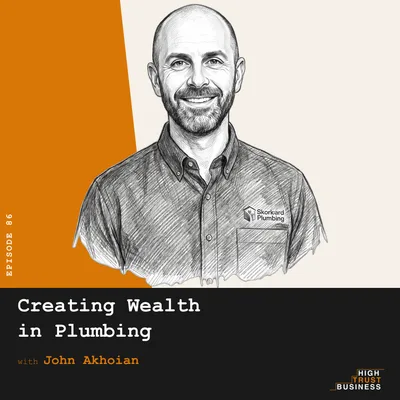
John Akhoian owns Rooter Hero, a plumbing company operating across California and Arizona. What sets him apart isn't just his business success, it's how he thinks about the entire plumbing industry.
John's written three books, each serving a different purpose in his business strategy. His first book targets potential employees who might never have considered plumbing as a career path. The second focuses on his goal of creating 99 millionaires within the plumbing business. His latest, Values First, reinforces how his company treats both team members and customers.
This conversation shows you how one business owner uses books strategically, not just for customers but for recruiting, team building, and company culture. John's passion for elevating the entire plumbing industry comes through clearly.
You'll walk away with specific ideas about using books beyond just customer acquisition.
Transcript
AI transcript provided as supporting material and may contain errors.
Stuart: Hey, everyone. Welcome to another episode of the Bookmore Show. It's Stuart Bell here, and today got the great pleasure of being joined by John Coyne. John owns Router Hero, a plumbing company based out in California and Arizona. And we're going to talk today about the three books he's written. What's really interesting, I love about John is the passion that he brings to the subject, not only for the passion for his own company, but also the industry as a whole and what other plumbers and tradespeople can do to really amplify their business and set up a company, an organization, a business that's going to provide for them and their family and also kind of leave that legacy, build something that's really meaningful. The passion that John's got really comes across and the interesting approach they've taken to the three books, really covering the three pillars of who they're trying to engage with and the difference that they're trying to make. It's very much on target with his passion because it's looking outside or beyond or bigger than just the campaign level, which we often talk about here. So let's get to it. Hey, John, welcome to the show. How are you doing?
John Akhoian: Good, thank you, Stuart.
Stuart: Well, today we've got John o' Coyne with us. He's written a number of books with us. Most recently the Values Pursed book, which is about the subheading on that is a principle driven leadership. And then prior to that there was creating 99 millionaires, and then there were ones before that. So rather than me giving a brief history, John, do you want to share kind of your backstory with the audience and then kind of talk just briefly about. About the books you've written and then we can dive into some details after that.
John Akhoian: Yeah, sure, Stuart. I. So I started in the plumbing industry when I was 17 years old. My dad passed away and he had a heart attack. I was going to high school at the time and had plans to graduate high school, go to college and be an attorney. And his tragic death really changed our lives. I ended up actually dropping out of high school, going to work with a plumber family member that had a plumbing company to learn the trades because we had bought a house back then and my dad was the breadwinner and I felt an obligation to. To, you know, take over and help out and pay the bills and do all that. My mom was worried about losing the house and who's going to pay the mortgage. And it was. It was a very big deal. I even contemplated on jumping in and driving My dad's truck because he was a truck driver without really thinking a whole lot about, you know, what. What I was going to do. But then, you know, my mom said, no, it's. It's better if you go learn a trade, you know, and instead of being a truck driver, because, you know, your dad's never home when he's traveling the truck, and I want you to be home for your family. Yeah, that's how I got into the trades. And it's. It's been the best thing that's ever happened to me because, you know, I've. I've just been able to accomplish a lot being in the trades, and it led me to write, you know, the books that I wrote, and everything is based on being in the trades and how, you know, being in the trades is a good thing.
Stuart: Yeah. So those. That journey from kind of working with a family member through to branching out by yourself, was that relatively quick or did that take some time in the trenches, as it were, before you kind of branched out by yourself?
John Akhoian: Yeah. So I had. I knew I had to learn the trade early regardless, because when I first started, I started as a helper, and I was making $25 a day as a helper working with the family friend who's a plumber. We sold the truck and had enough money to pay the mortgage for a certain amount of time. So I knew I only had a couple years to really start making good money in the trade so I could start picking up the bills and everything. And so by. I started When I was 17, by 19, I think, actually, within six months, I went from an apprentice to. I was. I was running all the calls myself. I was doing all the work myself. My. My. The family friend I was working for used to leave me alone. Hey, go. Here's. Here's all the appointments today. You know, go do them and come back. And I used to do that, come back. So then it got to a point where, you know, I just wanted to grow beyond because I had to make more money. And. And I was just capped out by him because his, you know, his top pay was $60 a day back then, or $65 a day. So I reached that rather quickly, and we had a conversation. I asked him, I said, hey, you know, we could. I could help you build this. Maybe we add more trucks and. And all of that. And he said, no, I'm comfortable having one truck. I don't want to go beyond this. I don't want the headaches. So he told me, he said, look, your options Here you could go work for a big company that's growing and keep growing with them, or you could go start your own thing. What do you want to do? And I said, you know what? I'll go start my own thing. At 19 is when I started my first plumbing company.
Stuart: That's such a fast turnaround from kind of coming into the industry to learning the ropes, to starting to excel in the organization or the company that you were to go out by yourself, that's a pretty fast turnaround. I think even with someone with a plan, to have executed that quickly would have been a fast track. But to have been thrust into it, that's. It's a quick turnaround. So from the point you went out by yourself, then, was that pretty smooth sailing after that, or was it more of a. Were there other things to it other than just doing the jobs that were a surprise?
John Akhoian: Yeah, well, it was. There was always something that came up. I mean, it wasn't smooth. It wasn't smooth sailing. So I quickly learned that, you know, I had to start working on getting me customers and getting me work, because, you know, know when you're first starting, that's. That's the biggest problem. So, yeah, so at 19, when I. When I left and started my business, I mean, I was forced to do it quickly and learn to trade quickly. But I really loved the plumbing trade. I was just, you know, after day one, I completely fell in love with it. So it wasn't hard to learn because it felt like something I wanted to continue to do for the rest of my life. But, yeah, when I. When I went out on my own, first of all, you know, it was a challenge getting the licensing. You know, I remember when I applied for my California State License Board exam. You know, back then, you know, they had a review board review my application, and I had to meet with some members from California State License Board that questioned me about, you know, my age. And, you know, they said I was. I was one of the youngest licensed applicants out there. So I had to convince them that I was ready for it, that I had been working with my uncle for a while.
Stuart: So it wasn't even just an automated process where there were a lot of hoops to jump through. You actually had to face to face with someone and convince them that you were legitimate. This wasn't just some kid trying to do something that they weren't truly prepared for.
John Akhoian: Right, right. So, I mean, I had that challenge and then the challenge of finding customers, you know, finding people to work for. So it was. It just Took it a day at a time. I made a decision back then that I was going to work for, you know, 10, 12 hours a day. Either I'm number one, I'm going to be working on somebody's plumbing, or I'm going to be looking for somebody that needs plumbing work done. So those are going to be my two focuses. And that's exactly what I did. So I'd wake up early and I'd go knocking on doors, passing out flyers, visiting restaurants, you know, leaving my cards and doing. Sometimes I do that two, three, four days in a row without having one single service call.
Stuart: Right.
John Akhoian: And then all of a sudden, I'd get a couple of calls and off I was, you know, saving the day, fixing their plumbing.
Stuart: Right. And it's surprising how it works, the grouping together of things. Like you said, the fact that nothing will happen for a few days, and then there's a. A few things come through at once without that strong reliable source. It's such an up and down, both kind of in terms of the work that you try to do. And psychologically, it kind of goes from famine to feast a little bit. I can imagine pretty quickly you were looking for ways of kind of stabilizing that and making the business coming in a little bit more reliable or consistent.
John Akhoian: Yeah. And over time, that's exactly what happened, Stuart. You get one customer, and I started getting referrals. And my neighbor was an air conditioning contractor. His name was Alan. Lived across the street from my mom's house. So I did some networking with him. He had a lot of management company accounts, and he helped open the door and get me into a lot of relationships with his customers that, you know, and one thing led to the next and, you know, I within. Within, you know, short, you know, six months a year. I was busy every single day and I had more work than I could handle. Yeah, it was great.
Stuart: I think that's the same for so many businesses, isn't it? You start out with the idea and the execution of the work itself. Customer acquisition, the marketing side of it quickly becomes apparent that it's something you need to do, but without a strong plan, kind of throwing things at the wall, trying to see what works and just putting the effort, the grunt work into it. But then a couple of things come up, a couple of things start working, and you start to see the path towards more customers and then more referrals and more business. I guess it's a common path that a lot of people see of all of that work that you were doing then to Build new business was referrals. A lot of it after the first year or so.
John Akhoian: Yeah, I would say the toughest thing was the first year. I mean, you know, just it was day to day. And then after that, it got really busy. It got really busy after that. So I was, you know, at that point, I didn't really have to go out to the marketing part of it as much.
Stuart: Right.
John Akhoian: I was more, you know, spending more time doing the plumbing. And I ended up bringing a helper in. I bought a second truck and I trained him. It was a cousin of mine, kind of had the same. His. My aunt called me and said, hey, you know, your cousin doesn't like school and. And do you need a helper? I said, absolutely, I'll take him in. So I taught him how to do plumbing, and he's now out there doing really well.
Stuart: And what a great opportunity to kind of return the favor to the universe. That or the opportunity, at least the universe that you had. Kind of pay it backwards, if not pay it forwards.
John Akhoian: Yeah.
Stuart: Let's jump forward a little bit then to how our paths first crossed and the kind of thought of writing a book in the first place and then kind of look at what you're doing with it now, because that's obviously changed and developed over the couple of years that we've been doing things together. So where did the thought of the book come from in the first place? And I guess give everyone a bit of a backstory on what that the early books were and. And where we've gone from there.
John Akhoian: Yeah. So the. The first book I wrote was Creating Real wealth and. And it was a story of mine that how plumbing was plan B for me. Right. It was something I fell into. And with most people I deal with, you know, today we have, you know, a couple hundred plumbers working in our company, and I interact with them a lot, I talk to them. And most of them have fallen into plumbing through hardship, you know, because they started either laboring or doing something, and they eventually learned the trade of plumbing. But they all are really prideful about what they do. And it kind of happened to be the same thing for me because I fell into plumbing through hardship because I had to do something. And my mom wanted me to learn one of the trades and. And luckily we had a, you know, somebody in the family that knew plumbing. But the first book was about getting people in the trades because today we have more people retiring and getting out of the trades than people going into the trades. And, you know, one of the biggest problems is that people, you know, go out there and especially a lot of, you know, young adults, they go into, they go into schools and they get school debt and they come out and that's not really what they want to do. And like me, plumbing was plan B. A lot of people look at it like, hey, this isn't, you know, we'll only get into it if we fall into it. But it was to let everybody know that this is a great career path, that if you choose to go into the trades that you're going to be wanted, the demand is going to be there because our infrastructure, you know, everything is getting older and there's not enough tradespeople to fix it.
Stuart: Right. I was just gonna say with the population increasing, the demand increasing, but then people retiring out of the trades and they're not really being in the uk. It's very similar. Trade schools and the apprentice approaches were shut down 20 years ago for the majority. The kind of technical schools that were around far fewer now than there were 20 years ago. Because now everyone's following an academic route into kind of service or financial type industries. So there's a, there's a huge demand coupled with a dwindling supply of people.
John Akhoian: Yeah, and that's exactly what's going on in the US as well. And you know, it's an issue. So we, you know, we have a, in our company now, we have a apprentice program, we have a program where we teach people that come into the trades and we have our own school, we call it Hero University. And it was to attract people towards that, to let people know that hey, this is a very good career path. We have young adults coming in. Within six months they're starting to make, you know, 50, 60 thousand dollars a year, 70,000 a year. Within a year they're making a six digit income. So it's something that's real and you don't have to incur a lot of school debt for that to happen. In fact, we'll pay you while you're going through training.
Stuart: Right. And that's such a opportunity for people where their academic route isn't a preference. I mean, even for those who pick the trade because they want to be in the trade, it's a great route and a great career. But the opportunity for, the opportunity for people who wouldn't necessarily or hadn't previously necessarily thought about it as a first option to know that there is a relatively stable path from not knowing anything through an apprenticeship program where they're going to get their handheld and guided towards being successful at the End of it there's an income well they're going through and then at the end of it there's a career which is going to be more beneficial to them than a lot of other careers out there. It's always a surprise when I'm talking to people in trades and it's actually surprised. I talk about financial planners quite a lot. That's what a group of people that spring to mind as I'm using examples for the books. But it's surprising how many trade based books we've got. And I guess even my response to thinking about financial planners more than the trades is indicative of the schooling out there where it's just not something that's front of people's minds. They just don't think about that as an opportunity. But it's the perfect fit for so many people.
John Akhoian: Yeah, exactly. And some of it through budget cuts because when I was going to high school we had auto mechanics class and we also had a woodworks class. So people were encouraged to get into mechanics and do things of that nature like woodwork or whatever else. But because of budget cuts, I think those came out of the high schools and I think it created the dilemma. I think that's where it started.
Stuart: And then over time I think it reinforces itself. As soon as those first cuts are made, then the next group of people going through the system who weren't around when it was an option in the first place, never even think about it. It's not something that people are asking for. The just the awareness of it in general just removes itself by virtue of the fact that no one remembers what happens a few years ago. And as I can imagine it's the case that it doesn't take long for that just to fall out of fallout. Something that people are thinking about day by day. So the apprentice program that you've got is that something that typically oversubscribed popular within the local area? Because I know you've got a big organization with. I imagine that the turnover that you've got is with so many people is not insignificant. So does the apprentice program. Is that oversubscribed? And that leads to a lot of the staff that you then take up at the end.
John Akhoian: So yeah, the way it's kind of changed and evolved over time. The apprentice program. So initially we were hiring people that wanted to get in the program and we put them directly into the school and it's a hands on. So what we do is we have 50% of the time they spend working on mock up plumbing, which is hands on garbage disposals, faucets, other things that, you know, they get their hands on and they could take apart and put together. Then the other 30% is spent in classroom style theory, looking videos, concepts, code, and then they spend 20% of their time actually in the field working with another plumber, seeing him do the work, getting to know the tools and interacting with the real plumbing system. Because the mock up is really not exactly the way it works when you actually go out in the field. So initially we were hiring people and putting them right into the school. But we found out that we were getting a lot of turnover because people would get into it and you know, the concept was good. They wanted to get into it. And after we trained them, they'd go out in the field and they didn't like it. So what we did is we switched it around a little bit. Now we hire them, we put them out in the field for, you know, about 30 days, maybe, maybe a month and a half and they work with another plumber as a, as a helper. And then after that, you know, if they like what they've seen, then we put them through the school.
Stuart: Yeah, that's a super interesting. And that real world feedback from looking at where the pinch points were, where the challenges were, because I can imagine the clean classroom environment is one thing, but the slightly untidy real world is quite a different, quite a different day to day experience. So the fact that you've swapped it around so they get that real world experience first, if anything that's going to be the big deterrent. And if they make it through, then okay, now we're moving forward. It's almost like a filtering process for the people who are not likely to continue after the fact. Did that take a long time to, to realize or was it pretty apparent from the start?
John Akhoian: Well, it, we had to stop and analyze the results because it did take us. We went through two classes of people before we realized that our turnover was too high with the students and that we had to do something different. And when we started asking and analyzing and you know, peeling the onion backwards, we, we figured out that the biggest problem was that the people didn't really realize what they were up against once they went out in the field. So once they were out in the field, then they saw how, how difficult it was because you know, some of it's pretty labor intensive.
Stuart: Yeah.
John Akhoian: And they really had to get the feel for that. They had to crawl under houses, they had to get dirty, they had, they have to, you know, come across some, some really Bad plumbing situations and see if their stomach could handle. Handle it, you know, before they actually got into it because some people just said, hey, I just, I don't like it. You know, I thought I would, but I just don't like it. And that was the issue. But now that they went through it and if they, if they don't make it through that month and a half of, you know, ride along, then we don't put them through the class. Because if they don't make it through the month and a half ride along, then most likely they, they're not going to make it after we put them through the class. And we don't want to invest money and time into teaching them if they're not going to use the trade.
Stuart: Exactly. Because that's the realities of the job aren't going to change magically just because you've now got more skills. It's. You're still in the situation where you're trying to fix the same problems in the same conditions. Such a great insight. The book, the first book, the Secrets to Real wealth, how far down the process did that come into play? Was that something that you thought of as a lead generator for that part of the business for a while, or is it something that was very quickly kind of sparked as an idea and then was executed on?
John Akhoian: So, yeah, when, you know, we thought about. I was thinking about how to, you know, share the story, the story of how I got into plumbing and, you know, just share some of the statistics about the problem going on with the trades. And, and that kind of happened pretty quickly. I mean, when I was thinking about it, I always wanted to write a book. And when I saw the problem, I said, hey, this is a great solution because, you know, we can actually distribute this out to junior colleges. We could go straight to high schools, in fact.
Stuart: Right.
John Akhoian: You know, get. And it's a short book. It's got very short chapters and it's something that gets right into talking about the problem and what the solutions are. So it really helped us just create the awareness of the problem and see if there's people interested in wanting to come into the trades of plumbing. So. Yeah.
Stuart: And exactly said it does the job of making those invisible prospects visible. A term that we use a lot here. It's of all the population of all the high schools in all the local areas or all of the junior colleges without something like this or something serving that purpose of okay, who's broadly interested? That's just a single group of people. At least now you've got the Opportunity of identifying those people who are broadly interested and then continuing the conversation specifically with them, rather than kind of just having to shout out into the wilderness all the time and ask who's interested, who's interested, who's interested? Is it something that you're still using today or have you moved on from that now to look at other ways of engaging people?
John Akhoian: No, we're still using that actively today. We use it to send out to possible prospects if they're thinking about getting in the trades. We use it when we're doing, whenever we're doing any kind of job fairs and things like that. We'll take the book out there, we'll pass it out. And it's something that we continuously use in order to, you know, find prospects that want to get into the plumbing industry.
Stuart: Have you thought that anyone else is. Have your competitors seen the idea and tried to copy it yet, or are you still pretty much the only ones that are taking that approach?
John Akhoian: Well, I mean, there's, there's a lot of trade books and there's a lot of people promoting people going into the trades, which is all good, and to copy it. I mean, the book has some unique stories in there and experiences and that's really hard to copy. But I think anybody that's trying to solve the problem is doing good for the industry. So anybody that's in the trade then is looking at this as a possible opportunity to get people in the trades, is actually working on and helping solve the problem because, you know, it is getting to a point where, you know, more and more people are needed and we don't have enough people that are just shining the light on that problem.
Stuart: And that's such an interesting way of looking at it as well. It's kind of looking at the bigger picture. It's not just that you're trying to solve the problem for yourselves. It really is an industry wide issue that you're trying to address, not in a kind of altruistic type way. It's not just you trying to feather your own nest or look after your own, solve your own problem. It's really trying to do something to raise awareness across the board, the opportunity to kind of in the industry level. Is there anything, do any of the industry bodies take on this challenge of trying to find talent to come into the field or as industry bodies a little bit more focused on the licensing side of things and more of the rules and regulations, rather than kind of the making sure that there are enough people to do the job?
John Akhoian: Well, I think one of the biggest Challenges we have today is finding enough people. You know, unemployment rate is very, it's down to its lowest it's ever been as we're talking right now. That alone makes it challenging. And when you add the trade aspect to it, it makes it even more challenging than that. And there's just, it's, it's the biggest challenge in our industry right now is finding qualified people.
Stuart: Yeah, yeah. And as you say, it's a, all of the comments that we made before about the demographics and the changing desires of people, what they want out of work. It's just a problem that gets increasingly more difficult. So how then, so we move on from the first book to the next one was the, I guess give people a little bit of background on the next one and then where the idea from that came from and how that fits into your bigger picture.
John Akhoian: So one of the, one of my goals, I've had this goal from when I was a big follower of Zig Ziglar and one time he said this quote when I was listening to one of his talks. He said, if you help enough people achieve their goal, you will achieve yours. And it's always been a goal of mine to help people create wealth through this trade of plumbing. So the second book I wrote is called Creating 99 Millionaires. And in our company we've got a position which is a very unique position called a channel leader. And it's a experienced plumber that is a really good communicator that runs a team of plumbers, maybe anywhere from four to six plumbers that work with them in correlation in the field. And it's more of a sales role, you know, it's more of a how to go to customers, homes and you know, how to diagnose the more complicated issues and how to give them long term solutions. And we have luckily have had quite a few people in this role who've become millionaires because they made really good money. And it was one of my goals, and it still is one of my goals to create 100 of these millionaires, you know, guys that are really good at their trade, they're at the elite level where they're doing so well that you know, they're making good money, they're smart with their money, they're investing their money, they're putting it away because, because you know, in this, in this, in this environment, in the trades, not everybody is teaching people about money. They're not teaching them that a lot of them teach them about how to make money, but they won't teach them the Lessons about how to grow money or how to invest money and how to do this. And it's, it's been my personal mission to do that. And that's what the book does. It goes into talking about a story and we start with the end in mind and we start the book off with having a meeting with 99 millionaires. And, and these are all unique individuals that are channel leaders that are, that are working in correlation with the company goals and creating value for themselves and their family. And how this waiter that's in this meeting that's listening in and wants a little piece of this, you know, and wants, hey, what is, what is this thing that they're talking about? And yeah, and then, and then we go into talking about the benefits of this. And this is more to attract more experienced plumbers. So the first book we wrote was to attract people into the trades at the beginner level. And this book was more designed to attract people have experience in the plumbing industry that are having a hard time finding a way for them to use their knowledge and skill to create wealth for their themselves and their family.
Stuart: And is that quite a. The amount of people that move from company to company and the people out there in the industry, working in the industry, are they looking for this type of answer as well? It's something that kind of that known knowns and unknown unknowns type thing. Is this something that resonates with them because they're in it is something they're actively looking for or is it more of a education piece to kind of present the opportunity with and say, hey, you're doing all of this work, you're getting all this money. If you add these extra elements to it, it could be so much more beneficial.
John Akhoian: It's both. It's both. It talks about, it talks about both aspects. It's an educational piece about how to, how wealth is created. It doesn't go into any deep concepts, but it talks about, you know, how you have to get better, how you could make more money by becoming better and focusing on becoming a really good at your trade, your communication. And then it also goes into the concept about living below your means, how to save your money, how not to waste it and how to invest your money and how compound interest works and how, you know, how that will actually help it multiply. So it goes into both. It talks about a little bit about the trades, but it also talks about money.
Stuart: And the people who read that can receive a copy of it. Where are they, where are they coming across it? How are you getting the book out in front of them.
John Akhoian: So right now we've been doing a lot of pr. We've been, been on many podcasts that are trade specific and when the book, when people finish the book, they go to the back and we send them a copy, we'll send them a audio book or we'll send them a free book if they go in there and fill out a little bit of information. So we've been promoting it just through our regular PR channels, talking about podcasts, putting it out there in trades, sometimes putting it out there at job fairs.
Stuart: Yeah, that is always interesting how niche podcasts have become these days. Kind of think about the amount of time that podcasts were around and weren't getting that much traction outside of tech circles, I guess. But nowadays it really is one of the primary mediums of getting in front of people, particularly getting in front of people who are engaged and kind of passionate about the subject. Because it might not be, because it's still a little bit of work to get subscribed to a podcast feed. It's not quite as easy as just flipping on the tv, but the audience that those podcasts have are really the ones who are the most passionate and consuming as much information as they get. So to think that there are trade space podcasts out there as well, which when you think about it is obvious, but it really shows a development of the, the channel. Now it's really getting to those niches that are the next level down and really helping those audiences that are desperate for the information. Do you find that there are many, the podcasts that you're talking about, they trade space ones in the way that I'm anticipating. They are whether talking to other plumbers about building a better business or doing a better job.
John Akhoian: Yeah, I, you know, it's, it's been, we've gotten some response from both, you know, we've been on some trade specific ones and some that were more general and it's, it's just a matter of getting the content out there because what, what's happened is, you know, I had one person that actually had their, their son that was just getting into the trades, listened to the podcast because the dad heard it through a non trade specific podcast that we're.
Stuart: Ah, okay, yeah, yeah.
John Akhoian: And so it's just a matter of getting out there and then people hear it, they get inspired by it, they hear the talk and then they'll, they'll know somebody and they'll refer somebody or they'll go, hey, you got to hear this. Or in some cases you Know, we've had people fill out, go to the website and get a free book and then send it to a friend, go, hey, I saw this and I thought you would be interested in it. You know,
Stuart: it's surprising how the. How thin threads connect people together over time. It's almost. If you don't believe in destiny, it's almost an indicator that there's a bigger plan out there.
John Akhoian: Yeah, we're just putting the word out there and the universe is spreading it. You know, I think it's just making sure you get it out there and you talk about what you're passionate about and people that want to get into it will eventually get their hands on it.
Stuart: Yeah. Which ties in with what we talk about in the books quite a lot is that you don't know where it will lead to. The show that just went out last weekend as we're recording this with Bill Bloom, who is a financial planner. His first book was the Yachter's Guide to Early Retirement, because he was a financial planner and as a sailor, so had a lot of clients and connections and enjoyed being in that space. But that from a relatively thin thread, led to a booth at the Chicago Boat show. And from the booth the following year, they'd asked him to speak at the event. So all of, as he was describing it, they were all pretty thin threads. It wasn't a big orchestrated plan that he had going into it, but it was a series of very small steps that led now to pretty regular speaking engagements in front of the audience that he's really trying to. He can do the best work with. And that seems very similar with yourself, although a different route, but still creating assets, creating things that get out in front of people through as many channels as possible because you don't know which one's going to resonate with which group of people at which time. And it's only by getting things out there that you've got the opportunity that that could even happen. So of all of the work you've done, the first two that we're talking about here, of all of the work that you've done, are there any of them that have been surprising? You've maybe put a book into an environment that you didn't necessarily think was going to take off, but then really resonated with the group.
John Akhoian: Well, I did get a lot of good response off of the second book we wrote, creating 99 millionaires. It was. I have a lot of friends in the trade and I heard, you know, a lot of people tell me how inspiring it Was. And, and it even inspired others to write books as well, which is great because. Yeah, you know, we're getting the message out there that being in the trades is a good place to be. I mean it's not, it's not a bad place to be.
Stuart: Yeah.
John Akhoian: And it doesn't have to be plan B. It could always.
Stuart: It could be plan A. Yeah, yeah. And a very profitable planet. Yeah.
John Akhoian: Yeah.
Stuart: You started to mention the fall. I think I cut you off, but you started to mention the follow up after people opt in to the, to the second book and there's the opportunity to send them the physical copy. But I guess on, on both of them and then we'll talk about the other books in a minute. But on both of them, is there a funnel that people follow through once they've opted in? Is the kind of orchestrated path that they follow afterwards? Or are you trying to capture people more in the moment and don't so much focus on the follow up?
John Akhoian: We do, we do follow up. Whenever people go in there and request a book, they give us information. And we have a full time recruiter here, Melissa, who's really good. She follows up behind anybody that's requested a book. We have our marketing director, Greg, that does a lot of follow up as well. So yeah, we do, we do follow up to see how they liked it and what it is. And I'm very accessible as well. I mean I have my cell phone number behind every business card. We have my email addresses on the website. So there's just a lot of ways to get a hold of me. So sometimes I'll even get people that will just directly respond to me. And we have an open door here.
Stuart: Yeah. And that accessibility to real people I think is quite a game changer. So many times we're, I mean, even with the people that we talk to, people are looking for ways of automating the follow up process so they don't have to get involved as much as possible. It can be a machine that spits out customers at the end. But I think the opportunity that gets lost there, whilst there is a scale benefit to it, the opportunity that's lost is that personal connection. I guess for you guys when you're really dealing with. It's not like you're trying to sell a product or a service that is just delivered and then it's just a customer product relationship. You're trying to build a relationship with people that you want to bring on as part of the team. So imagine that personal connection with Melissa and yourself and the rest of the team members makes a difference as well.
John Akhoian: Yeah, absolutely. I mean, I really get frustrated when I'm going through and all you get is a computer or a voicemail or something else, you know, and it's just, you know, we want. We want the experience to be really good, so we try to make ourselves very accessible.
Stuart: Yeah. Is that a feedback that you get? Is that a common thing that you hear back from the people that you're dealing with? That and the organization as a whole, that personal connection really resonates with them.
John Akhoian: Yeah. I mean, even when we do the. Or we do some radio advertising, I, you know, I announced every customer that my personal business, my personal cell phone number is behind every business card. So I'm so confident that you'll be happy with our service that, you know, I put my number behind. And some people just, you know, they're just amazed that, you know, I would make such a demand and I'd actually put my number behind the car. Some people even just call to go. I was just trying to see if
Stuart: this just to see. Right.
John Akhoian: Because every, every CEO or every, you know, upper level manager is trying to hide behind their people and you're out there accessible in front of everybody. And I said, you know, it's done. Two things. Number one, I'm not as busy as most people think, so I can handle, you know, some calls from customers if that ever happens. And number two, it's actually my people know that my cell phone number is behind every business card. So I think in one sense, you know, they, they make it a. You know, they make it purpose to make sure that people are taken care of really well. Because if somebody does call me, they want them to call me and say how great they were.
Stuart: Right, right. Not to report any issues.
John Akhoian: Yeah, yeah. And I think it's created some personal accountability in one sense. And we have a lot of great people here. And I get to come to work and work with so many super individuals that inspire me that have great stories of their own. So I really love what I do, and I love what I do with the people I do it with. And I think it just creates a really good positive experience for our customers.
Stuart: And people often say that that sense of culture is driven all the way through the organization. So the authenticity that you've got to back up the promises with that personal connection and phone number, I can only imagine how much that trickles down through the rest of the organization to really give that sense of pride and putting your own name on a job that is perhaps lacking in Other organizations, maybe even more so, where they know that as much as possible, everyone's trying to hide behind the automation and the, and the other tiers of people that get in the way to prevent it. So I can really imagine that as a company culture flows through the third book, that, the third book, then let's give a bit of background on what that is and then how that fits in the mix with the other two.
John Akhoian: So the third book we wrote is Values first and that's, that's our values. So our values in our company are really important to us and we have it front and center. We read the values before every meeting. We talk about stories about when we live the value. And it's interesting because we start the first book with, with or the third book we start out with. You know, one of my friends here at the company that me put some of the stories together in the book and, and, and he said, john, why do you want to write this book and try to convince me not to write it? He said, you know, it's going to create a lot of accountability and why do you want to write this book? I said, you know what, I really thought about it for a while and I said, I want to write this book because I want to be held accountable to the values of this company. Because I want to live the values of this company and I want to tell everybody what they are. I'm not perfect, but I'm going to do my darndest to get out there and live it and exemplify it to the customers and the people of this company. And that's the reason I wrote it, is because I wanted to be the one that first and foremost followed the values and also wanted to explain what our values are to our customers, to our employees, to the general public. Because I believe that, you know, they are living in our company and it's something that we want, we want to share with people because we believe it's going to better their lives. It bettered my life, you know, and I know it'll better everybody else's lives as well.
Stuart: Well, and that as a. So many times people talk about the reason for writing something having a very specific return on investment or as a very specific part of the funnel, but both yourself with the values book, the people that we've written, they're almost more stories or journey type books. There's a different level of passion that comes through a project when it's something that means so much. It's kind of that heartfelt content rather than headfelt content. It's really sharing something to share the message rather than sharing something to encourage someone to take the next step. There's benefits on both sides obviously, but just to be able to capture the words and capture the passion that you've got for what you've done into something that can be shared with no direct or immediate, I don't say no direct or immediate benefit because there is a direct immediate benefit that comes from it. But that's not the intention. The intention is to share the story and, and the, and the message and the passion that's behind it. How have you been given that? That's a slightly different using it in a slightly different context or it's a slightly different purpose. How have you been using it and how does it fit into the organization as a whole?
John Akhoian: So our plan with the third book, Values first is to send it to our customers. So it's going to be a book that we're going to either ship or mail or hand out with every service call we do just so our customers could understand what our organization's values are and hopefully read the book if they take the time to do it or pass it on to somebody else. Because, you know, we built that book is just ultimately designed to let people know that, you know, this is what we're about, you know, this is our mission.
Stuart: You'd mentioned, as you were describing it, the kind of slightly scary accountability than it that it also brings with it. Any point, was there a second thought once it had been created and it's there in front of you? Was there anything that you thought might not so much lead to problems, but anything that kind of took away from the very strong positive feeling of getting, getting it done. Was there anything scary about it?
John Akhoian: Not really. I mean, I think, you know, sharing the values with people just attracts like minded people to the organization. And, and I believe, look, we don't, when we bring up, when we're doing interviews and we put it on our website, our values are everywhere. We talk about it before every meeting. We read the values and you know, we share it a lot and it's just something that happens continuously here and we want our customers to know that we're a values based organization that, you know, these are the rules that we're going to live by and this is how their experience with our company is going to become so much better because we're living through these values and, and we're not, we're not shy about it. So we just want the word
Stuart: and it's inspiring. I mean like the previous point about making the phone number available and having that accountability and confidence in what you're doing to be able to do that. I think presenting the values is part and parcel of the same mindset. Even in just talking today, and I'm sure as people are listening, that comes across so strongly that it's something that you're very passionate about, very confident about, that the whole team that surrounds you is thinking in the same way. There's the nature of the business and the way you've got things set up, brings together like minded people that it really is just a extension of that and the opportunity to share it just reinforces all those messages with the customers. I imagine it's going to be something that's going to be very well received and makes them feel part of the family. Even more so than just the interaction with the guys.
John Akhoian: Yes, absolutely. That's how we feel.
Stuart: Yeah. So how always surprised. I think on every podcast interview that I've done that isn't just Betsy and I talking. I kind of get 45, 50 minutes in and then realize how fast the time's gone. In the bigger picture, you've got the three books that are working together at the three different stages. Is there something that's next in the pipeline? Or now that you've got these kind of three key pillars built, are you looking at utilizing those more rather than going on to the next one and the next one? What's the plan as far as the books go in the next six to 12 months?
John Akhoian: I have no plans for any other books, but you never know. I mean, I might be inspired to write about something and if that happens, then, you know, we'll take it day by day. But right now I think I've covered a few different areas that I really want to share with people and I've done it through the three books. And you know, I really appreciate the help with 90 minute books for helping me put all this together because they made the approach so simple. They've made it so easy to, you know, take all of this information out of somebody's mind and put it in a concept that'll turn into a book, you know, and enjoyable to read.
Stuart: So I think, and that's the as with, as I'm talking to people, as Betsy's talking to people, as Dean's talking to people, that idea of there's so much fantastic knowledge in people's heads and there's so much passion around what they're doing and the ability to have these as the beginnings of great conversations with people, just to Be able to help people capture that and get it down there and get using, get it in front of people. It really is. Every time we finish another book and then talk to people afterwards about how they're using really makes the whole process worthwhile. Because just as with you, the passion that those conversations come through is the kind of the difference that people are able to make. I mean, it really makes the whole thing worthwhile. It's good to be able to help people get that out there. So with no. Well, and the other point as well is that just as you experiencing with the people that resonate with the books and come to work more closely with your team, as members of the team or as customers, it's the same here. I mean, we get. The people that we deal with are very much on the same page because we're always coming from the same place. And it just makes the whole experience go, go well. So with the three pillars that you've got, the three books that you've got in place, is there anything over the next couple of months where you've identified an opportunity to use it in a different way, or is it going to be more of the same and just really building up on the, on the great foundations that you've got already?
John Akhoian: Yeah. So the books we have is on Amazon if anybody wants to go purchase it. We're usually the biggest consumers of our own books, so we actually buy it and we distribute it to people just to get the word out there. But our plan is to get on more podcasts like, like yours, Stuart and other ones and share the story, share the books and hope one day it'll change somebody's life.
Stuart: Fantastic. Well, that's a great point to wrap up and make sure before we do that we can point people in the right direction. So I'll put links to the books on Amazon in the show notes. So head over to 90minutebooks.com podcast and look for the interview here with John. The email that we send out, obviously that'll be directly linked to it, but as people are listening is the. Where's the best place for them to follow along with what you guys are doing or learn more.
John Akhoian: So if you, if they go to our website, rooterhero.com that's r o o t e r h e r o dot com and forward slash 99 millionaires will take you to the second book we wrote and just forward slash the book's name will take you directly to a site where you can actually request a copy of the book and just give us a little bit of your information and we'd be happy to send you either an ebook or an audio file or also the actual book, whatever you request.
Stuart: Fantastic. Well, I'll make sure that all of those links are in the show notes as well so people can get straight across there. I just want to say thanks again for your time today. It's always such a pleasure talking to people who are passionate about their subject. Your passion definitely comes out. It's exciting to see what you've done with the book so far and really looking forward to checking in in the future and seeing how that's improving.
John Akhoian: Thank you. I appreciate your time. Stuart.
Stuart: Fantastic. Thank you. Thanks everyone. We will catch you in the next one. And there we have it. What a fantastic episode. As I said at the start, such a a great opportunity to speak with someone whose passion really comes through and the fact that he wants to make such a difference and they are making such a difference at an industry level, not just a company level. It's really something that makes a difference and is a great example of how a book is not only a great lead generation tool, but also a great way of presenting your values out to either people that you want to work with, customers you want to deal with, or the industry as a whole. So if you want to continue the journey, a couple of options. If you want to be a guest on the show, it would be great to have a conversation about your book or your book idea. Then head over to 90minutebooks.com guest if you haven't yet, then head over to bookblueprintschool.com and complete your own scorecard to look through your book idea against the eight book blueprint mindsets that we've got. John's example is a really great example because we talk a lot about lead generation and how you can engage and identify potential customers. But scoring John's book against the mindsets, it scores highly even though the outcome is different because there's still a clear message, there's still a clear framework and a way of guiding people through the information that's delivered in the content is valuable. And then there are, there are clear steps and call to actions and a reason for the book being created in the first place. So no matter what your book idea is, then filter it through or assess it against the eight mindsets, the book blueprint mindsets, and it will give you great indication of where you can amplify that message even more. So thanks again for listening everyone and we will catch you in the next one.