Chapters
Show Highlights
- Your book should give value first to start relationships, not just capture contact information
- Use your book to deepen existing relationships, not just attract new prospects
- Add value at every stage of a relationship, especially when you don't need anything
- Build a follow-up system that educates and motivates people toward the next logical step
- Relationships work best when viewed as a long-term framework, not a sales tactic
- Your book's tone should match how you actually speak and build relationships
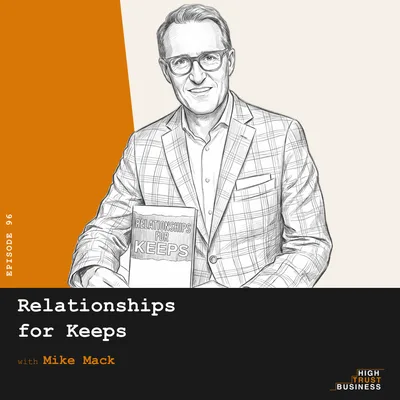
Mike Mack's back for his second time on the show, fresh off publishing "Relationships for Keeps." If you caught his first appearance, you know relationships aren't just Mike's business strategy, they're his entire worldview.
What makes this conversation worth your time? Mike breaks down exactly how he's using his new book to deepen existing relationships and start new ones. You'll hear the specific steps he takes to add value at every stage of a relationship, not just when he needs something.
Mike's got this figured out. His approach comes through in how he talks, how he thinks about his readers, and how he builds his business. You'll walk away with concrete ideas for using your book to strengthen relationships instead of just collecting leads.
This isn't theory. It's a working framework from someone who's built his entire practice around genuine relationship building.
Transcript
AI transcript provided as supporting material and may contain errors.
Stuart: Foreign. Welcome to another episode of the book More Show. It's Stuart Bell here and today, another one of my favorite types of podcasts because today we get to speak to one of our authors, Mike Mack. You might recognize the name because Mike's written a book with us before, has been a podcast guest with us before, and is now back having just written the second book with us called Relationships with Keeps. If you follow us on Facebook, you might have seen a video that I shot just as the book launched in towards the end of last year. This is a really great episode. Mike's got some fantastic insights into not only the creation process, but how he's using the book and not surprisingly, how it's kind of amplifying the relationships he's got. If you've listened to the last podcast, then obviously you remember the relationships are kind of key to not, not producing particularly. They're not sponsoring his business, but certainly how he builds the business and the kind of the framework that, or the lens which he views everything through is very relationship dominant. And that comes across both in the tone and the friendliness in the podcast. I'm sure you'll hear that as you listen, but also in the steps that he takes to nurture those relationships and really add value at every stage. At the end of the day, that's specifically what his book's about, but that really is about what all of our books are about. It's given that value to start that relationship, to build the journey and lead people to educate and motivate them on towards the next step. So with that, take a listen. It's a great show and I'll catch you on the other side. Mike Mac, great to have you back on the show. How are you doing?
Mike Mack: Wonderful. Stuart, always a pleasure to be on your show.
Stuart: Always great to hear from you. I was just saying before we started recording that yourself and a couple of other guys always kind of hold that position as the, as the go to reference or example when we're talking to people. So I'm sure people are pretty familiar with the name Mike Mac. And if longtime listeners, they'll probably remember that you were on a show a little while ago, which I'll link in the show notes. But obviously we've got a lot of new listeners now, people that haven't haven't come across us in the past. So do you want to give a quick Mic Mac intro 101 and then we'll, we'll pick up on the books from there.
Mike Mack: Indeed. Stuart, again, thanks again for the opportunity. Thank you so Mike Mac I am the managing partner of X5 Management, based out of Alberta, Canada. We offer training, coaching and consulting services. Been doing that since about 2006, dealing with a corporate audience. And I also do, on a personal level, do a lot of speaking. It's usually in the areas of customer service, relationships, sales, et cetera. And really that lane has been the catalyst to become over the last number of years, an author. And that's how I connected with you back. This goes back four plus years ago, Stuart, when I had the good fortune of utilizing your services as well. So love what we do professionally and it's been a real fun journey bringing books out in the marketplace and on Amazon as well. Thanks again to you and your team for that.
Stuart: Well, the setup, as we've been working with you in the past, is slightly different. The ability that you've got to write and bring all those thoughts together and then we can just help get it over the line and do all of the production side of stuff that's slightly different from some of the other guys that we're working with. But even those first drafts is always great that the team, when your team first reached out, our team on this side are always excited to see that first draft because Remarkable Service, which was the first book that went through, that was really the, the catalyst and the trigger for a lot of things that we've subsequently referred to. So this idea of the kind of, I don't want to say heartfelt journey because that makes it sound a little bit too woo woo. But the softer side of adding the service element and the personal connections, obviously lots of people, it's not new to a lot of people, but the way that it was positioned in that book is now a way that we refer to things in a number of examples and then we're excited to see the second book, Relationship for Keeps, come through because that seems to be quite a refinement of the thinking, if that's the right way of putting it, or certainly as it's come together, it goes deeper and more structural. Was that the way that you felt about it as well, or is that just me as the reader perceiving it that way?
Mike Mack: No, it's a great observation. So I guess a couple things come to mind. Putting a Remarkable Service together. And that project started four years ago. While I use my own knowledge base and experience relative to customer service. All the chapters predominantly had a good story, whether we're speaking of a lighting company in India or an IT company in Alberta, car dealerships, etc. It was an Entertaining read by design where readers had an opportunity to appreciate customer service stories as you can appreciate today. Readers like story. It really connects with them in the book. Relationship for Keeps was a journey for the last number of years, kind of loosely depicting some of my own experiences and my relationship with my mentor Arnold McLaughlin. So the uniqueness of that one, Stuart, as I created character development, so very unique from a traditional business book. What put fictional characters within that particular book and you followed that journey along with the two main characters of Joe and Vicky throughout that particular piece. Definitely more personal and from a relationship perspective. What I was going for was really to connect with that business audience and the personal audience as well. And it's pertaining to building powerful relationships in business and in life. And just a quick comment. Relative to your team, you made a comment earlier about the relationship side. Not only was your service incredible with your entire team, but but I truly felt that connection with the relationship and I would joke about it to friends almost how awesome you were in that I could get an email at 5 o'clock on a Sunday or somebody would take a quick phone call at 7 o' clock in the morning on a Monday morning. So it was way more than the process for me of writing the book, but that collaborative support with a bunch of friends almost, that's how I felt. And my next book, rest assured, will be produced through you and your team again in the works, I might add.
Stuart: Fantastic. And that becomes a. An addictive creation process once you know that the all the mechanism side of it, the kind of less interesting nuts and bolts side of it can be taken care of. And then you can just look at the content and think about the story and the words that you want to get down there. It does become slightly addictive to the first. It's like tattoos. The first one is the first of many for a lot of people.
Mike Mack: Well, very true. And I want to comment on that on a couple levels. And I kind of joke writing a book is kind of like a tattoo. Once you've done a couple, you want more. But I remember it very vividly learning of your services back four, four and a half years ago. And in fact I was involved with Strategic Coach and Dan Sullivan was familiar with your services, if you recall, and taking the headache away from the logistics and the process and being creative and focusing on the book, the story made all the difference. And I often say that had I not used your services at the get go, I'm not sure that first book would have been out. Would it have been as good? Because I was really allowed to focus on the book and the story rather than the detail and the minutiae behind all of that as well. That's the valuable resource that you and your team provide for sure.
Stuart: And it's so interesting, as we're recording this, there's a breakthrough blueprint event that Dean's doing across the celebration. I was cross there yesterday afternoon. And one of the points that came up in that discussion was it's difficult. The first day of the event, we're usually following through the breakthrough blueprint process of looking at the before unit elements of attracting an audience first. And obviously a book fits in very well with that. So one of the things that came up was this idea that the curse of knowledge. It's difficult to remember how much customers don't know because they don't have the same level of knowledge and understanding that you do. So bridging that into what you were saying about being able to create and only have to worry about the creation process because we enjoy the mechanics of getting the books produced. It makes that so much easier to take that burden away so that you can just concentrate on the words and the narrative and taking people from the title through to the back cover and helping explain the thoughts that are going on without getting either sidetracked or slowed down or even just the emotional or thought baggage of, okay, well, even if I get these words down, what do I then do? It's so interesting that for us, it doesn't really slow the boat down at all because it's what we enjoy and what we do day in and day out. But for other people, that's really quite a difference in just being able to get to the point that it's not preventing you from getting those thoughts written down. Indeed, the creation process, was that something that. Because from our perspective, we see you as someone who is able to write very well. And I would say very quickly, although you mentioned, and it was four and a half years ago that we started the first one, maybe it's that as you get an older time confesses type thing, but still we see as someone who's able to write and not have a barrier to that at all. Is that.
Mike Mack: Yeah.
Stuart: Do you see it in the right way?
Mike Mack: Yeah, I think a couple comments, Particularly the last book, Stuart, I just decided to be really disciplined. Not only I wanted to Finish it in 2019, I made a commitment. I would say I was half done, fundamentally a year ago, say the early part of 2019, and the book came out in November of 2019. I committed that I would Kind of start it on a regular basis. And I really only worked on the weekends and I'll say mainly Saturday morning. I'm an early riser, so I might have been in the book at six o' clock writing and recreating and use my wife a lot as a sounding board. She's published a book in the past as well, so she was creative in that regard just to give me some insight. And because I was more creative and more focused versus doing that on a Tuesday at 3 o', clock, it wasn't realistic to do that. So that worked for me where I just took that block of time and I committed to it. And as you can appreciate, the more I did it, it just became easier because it didn't feel like work. It was. I was in the zone and feeling like I was building and creating something as well. But it does take time and I think even now to say I've got the next book in my head and I got the one after that in my head. That's the fun part. But there is still work to put it to paper. Creating a storyline, if you will, but then more importantly, make it a value of entertainment in most cases for the reader. That's something you have to really, really keep in mind in the process. I'll end on a comment on that is when you write a book as you can appreciate, you really put yourself out there. So for me, it was a great test of vulnerability. You could like my book and 10 other people didn't and you had to be okay with that. That's the reality when you put it out to the public and it's on Amazon public domain, if you will. And you know, I've got a lot of great feedback on that, but I'm sure some people may not have enjoyed it as much as I hoped, but the piece that keeps me going always is those. Even those private messages you get or the Amazon reviews relative to how it impacted them. That's what's most important versus saying you were a great writer, versus they related to some of the personal aspects or the business aspect or struggling through a family situation, etc. And that's really ultimately the most gratifying as an author when it's done beyond it becoming a best seller on Amazon. That's great. And that was definitely a goal. And I'd like to talk a little bit about that after, because that was a process too. When time is right for that question as well.
Stuart: Yeah, that's an interesting one because it's a question that we get a lot and the points that you were making about the time it takes to create the story and thread the narrative through and make sure that it's entertaining and value driven. I guess you should step back a stage and just kind of note the differences between how you work with us and how the majority of people work with us in that you come with the completed manuscript and then we're taking it through the production stages, whereas the majority of people are coming with the idea and then we're helping them write and create. But the points that you make, and we had a show maybe four or five episodes ago now with Justin Breen, who's a PR specialist and helps companies take that gain earned media by creating things that have that hook. So it was a point that he made as well. The idea that we're trying to get the value of the idea that raises a hand and starts the conversation. In the majority of 90 minute books, that's the smaller time commitment to get those ideas down and lead someone towards the next step by giving them value, but within a smaller sense. But even within that smaller sense, to be able to illustrate and back it up and amplify it with personal stories that are relatable to allow people to always contextualize the thing that you're trying to deliver in the value. It just gives it deeper hooks and creates more of a rapport with people. I think that's well worth anyone remembering whether they're working through the traditional 90 minute book process or like you writing yourself and then just coming through the production stage of things.
Mike Mack: Yeah. If I may go, Stuart, just on that note, the first book from four years ago, here's how I look at it. And a compliment again to you and your team is you really taught me how to ride a bike. And once I understood the fundamentals, that's when the creative process, because I think the second book, arguably, I'll say it was more fun for me because I allowed, I had more time just to be creative. I didn't have to think about the structure. And my assistant, who's been with me now two and a half years, worked closely in getting that book live back in 2017 on the revised edition of Remarkable Service. And then having her coordinate with your team, Betsy and Kim and so on, allowed me to not have to think about that. What's that like getting posted on Amazon and how we're categorizing the book and all of that, I didn't have to worry about. I just had to be the creative guy behind the story and the product. If you Will. So what you do in your system and your process, I just want to echo that was really paramount for me. So next time I don't need to do that again. But I understand the process, and I think unless someone's a really gifted writer, naturally, I think sometimes we overthink it. So knowing what I learned from the first process was significant, and I would recommend that they go through that process and the consult on the front end to really put it together. You know, my book, I don't know if you have an average word count with all of your authors and the finished products. I mean, my two books combined, they probably average north of 28,000 words. Right. So that's a little bit of a broader book. Yeah, Some may be smaller than that, because I think the very first edition of Remarkable Service that I did with you and your team, that actually came out four years ago, 2016, and that was probably less than 15,000 words, just to give you context. So really beef that up, if you will.
Stuart: Yeah. And even 15,000, that's. So we typically are recording for. So I think people by now have heard us talk about the process enough. So we're recording for an hour to get that content. And depending on how kind of densely someone speaks and how much editing is required to change it from that conversational format to a more narrative format, I would say that typically with more around 8 to 10,000 words is an average size. And that as a way of communicating one concept of getting someone to raise their hand as interested in being the start of the journey is absolutely fine. It really helps you kind of constrain the scope of something so that you're answering the question deeply, you're not being too superficial. And it constrains the scope in terms of the time and commitment that it takes to get this thing created. But in. Interestingly, what you were saying about building on the version two and taking that almost doubling the size of it in version two and then coming back with the second book and being able to create something even bigger. I like what you were saying about riding the bike to begin with, the kind of first version being the version that will get you from A to B. But maybe there's a little bit of the scoop bike thing going on where it's a little bit wobbly sometimes, and it's not a bike that would win the Tour de France. But once you've mastered that and you've got used to it and you're comfortable with it, it makes it so much easier. And all of these other things that prevent People from getting their thoughts out there. The kind of overhead of production, the concern about writing an outline or a structure that makes sense, the idea of introducing the. The story elements, the emotional elements to it that kind of amplify and reinforce, and the kind of this overriding thought of leading people towards the next step. Once you've done that and it's more comfortable, then you can concentrate on the next level of adding more content, of adding more depth, of being able to spend more time, because you don't have to take that time to do the other steps that aren't adding to the content. And also, I think knowing the sensible scope constraints, because that's one of the things we see a lot, particularly with people who are writing themselves and then coming to us afterwards is we'll hear stories of, I've been doing this for 18 months now, and I've got 10,000 words, but it's all a little bit random and it's. I'm not really able to close it back in. So this idea of scope constraints, I think, is a huge one. In a world where anything could be included, you really, really. The only reason not to include something is because you're choosing not to include something without having the discipline to control that scope or without having someone else helping you control that scope. Very easy to kind of talk yourself or write yourself into a. Into a black hole of just more being more rather than more being more value.
Mike Mack: Well said. And I want to comment on that because I felt that many times and, you know, as you look at the finished product now, and I'm proud of both of those books, but you'd say, hey, you know, chapter three, I would have added this. And that's hindsight. But, you know, being at peace with where it's at and getting it out, and you can always do a revised edition. The other side that, you know, and what you and your team do well, is that. That relative size of the book, so even mine, I mean, comfortably, to get those two books read each within three hours or less comfortably. Most people also appreciated that, you know, they could read it over a weekend and go, hey, I read your book versus it. Being twice as long and indeed more is not necessarily better. For sure.
Stuart: We had someone Betsy was talking to. I can't remember what industry they were in. I can't remember. Anyway, it was last week, but they were talking about this idea, and the idea was heading towards, I mean, multiple hundreds of pages. I mean, there was just so much that we were talking about that they were talking about, and we Introduced that idea that the choice is either to take all of this additional time and effort to create the one thing and the amount of leverage that that one thing has is a relatively fixed amount. But breaking it up into the five or six clearly definable things within the book that could have been individually written, individual titles saying to them the same time and effort to create all of this is going to go from their perspective, is going to go into writing them as individual pieces. But the additional leverage that you've got of having them as individual pieces is almost exponential because you've got the opportunity to use it in multiple different ways, multiple different campaigns and those campaigns being nice and specific and relevant to whatever the individual subject is. But then you've got the opportunity to leverage and use the other books, the other assets in that follow up campaign. So rather than having it all go into one, engage someone with the first one but then introduce them to the fact that the others exist because that will then lead them down the path towards the kind of end goal. But instead of all being presented at once, you present it in bite sized, manageable, sensible chunks. And the final benefit, which is, I'm guessing the benefit that you're seeing as well, it is, it's a. From zero to an author with a book is a huge step. From zero to an author with a number of books is then the credibility just builds on it even more. So I'm assuming that if that you are already or if not very shortly, being a person that has multiple titles, that in and of itself is a leverage is an amplifier because people are seeing it as. I've written several books rather than just one.
Mike Mack: Yeah, and I'll comment on that, particularly in my local market. Anyway, Edmonton, Alberta, Canada. We've got a million people in the greater Edmonton area and I've been here 20 plus years. So people, I'll say know me for a few things, what I do professionally and the associations I'm involved with. But great example is last week an old, old business connection of mine that I don't see very often and his name is Jim and we were at an event last week and ironically it was the first thing that he brought up. Hey Mike Sales going on that new book and you know he's known me for five years so that would be a guy that I don't even know if he bought the book but the fact that he saw it somewhere obviously on social media and it was the first thing he brought up says something about someone I see twice a year that was gratifying. And it validates that the at least say the perceived credibility because a lot of people go, hey, you wrote a book. And then when you put it on Amazon, and strategically we worked on making both those books become an Amazon bestseller, which is a whole science to that and a lot of work at the same time. But you get it to a relative level that suggests at least that you're credible. And when more and more people read it and actually like the content, then it. That elevates you even further. So that's. It's an organic build though, as you can appreciate. So, you know, I'm not that famous, but in the local marketplace, I wrote the book to add value, but at the same time, it's really been an incredible door opener on the business front in terms of consulting and the training services that we provide. And I'll comment on a couple things that might be helpful for your future clients and authors that when I think about promoting the book, obviously social media is number one that you can move so much information whether that's in the form of promoting it on Amazon. And I don't do that anymore, but I did on Amazon Bestseller day. Lots of memes, pictures of the book. And your team does a great job of providing us a nice digital kits and assets relative to, you know, the book beautifully displayed on a table with a cup of coffee. So there's good promotion. I order a lot of copies and a lot is all relative. I probably order 100 copies at a time. And if I'm going out for a meeting, as I am this morning, meeting someone new, I often bring a copy of one or two of those books and it's my gift more times than not, they asked me to sign it. And that's wonderful, right? But. But it's a gift. And six months later, someone calls and asked us to do some work that's a paid opportunity because you gave someone a book six months ago as an example. So it's as my latest book reference, it's about dropping a pebble and chasing the ripples. It's a slow process, but it's intended to be goodwill in nature. But most people, if it looks like it's an easy enough book to read, it's not 8,000 pages. Most people come back. And in fact, the person I'm meeting today, they have read the book and specifically wanted to meet me again after seeing me in December because they have some insight on how it impacted them. So I'm excited to hear that in an hour. So, yeah, it's an ongoing process that's
Stuart: very gratifying that accessibility both in the content because it's small enough to consume. It's not like you've given presenting someone with homework to go and read up. It's something that's adding value to the relationship because it is gift guilt, gift giving. It is creating a rapport with someone in a way that seems very genuine and not asking for something. And I think your underlying personality. And how do you recommend it? We'll make sure that there's links in the show notes and we'll say that before we go. But I recommend that everyone reads both of those books because that authenticity and genuine interest in the relationships that you've got naturally I think permeates then through this path of giving people the book because it's just genuinely a nice thing to do and it's given them something of value. And the fact that that then in a number of occasions turns into something further down the track is because you're able to keep that relationship going, which obviously is a big part of what of how both books are written on that subject. This idea of creating something of value that starts a conversation that is a door opener. And I know we're going to run out of time today and I'm grateful for the time that we've managed to get. So I think we should schedule something else sooner rather than later just to talk about how you're using it in a day to day sense. But. But that idea of giving something to someone that is of value because the conversation that you're having is represented by the words in the book, it's kind of thematically the same. So the whole Mic Mac train, for want of a better term is heading down this path. And the book at several points is a relevant reference point that you can refer back to. So I think once it is something that's created, it is something that lives out there. This opportunity just to refer to it on social media, in, in discussion forums, in live events, in person. When you're meeting someone one on one, there's just so many opportunities to have the asset have. The book is something that reinforces the point that you're making without forcing it down someone's throat that you're trying to make this point that the subtle elements of it are somewhat difficult to quantify. But I think that's the. A lot of the underlying power amplified then by just your approach naturally to relationships and keeping the. Keeping relationships going.
Mike Mack: Oh, very true. And there's a quick comment, thanks for the kind words on that because that is How I'm wired. It's what I do. But this isn't news to your audience on this show today, but when you think about you, you don't get wealthy and rich and famous from selling a book unless you're Tony Robbins or someone such as that. And he's. He's a great author and an individual. It really hit home when we first started working together. And you talk about providing this book and the digital assets. Like anything, when you think of an asset, there's value, but it's how you monetize that value down the road that's the magic. It's not the revenue that comes from Amazon and you make five bucks a book or whatever the number is. It's everything beyond that. So for me, the relative price point to buy my own books and give them out is a good enough investment for the long term that I could give you examples of the magnitude of that return, which has been great. The other part I will note quickly, and I know we're running short of time. Is that the beautiful part? Leveraging Amazon? And nowadays most books are on the platform of Amazon, where you can go in and gift someone. I did that a lot. At Christmas time, I can do a gift package of my new book and ship it literally anywhere in the world for a relative price point. A little bit of a premium on the retail with the shipping, but if you have prime and depending upon the markets, that's just another avenue. So you could connect with someone. And I live in Canada, it could be someone in eastern Canada, southern U.S. and Europe, in fact. So there's really no excuse to get it out there. But you have to decide, you know, what the big game is, what, what your big vision is relative to the book. And, you know, it's an asset, it's always there. You can do something different with it in six months. And thanks again to your amazing system that allows us to do that.
Stuart: I mean, it's such a fantastic. I say it time and again, particularly when having podcasts like this with people who have written the opportunity that we've got and the words that we see come across to think that, I mean, not saying that people can do without us, obviously, but it's a number of people wouldn't because the hassle factor would just get too high. So to be able to help someone get it out of the door, it's so reassuring to then speak to people three, six, 12 months, three years down the track and listen to some of the ways, really inspiring ways that people are using it. It's very satisfying as the small part that we play in help getting out there. I can't believe how quick time goes. It's. It's always surprising. I thought what we do is if we can, we'll schedule something again when calendars align and just maybe go through the different ways that you are using it. But before we left today, I really wanted to touch on two points. One obviously is just pointing people in the direction of where they can get copies of the books because we do recommend it a lot. Whenever relationships come up, we've always referred back to these books. So I want to make sure we give people the opportunity to find a place to that they can, they can get a copy. But the other thing is you more than there's a couple of people, but you're certainly in that couple of people group who have really kind of made the most of the Amazon bestseller type launch. Now people ask us about it quite a lot and it's definitely not something that we specialize in. And with the disconnect between Amazon sales and lead generation, you can't get the details, you can't immediately get the details of people who buy the book. Then we're always concentrating on the lead generation more than the bestseller. Having said that though, to be able to have that flag and to be able to use that term definitely has value in and of itself. So it's obviously a big job. But are there any pointers that you've got or things that you did to set up to make that bestseller status happen? As I say, it's a question we get a lot. So any insights? Yeah, indeed.
Mike Mack: And if you're okay, I want to give a plug to someone who has helped me do this, if you're fine with that. Because she was a huge catalyst and she's a best selling author many times over. She's based out of California and her name is Sherry Fink and I want to give her a little love on the line. She's actually referenced in the back of my book as a quote as well. So I've used her services a couple times now and really just the strategy and the consultative discussion up front as to where the book is going to be placed relative to categories. So that's a real robust process kind of months in advance. The day of Amazon bestseller is massive. I would if I were to throw out a number I was on my laptop because all that's really driven online from 5am to 11pm Just to give you context and I have a stat that I'm proud of so There's a lot of books on Amazon, Stuart, as you well know. When I launched mine on a Thursday morning back in November and the night before my rank on Amazon, ca, which is Canada, was 36,000 and you got to be in the top 100 to be a best seller over the next 24 hour period of time. I ended up finishing that 24 hour cycle at number 15. So there's a lot of process but it's just go time steady and Amazon's a big machine that you've just got to. You're promoting your book and the reality is you have no way of knowing whether you're winning the race. You see the rankings trend but you don't know of all the promotion that you provided and sent private messages to friends that they all bought the book and you don't have time to ask them again. So again, that's a bigger conversation. Sherry Fink I can't say enough amazing things about she's. Anyone can google her services in that regard, but I would highly recommend that because I had a more robust program with her in the first book and in the second book we didn't need as an extensive amount of support because we understood the fundamentals but it's work and laser focus. Your question earlier, Stuart, if I may just, you know, if people want to acquire the book, obviously it's on Amazon. That's where it's at. One of the things that we did and we took pride in. So it's available on Amazon.ca.com and it's also UK as well. And that really is important from a shipping perspective as you can appreciate that if someone is in Europe or someone had an inquiry on social media the day of my bestseller and they're in Texas and they couldn't get the book because the link referenced ca. But when they went to dot com and their prime account they got that book in two days.
Stuart: Right.
Mike Mack: So that's where it's available and it's priced to be most reasonable as well. It's not a crazy price point that most people would be comfortable with the purchase and more importantly that they enjoy the read. And I also through your channel and when you post this show at some point in time, Stuart, if I could be of any assistance to your readers and future authors that want to use your service, not only will I give you a big testimonial as I'm doing publicly right now, but any way I can be a service they can also connect with me on LinkedIn as well, which is. Which is readily available Fantastic.
Stuart: Well, we'll be sure to make sure. We'll be sure to make sure. We'll be sure to put a link to the book, the three stores, and obviously your LinkedIn profile in the show notes. So when we release this email, when we release this show, we'll send up the email with the link to the show notes and put it in there. Either that or if you're listening to this in the future, we're recording at the beginning of February. The shows probably go out in the middle of February. So anytime in the future, just head over to 90minutebooks.com podcast and there's a tag on the side for the. Well, there's either the search box on the side to search for Mike Mack or there's an interviews link on the side and you'll find all of the interviews and just search for Mike's episode there. I know that we've got a lot of your details connected in the first show, so hit either of those show notes up and you'll be pointed to the right direction.
Mike Mack: Yeah, Stuart, on that note, if I may, obviously, you know, they can. They can look at our business website, x5management.com and then more on the book side and my speaking platform that if people want to get ideas from, they can reference mike Mac.com as well, just for handy reference and more just to give context on a little bit on the marketing side as well, Stuart. So thank you again for the opportunity.
Stuart: No problem. Actually, that's a great point of reference, which I probably should have hammer home a little bit more when we're doing these interview episodes. I mean, it's great to hear the stories of people creating and how they're using it. And just as a. As a point of entertainment and reference, it's always good to hear other people's stories. But the real secret, as with the other episodes that we do and the More G's Less Whiskers podcast that Dean does, really the whole purpose of this is to substitute your name as you're listening for whoever's talking and being interviewed, all the points that we're talking about, because really we want you to steal as much of this as possible and replicate it in your own business. We didn't have time to go into it too much, but the point that you were making about the relative fame and exposure in the local area compared with a national global bestseller, obviously everyone thinks about bestsellers in this global context, but really, I would say that 99% of the people listening, if you could dominate the hundred geographic miles from where you live, where you, where the office is, then that it would be a hugely successful business for, for the majority of people.
Mike Mack: Oh, indeed, Stuart. Yes.
Stuart: That idea of stealing what, what is talked about on these podcasts and, and dominating your own local area, then there's more than enough business to go everyone, even if you're in similar spaces. So yeah, definitely head over to Mike's website and see how he's using things and, and just the broader connection. Time flies. I know that I've got to cut you loose in a second. It would definitely be great if we can get a call schedule for the not too distant future and go through some more of the specifics of, of how you're using things and how you've used them in the past. Again, I just want to say thanks for your time today and the sharing your story with people. I know it's, it's as we hear what you're doing with it, it's always inspirational for us. So everyone that's listening, there's, there's a number of ideas to take away from this. As I mentioned, we'll make sure that there's show notes to everything Mike. Mike related in the show notes and links to the books. And Mike's very active on LinkedIn too. I'm guessing that's a great, a great way to connect with you. And apart from that, just want to say thanks again and looking forward to speaking to you in the next time.
Mike Mack: A pleasure. And again, I want to give the final plug one more time is that you know, when you go to 90minutebooks calm and that process, have that conversation with your team. Stuart, that's what I highly recommend. Any aspiring author out there and it's a safe conversation and if you've got that book in your mind and brain and on paper, you won't be disappointed on that service. And I'm sincere on that that the next book and four after this, I will just always use your service because it's, it's just that awesome, honestly. So that's, that's the final word. I don't want to make it as much about you because I always admire not only giving us the opportunity to get a bit of profile for our books and us as authors, but the service and price point is so reasonable. Kudos to you and your team again and best wishes in 2020 and beyond. And I've always got time to talk to you, Stuart, anytime. So make it a great year.
Stuart: Fantastic. That's great. Well, thanks, Mike. And there we have it. Another fantastic show. It's always such a pleasure catching up with Mike. We've got a good report even though we don't get to speak as much as I'd like to. Really looking forward to getting him back on the show to talk about some of the details of how he's using it kind of day in, day out. But I'd highly recommend grabbing a copy of the books. There's links in the show notes, they're available on Amazon. Mike Mac, as you can see from this the email as we release it. Mike Mack is M A C K Then head over to Amazon to check out the book. Head over to the website to see what he doing and how he's using it and how he's promoting the books in kind of the day to day business framework. But then also it's well worth connecting on LinkedIn because just a great resource to bounce ideas off has always got time to always makes time to answer as much as possible the questions that get presented. So with that we didn't talk much. It was kind of on the the notes I had here to refer back to, but we didn't talk that much about the book Blueprint Scorecard. But layered throughout the episode there was references that we made to some of those mindsets. So if you're thinking about either writing the book yourself, using and using us for production, if you're thinking about producing it all yourself, or you're thinking about coming to us in the in the normal way and following the process from start to finish, the Book Blueprint Scorecard is a great way of measuring your progress on those eight mindsets to really create that most valuable asset that you can use to engage and start those relationships and move people towards a decision to do business with you. So that's over@bookblueprintschool.com and then as always, once you're ready to get started, then head over to 90minutebooks.com, follow the get started links and we'll be here to help you get your book out there there. Okay with that. Thank you everybody and we will catch you in the next one.