Chapters
Show Highlights
- Your idea is what matters, not how perfectly it's packaged or presented
- Your book title can be the catalyst that finally gets you moving from thinking to doing
- Focus your time and money on collecting names of interested people, not perfect production
- Your book identifies people who want to talk about your idea, then you introduce your actual service
- Stop waiting for the perfect moment and start with what you have right now
- The best book is the one that exists, not the perfect one you never finish
You've been thinking about writing your book for months, maybe years. There's always another reason to wait, another thing to figure out first.
Dean Jackson cuts through all that noise. He runs marketing masterminds and has watched hundreds of entrepreneurs get stuck in the same loop.
We talk about why your idea matters more than perfect packaging, how your title can be the thing that finally gets you moving, and where to actually spend your time and money so you're building a list while you write.
If you've been circling this decision, Dean's perspective will either get you started or help you realize you're not ready yet. Either way, you'll stop wasting mental energy on the maybe.
Transcript
AI transcript provided as supporting material and may contain errors.
Stuart: Foreign. Hey, everyone, welcome to the Bookmore Show. It's Stuart Bell here and got a great episode today. I grabbed some time with Dean Jackson to talk about why now is really the best time to write your book. You know, we often work with people who've wanted to create a book for years, but for some reason, something's holding them back. So today we really looked at why your idea is the most important thing and not how it's packaged. We were talking about how your title can really become the catalyst to get you going. And then we finished up talking about a better way to invest in your book, the sensible way to invest in your book and really use it as a way to collect all of the names that you need and then react and pivot to the feedback you're getting kind of whilst you're building this audience and engaging with people. So it's always great to get deemed perspective. We go a little bit deeper into this idea that your book isn't the product. Your book is a way to identify people who are excited to talk to you about your idea and then ultimately you can introduce your product or service that can help them. So really, if you've been thinking about writing at all in the last couple of years, then this is the episode that you need to listen to to really get going, pull the trigger and get started. So with that, let's get to it. Mr. Bell, Mr. Jackson, how's it going?
Dean Jackson: Great. How's it going for you?
Stuart: It is wonderful. But I've just run into the great podcast timing of jumping on the call with you just at the moment that the neighbors start drilling their floor. So hopefully there's not too much background noise.
Dean Jackson: I can't hear anything.
Stuart: Ah, that's good. I've closed the soundpreg door.
Dean Jackson: Perfect. So you want to make a podcast?
Stuart: I think so. Now seems like a perfect time for it. It's Sunday. What better to do than talk about books?
Dean Jackson: Amen. So what's your premise today?
Stuart: I was thinking we were around the house last night watching Lost in Translation and talking about how the times are different, seeing the crowds on the Tokyo streets, very from being here today.
Dean Jackson: That was different, wasn't it?
Stuart: I know, right? And it's surprising how different it feels, how quickly. So that got me thinking that we've talked in a couple of shows before about things are changing, there's move to Cloudlandia, but still, I think that now, even in three or four months into this, I still think that now is the. The best times and in many way almost the Most urgent times to get your book written, kind of seize the moment. So I thought we'd talk about that today.
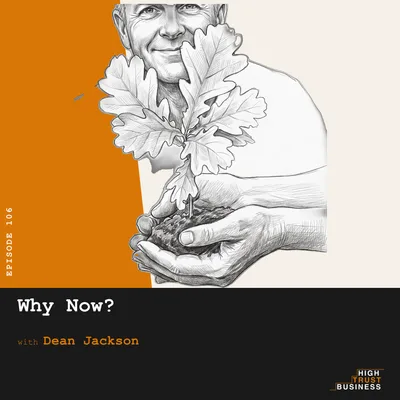
Dean Jackson: And you know what? I believe that to be true. But more importantly, I think there's no time like the present. You know, it's one of those things that is, you know, the best time to plant an oak tree is 20 years ago.
Stuart: Right.
Dean Jackson: And the next best time is now.
Stuart: Right.
Dean Jackson: You know, and so the best time to have written a book is in the past, have one, to have one, and to have it out there, getting you into conversations on demand in as as many as you'd like, as often as you'd like, with the exact people who can, you know, be best suited to work with you to get the result that only you can deliver. And so when we look at this now, you know, our whole mission, the way we set up 90 minute books, is to make it the fastest, easiest, most pain free way for someone to get that accomplished. Right. To mark it off their list. I've seen now we had a I Love marketing episode, Joe Polish. And I've been doing live zooms and recording episodes with A while streaming live on Facebook, which is adding a whole new dimension to the the way we do the podcast. But we had Anna David on the podcast just a few weeks ago now, and she's just gone through a process of writing her book, make youe Mess, your Memoir, and she's written other books and we had a good conversation about the process. And I've seen other people now coming on, you know, different podcasts or different platforms and talking about their process of writing books, which takes months, you know, of slaving over something. And I just still can't get to the point where, you know, you see that it would be necessary or advantageous.
Stuart: You know, it's so funny. Betsy and I were talking last week about the exact same thing because we see an increasing number of competitor services out there, but being the insiders and being able to kind of decode a little bit the words that are on the screen versus the actual effort that's involved. It's so surprising that there's so much time and attention and effort put into things that don't really move the needle that much. So either people are being charged a lot of money for things they don't necessarily need, or the timeframe, the amount of effort that's included, just as you were saying, is exponentially larger than the return once you start getting past that 80%.
Dean Jackson: Yeah, and that was, you know, I did a live stream with Ross O' Loughlin A very impromptu last minute thing. And I was talking about books and showed a lot of different examples that a lot of times I think about how is it that people, what are they thinking about books? That is limiting the, you know, their ability to just get them, get it done. Get it done right, or to pull the trigger to, to get it done. And I think one of the things is that they don't know what their, what their book's gonna be about. That's one reason I totally get it, that if you can't see the, the end, you know, if you can't figure out what, what the big picture is that what your book's gonna be about, then it's harder to move forward. Right? It's like when I say in all the eight profit actors, the first thing is to select a single target market. And people find that a difficult thing to do. So the thing about writing the book is that if, you know, if you. This is why we spend so much time talking about books, titles and about the, you know, conveying what the actual message is. Because if I can get someone unblocked and they can see the title of the book and they can see that having a book like that would get them into conversations with the right people, that now is a magnet that pulls them forward, you know, pulls them towards getting something done. So, you know, now we've got some great resources. I mean we've got the, we've got that video about it, we've got a, we've got a book title workshop. You know, I've done a few different ones, but we've got audios of those and wouldn't be too difficult to put together a worksheet for it too to go with it.
Stuart: That's a good time to plug the scorecard again. So the head of blueprintschoolcard.com so as you say, the first mindset there is selecting that single target audience for the book. Then it's a title that resonates and amplifying, subheading and then on through the rest of the eight. But those elements all feed into. It's that amplifying point to give people the encouragement to go and to get into orbit. That kind of first burning that first bit of fuel to get up into orbit and then it's, it's easier sailing after that. But a lot of the additional resources that you were talking about and the help that we provide people all kind of linked in from that to give people that kick up the backside on the most important first part or not even the most important from people's point of view, but important in the sense of this is the thing that gets you going, that creates that momentum through to the rest of it.
Dean Jackson: Yeah. And so that, you know, it's pretty exciting that if we can get somebody excited about the book. So that's. First one, they don't know what their book's going to be about. So, you know, thinking about putting yourself in the position of who's ultimately going to be reading your book, who your audience is, and then figuring what's the best thing, you know, to what would be the title of the book that they would definitely want to have. And getting that in front of them is a, is a great thing. Now if you've got that, then the other thing that I suspect may block people is this thinking that they need to do a big book that they've got, you know, a big, that they've got to have the, you know, 250 page book that's, you know, published and the whole, the whole deal and makes
Stuart: a dance on the table as you drop it.
Dean Jackson: Yeah. And one of my favorite finds, because I really started thinking about it, you know, that some of the most impactful books in the history of the world are very, very small books. And I have taken to using the examples of the polls of the Communist Manifesto and Common Sense by Thomas Paine, both of them very small books. I mean, 30 something pages for the, for the Communist manifesto and some 80 pages approximately for Common Sense. And when you see them either you couldn't have ignited two bigger ideas than communism and capitalism with, you know, with books that are, you know, what we would, they would fit under the realm of the 90 minute book structure. You know, and so that's what I've been saying to people is, listen, your idea, whatever it is that you're trying to spread, that's what the, that's what the book is about, is starting the spread of the idea that the, your idea as far as its magnificence and potential impact on the world surely falls somewhere between the Communist Manifesto and Common Sense. I think it would be safe to say that your idea, if you're thinking about doing a 90 minute book, would fall somewhere on the significance scale between those two books. Right. And that is a, you know, I think I say that to give people encouragement and permission, you know, that, that it doesn't, it doesn't have to be a, a big book. And I would say there's no, there's no, there are no small books. You know, there's a small book. It's the hide a big idea.
Stuart: I was just going to say it's the idea that is the big or small. It's the idea that not the number of pages that it's on.
Dean Jackson: That's the absolute truth. Yeah.
Stuart: You can imagine the ego. It's difficult to not see it just as an ego issue that people don't want to get an eye or apprehensive about getting an idea out there because of the packaging around it, which really is just the packaging. It's really got nothing to do with it. It's either an excuse or, or it's. You're not focusing on the job of work. If the shiny object is the thing that you're most interested in, then get the book out there and they go and buy a shiny object.
Dean Jackson: Right. Like I just think of, I heard, I forget how many hours it was somebody said that it took to write their book. Right. But it was in the hundreds hours to write the book.
Stuart: Yeah.
Dean Jackson: And I just thought to myself like, you know, good lord, like that. Hundreds of hours, opportunity costs in isolation. Right. I just think like the new, the modern thing, what I say to people is a better way to think about this is to think that the, you know, get the book, get the title, get your book that presents your whole thing. Essentially what a 90 minute book is doing is presenting your idea, your best. 90 minutes basically of your, of your thinking. Imagining. One of the frameworks that we use for people is imagine that you've. You're a guest on a radio show and you're the guest of honor and the whole time is dedicated to you explaining your idea. And every single person in the audience is your ideal prospect. That, that's the, that's the way that we want to think about it. And then the book, I look at the book as a packaging. It's one form of packaging of your idea.
Stuart: Right.
Dean Jackson: You know, like we still do the audio version. We still do the, you know, you can do the electronic version and the physical version. Right. And it's just a packaging mechanism for your authorship.
Stuart: Yeah.
Dean Jackson: And authorship is different than writing. And that's the, often the big thing is that they're, you know, people are letting their block that they're not a writer, you know, fall into blocking them from, from being an author.
Stuart: Yeah, yeah, yeah.
Dean Jackson: The author is the originator of an idea. You know,
Stuart: I was talking to someone last week and was trying to use the comparison of video. So we were talking about recording some stuff and getting out to people and the mechanism which we were doing it was just using the phone. And you can imagine 20, maybe 15 years ago, someone not wanting to do anything with video because the whole concept is around or the whole preconceived ideas around needing to be in a studio with professional equipment and all of the overhead that comes with it. So therefore not wanting to step into the environment at all. Versus now knowing that if you've still got that preconception, if that's still holding you back, I don't think anyone would be in that situation now because everyone knows and is familiar and comfortable with the faster market approach of getting an idea out there. And the mechanism is YouTube or Facebook Live or doing a selfie video from the, from the car, versus being stuck in this outdated idea of no, it has to be this big package, big produced way of getting things out there. And books, I think, are exactly the same. And we're really reaching that point now of, of it being more and more problematic for people. It's not just the missing the top opportunity, but it's now more and more people are doing it. So you get left further and further behind by having that preconceived notion that's stopping you from getting the idea out there in front of people just because of the way in which it's delivered.
Dean Jackson: Well, they've also seen now every late night talk show host have their show broadcast from home. And there's not a single. And this is at broadcast television levels, right? There's not a. This. Dan Sullivan and I, we recorded today, we started a new podcast called welcome to Cloudlandia. And the idea, one of the things we were talking about today was this equalizing, right. That there's, there's sometimes like zoom on its own is a, an incredible tool. Right. Like we were talking about the next level of things. Like when, you know, people are working on like 3D virtual environments where you're, you're, you know, you would come in and be all immersive and you'll feel like you're in a, in a room with people and. But we were talking about the, I think unlikelihood that that's going to catch on on a large scale because zoom as it is and the capabilities that we have now is, is good enough.
Stuart: Yeah, right. Yeah.
Dean Jackson: And that's really the thing that the extra is not worth the squeeze. Right. The juice is not worth the squeeze to go if I could be. Because no matter how great it gets, you'll know it's not real. You'll know you're not in the it's not the real thing. There's no practical extra value that you're getting from being in a three dimensional avatar in a, in a meeting. And there's a lot of extra.
Stuart: The overhead. Massive.
Dean Jackson: Yes. That you've got. If I, if I could get that. But it's at the cost of I've got a strap on some head apparatus and have multiple cameras on different angles on me and be in a special 3D environment and whatever else. If all that is like what has to happen in order to, you know, essentially get the useful value of being in a zoom meeting, it's not going to be, it's not worth it. When we read that look at books.
Stuart: Exactly. That convenience, meaning that it gets done versus the overhead of those incremental increases further down the track. It's just that the math just doesn't work out.
Dean Jackson: How much extra? You know, I just think about how much extra if you spent hundreds of hours writing the book. Let's say that's 200 hours, let's call it right. So let's say that you go through and you do a 90 minute book and you do it the slow way and it takes you three hours of time to create. Right. Then you spend three hours creating this and then you create a ad and offer to get it in front of your target audience. And then you spent instead of, you know, 197 extra hours writing the book before you ever get to the point of getting in the hands of the first person. What if you gave your book away to a hundred people and spent one hour with each of them serving them? You would have so much more insight from that, you know, so much more value created from that. I mean, that's essentially when I say if you're going to spend 100 hours is let's get your book done. Let's spend some time getting your ad ready to get the book in front of people. Let's then spend some time developing your conversational conversion process and let's do a podcast for 50 hours. Do 50 podcasts for years worth of content.
Stuart: Yeah.
Dean Jackson: And build your audience that way. And then if you still wanted to guarantee you at the end of that 100 hour investment, the insights and the, the stuff that you're going to come from, plus the audience that you'll build is going to be so much more valuable, you know, so much more valuable to you.
Stuart: And I think it's those opportunities. I was on a zoom call the other day with Eric Reese looking at the. It was part of an MBA program Looking at the lean startup model and this whole idea of one of the questions we had was how do you know when lean is too lean versus good enough? And the answer there was really, it's very difficult, as you listen to this call today, it's very difficult to think that you would be in a position where it would be too lean, where it's going to be too thin, because the reality is we're all over indexed on delivering far, far too much and it slows down. So it would be very difficult for us to get to the stage where we were going too lean in the other direction. So again, it's a pointless question. It's just a procrastination question that's hold you back rather than just going for it. And like I say, that additional time and effort and I think that's the. We need to kind of revise the website, I guess, to kind of emphasize this a little bit more. But that is one of the things I see as a key differentiator in our approach compared with all of the others, is that the majority of the other people out there are really looking at the book as the product and not the conversation as the product. And the time and attention that we spend on those additional elements outside of the actual book creation itself. Although obviously that's the, that's the, the, the thing that's being created. But it's a tool to start that conversation and getting that feedback from real people, getting something out there in front, just as you said. I can't imagine 100 hours better spent in conversation versus just in editing or page layout or grammar checks or. Well, goodness saves. What else? Yeah, I was listening to a podcast yesterday, CrossFit podcast, where because quite a lot of their athletes in that field have written books and there was a girl who had a huge weight loss journey. So she'd gone from 500 pounds at her top to I think she was about 250 now. So it's talking about all of her the benefits of movement and just the health benefits. So she was encouraged to write a book through a publishing company in a more traditional sense. And she was saying that when we'd written the first draft, okay, that took a long time. But then we decided to add some, some hot takes at the end of each chapter, some kind of bullet points that people could read. And that process alone, just going through the chapters in the book delayed the whole project by eight months, I think she said, just because it took that much time. And for those, the, the, the missed opportunity of being able to Speak to people for that period of time for something that was of incremental increase. It's just, it's, it's crazy, right?
Dean Jackson: Yeah. So that's my take. I mean, for sure, that's the, you know, I just look at the time is what is the overhead of it, you know, to get it out into the world and how quickly can it be helping people? I've often challenged anyone who's going down a traditional book path. You know, writing in isolation a book that they don't know whether anybody's going to be interested in is such a futile thing. Right? When I think it would just be such an amazing thing to get your thoughts together, get your outline together, present the big ideas of what your, what you're talking about in a concise 1 hour or 90 minutes and package that up to start the conversation with people. And then, you know, you're building your audience. Especially if you don't have. There's two different approaches to this too, right? That if you don't have a list of people right now, an audience to put your book out to, if you don't have what they call in publishing a platform, right. If you don't already have a, you know, a list of subscribers, a you know, social media reach of tens of thousands of people that is going to, the longer that you take to write your book is, is even going to impact you more negatively. Right. But if you don't have that, your. The best thing is to get your premise out and to start using it to build your list. You know, I just look at the money too. Like if people are doing things on a, on a, on a budget where, you know, you've got certain amount of money to do something. The, the cost of creating these, you know, fig. Bigger books, all the overhead and cost of that is a lot to get to a point where now you can start.
Stuart: Just get started out too.
Dean Jackson: Yeah, yeah, yeah. Because that's just the beginning. Now you've got to have an equal amount of money to get it out there.
Stuart: Yeah. I'm usually pretty reserved on the podcast, but last week when I was talking to Betsy, it kind of went off on a little bit of a rant because. Exactly that thing in the morning before we recorded, I'd seen two ads for different companies and looking at the money they were charged and kind of just had a quick look through competitor analysis, look at what they were actually doing. And I mean, I'm sure they're going into it with the best intentions. I'm sure people aren't Intentionally trying to rip people off. But holy cow. I mean, just the extreme amount of money because people don't know. They think of it in still a traditional publishing sense. Big numbers, thinking about big returns and then they're willing, happily paying. We've had people join our program in the past where we've talked to them 18 months ago, two years ago, and they've spent five, did five figures on ghostwriting and editing and outsourcing people and ended up with something that's practically unusable or isn't finished in anywhere near what they want. And yeah, God, when you think about the better use of funds, it's that rant's building again. But it's frustrating.
Dean Jackson: It is only because we see what happens. You know, you see like. And then this was something we talked with Ross. That's why I did this live with Ross. You know, Ross did his, his book Open Every Day, which was targeted to people who are doing launch marketing that are, you know, constantly hopping that chain, one launch to the next launch to the next launch and so taxing, you know, to do those and all the reciprocal things that you have to do in those, you know, that, you know, he's been able to get that out there start, you know, he's constantly building his audience with that and all the while, you know, engaging with people to help them with things, with programs and coaching and consulting that is earning him thousands of dollars versus selling a big book for $29 or whatever you might get for a book, you know, just such a. Yeah, yeah.
Stuart: It's missing the opportunity that we have, right? Yeah, yeah, yeah. Alrighty. Well, that's.
Dean Jackson: Are you convinced yet?
Stuart: I am. I'm fully on board, I think.
Dean Jackson: What's your prescription, doctor?
Stuart: My prescription is that people should check out the show notes. So that's over on 90minutebooks.com podcast and I'll put some links to the things that we've talked about there. We've got the book blueprint scorecard. So if you are struggling with ideas for dialing in the title, then head over to the scorecard and you can see where you score yourself on the eight mindsets that we have. And there will be some additional resources we'll make available in the workshops that we've done to get that title and then just get it out there. I mean, this whole idea of being fast to market with something that you can test and then iterate on based on real world feedback. It's by the end of the summer, we're middle of July now, by the end of the summer. This could be out there taking names and building the business. Ready for. Ready for whatever the rest of the year presents for us.
Dean Jackson: Absolutely love it.
Stuart: Fantastic. Okay, so thank you very much. Enjoy the rest of the day, and we'll get you back in front of the people next month.
Dean Jackson: Thanks. Okay.
Stuart: Bye. Bye.