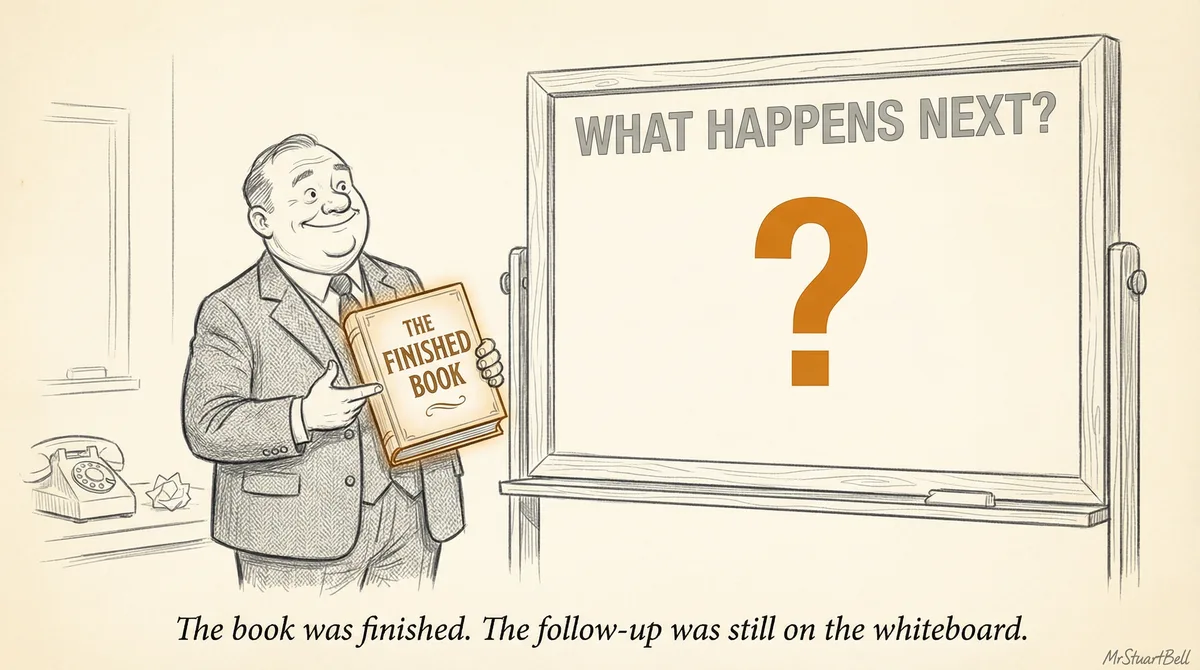
Over the last 10 years, one of the common questions I get from small business owners is, "Now I have a book to find leads, what do I do next?"
In traditional publishing, a book is the product, so the thinking stops once someone has a copy. If you're writing a book to build your business, your book is just the first step, the way to discover who you should be in conversation with. Just as much focus should be on what happens the moment someone gets a copy.
Here are the three must-have elements of a book that builds your business.
1. A Compelling Call to Action
Your back cover is the place to lead people to the next step. You need a way for people to join your list if they didn't get on it by requesting the book. A supporting whitepaper, quiz, or checklist is a great way to offer this. You also need an easy way for people to get started with you: "Now you've worked through the theory, the next step is to personalize these steps for your unique situation. Schedule your Readiness Review at [your site]."
2. A Relevant Follow-Up Sequence
Readers are only ever in two states. Ready to do something today, or not. Now or later. How would the conversation go if you were talking to your reader face to face? How can you replicate those steps in a short email sequence, compelling those who are ready to continue the conversation?
A few common emails to include: Ask a simple question like "What business are you in?" or "How long have you had a particular condition?" Provide more value by reinforcing a key point in the book. Refer to other people's success using stories. Share other resources you have. And, of course, ask them to take the first step in doing business with you.
3. A Way to Stay in Touch Until They Are Ready
Many studies show it takes months and sometimes years for someone to work with you. It's not usually because they are doing months of due diligence. It's just that life gets in the way until they decide today's the day, and they move fast.
Having a way to regularly stay in touch with everyone who has a copy of your book is the best way to be front of mind on the day they decide to do something. Your book is the perfect source for this material. A weekly email is only 52 messages, many of which you can create by giving a little more context, background, or depth to the ideas in the book. An alternative is a podcast. A weekly show talking about the ideas in your book and all the associated subjects is an easy way to add value and a reason to send an email.
Spending time or money to get your book in front of potential clients is too often considered an expense instead of an investment. Having a way to help the "now" and the "later" people means you are developing an asset that will mature over the next 2, 5, 10 years.