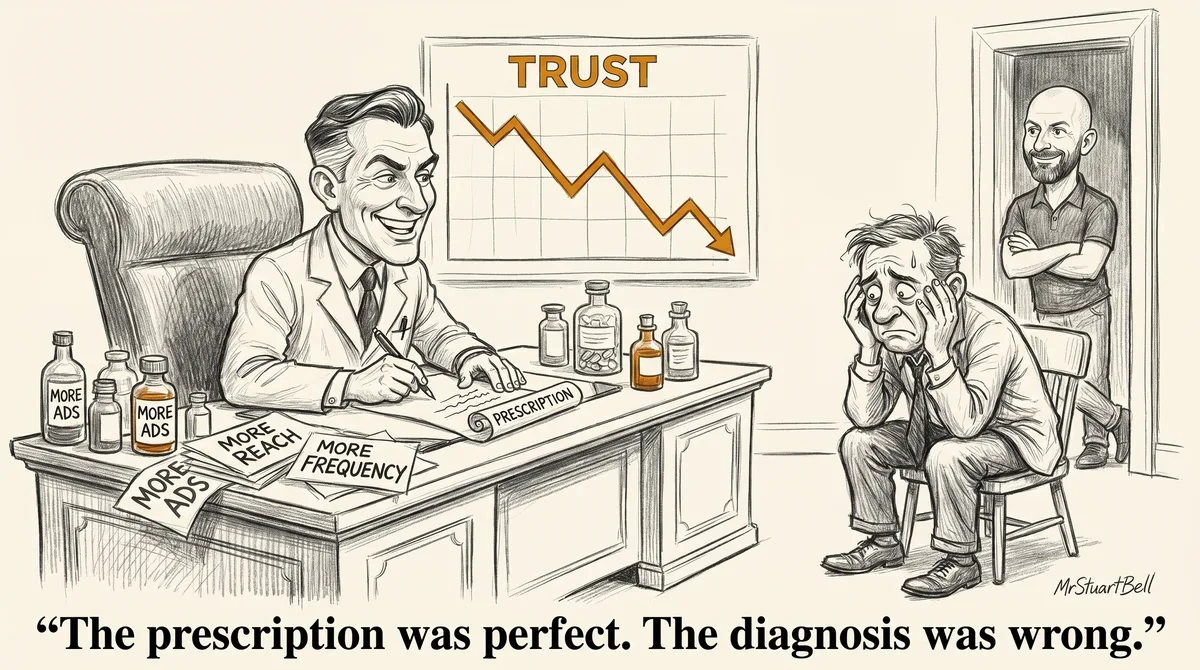
If your clients have to talk to you before they buy, you're playing by different rules.
I often hear financial advisors, attorneys, contractors, doctors, consultants say "I need better marketing."
Smart people. Good at what they do. Frustrated that the phone isn't ringing the way it should.
So they do what anyone would do. They hire an agency. Run some ads. Post on social media three times a week. Maybe build a new website.
And it doesn't work. Not really. Leads come in, but they're price-shopping. Content gets likes, but nobody calls. The website looks great, but nobody finds it.
The response: "Marketing doesn't work for us."
They're half right.
The marketing they tried wasn't built for them
Most marketing advice comes from the same playbook: volume, reach, frequency. Cast a wide net. Get more eyeballs. Nurture with a drip campaign. Convert with a landing page.
That playbook was built for Amazon or software subscriptions. Things where customers want to buy without talking to a human being.
It's marketing where trust doesn't need to be high. And it works brilliantly for those purchases.
But if you're a financial advisor, your prospect isn't going to hand over their retirement plan because they saw your Facebook ad three times. If you're a remodeler, nobody's spending $80,000 on a kitchen because of a Google display ad. If you're an attorney, no one's choosing you based on a drip email sequence they didn't read.
Your business runs on conversation. The sale doesn't happen until someone sits across from you and decides they trust you enough to move forward.
That's a High-Trust Business™. And the rules are different.
The mismatch nobody talks about
When you apply low-trust tactics to a high-trust business, you get a very specific set of symptoms. Leads that aren't the right people. Ad spend that disappears into nothing, and a nagging feeling that you're doing something wrong.
You're not doing anything wrong. You're just doing the right things for the wrong type of business.
You don't have a marketing problem. You have a trust problem in disguise.
Volume isn't the answer when your prospect needs to believe you understand their specific situation before they'll pick up the phone. Reach doesn't matter when the decision requires a conversation. Frequency just makes you annoying when the prospect hasn't decided to trust you yet.
The fix isn't more marketing. It's a different kind of marketing entirely. One that builds trust before the first conversation happens.