Chapters
Show Highlights
- Target complementary, non-competing professionals who serve your same audience but don't compete with you.
- Use your book as a 'charge neutral' conversation starter with people who get pitched constantly.
- Start relationships by giving value rather than asking for something to set better expectations.
- Your book should lead people to raise their hand rather than forcing you to chase prospects.
- Focus on getting in front of the right people at the right time, not broadcasting to everyone.
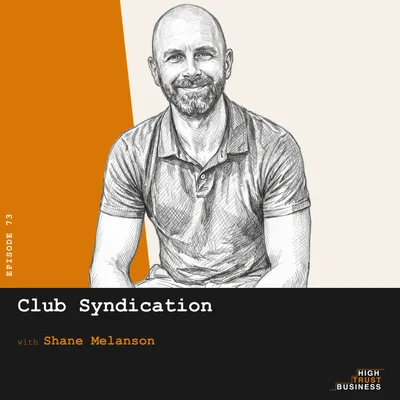
Shane Melanson helps people invest in commercial real estate across the US and Canada. His book 'Club Syndication' does something most business books don't: it actually opens doors to conversations that were previously impossible to start.
We talk about how Shane dialed in his target market and now uses the book to connect with complementary, non-competing investors. The book works because it's what Shane calls 'charge neutral.' Instead of pitching, he's giving value upfront.
You'll hear specific ways Shane gets in front of the right people at the right time. When you start by giving something valuable rather than asking for something, you set a completely different expectation.
This conversation shows why books work so well in industries where everyone's constantly being sold to. Shane's getting people to raise their hand instead of chasing them down.
Transcript
AI transcript provided as supporting material and may contain errors.
Stuart: Shane Melson.
Shane Melanson: Stuart, how are you?
Stuart: Hey, how's it going?
Shane Melanson: I'm great. How are you?
Stuart: Fantastic. Good, thank you. So looking forward to this call. Betsy had caught up with her when, when it popped up on the, on the calendar. It's, I think we've got some exciting things to, to talk about. I look forward to running through the process and, and then sharing it on the, on the podcast. I think a lot of people will get some great insights from this. Definitely seems like you guys have got a pretty robust, the things that you're doing at the moment are pretty robust and set up. This isn't a new venture that you're trying to work out on the fly. So it's be, I think, good opportunity to dial in some, some strategies and tactics to sit on top of what's already been successful.
Shane Melanson: Oh yeah, absolutely. I mean I can kind of obviously share my, my journey if you will, and what, what I, what I've been doing, but certainly any guidance and advice that you have because, because you know, this is, this is your kind of, this is, this is what you do. And so you obviously know, yeah, you, you know what's working and, and you know, whatever, wherever you want to start, wherever you think would be the most appropriate. I mean I can certainly discuss. I mean I put a lot of energy and effort into creating the 90 minute book, but that's just because I knew it was going to be like the people I was giving it to. It was more than just a business card, like people are reading it. And I just wanted to make sure that, you know, represented who I was and the feedback I've got because it's one thing to kind of speak into, you know, to kind of have the questions, but, but the person that actually put the text together and worded it, I mean, just such a tremendous job. I was just really impressed and the feedback I've got from very, you know, I mean the book that I wrote, wrote Club Syndication, it's really geared to high net worth. I shouldn't say that it's, it explains how high net worth individuals invest in commercial real estate and how they raise money and find deals. And so the kind of target market is really call them accredited investors, people that have enough money to invest in commercial real estate. And so, you know, this is a pretty discerning market and they want to, you know, if I just kind of threw something against the wall and kind of hoped that a fancy cover was going to, was going to, was, was going to do would have, it would have fallen flat and I must say, you know, like, it was funny. I can't, I was it, I can't remember who it was. Was it Betsy or one of the ladies there that I had the interview with?
Stuart: And she asked Susan.
Shane Melanson: Susan, right, Susan.
Stuart: Yeah.
Shane Melanson: So I sent her like A, the 32 page outline and she just looked at it and she's like. And you know what though? She went through it all and we had two conversations and she really kind of helped me flesh out. Like, kind of distilled it down to the essence. Like, you know, what I had initially envisioned was, was much bigger, but that wasn't like, I can create multiple books, right? How to find deals, how to fund deals, how to do, you know, these, these kind of various avenues. And when I really kind of distilled it down to kind of what I'm best at, which is helping investors raise money and find the right deals, we really just kind of honed in on that and it was just a tremendous process. And now that the book is done, yeah, it's been really cool.
Stuart: And that's such a key thing, I think. As we've talked about on the show a few times before, I harp on about it quite a lot. So people probably get fed up of hearing it, but it definitely deserves repeating. Is that absolute point you could have taken 10 times as long, wrote a book 10 times as big, try and make it the all encompassing piece, but then that becomes overwhelming for people to read and the read rates fall through the floor. But by separating things into thinking about it from a campaign point of view, from a conversation point of view, having the potential for multiple touch points, whether people are thinking about it from a finance perspective or a property perspective, or just a pure investment play perspective, then there's multiple opportunities to have those funnels set up with those touch points at the beginning that intersect a conversation that is already going on in their mind. And then you can still pass through the rest of the information, still follow up with the other books in the series, or refer back to the other books in the series as part of this ongoing developing conversation. It's so much more valuable to take that tact and approach rather than investing $30,000 in a book that takes 18 months to write. And then you still effectively just get one bite at the cherry because you, you're loading all of the efforts and the, and the touch points in what's really the wrong place. If you're thinking about it from a funnel that's looking at engaging people and then educating and motivating them over time to Take that, that first step and start a relationship.
Shane Melanson: Yeah, yeah.
Stuart: I think for you as well, I mean, one of the other things that is worth mentioning is the difference between people who are looking for a occasion. We'll get people coming into the program that other people have talked about. A book should be a thing that I do. I've heard other people talk about it. I know that I should do it, but I don't really want to think about it too much and I'm just going to jump, process quickly and then have it done. Which is probably better than not doing it at all. At least you end up with something. But if you go into the process as you did, with a mindfulness about what the outcome is and more of a thoughtful approach about the content. I mean, we often say that read rates are dismally low really, even for fiction in terms of the words that actually get written. But it's, and it's the COVID that catches people's attention and gets the opt in in the first place. That's the most important thing. But it's absolutely the case. They're understanding your audience and having content that is good enough, that's fit for purpose, that delivers value. That's also a key component as well. Because just as you said, if you created something that didn't deliver on the promise of the COVID that wasn't thoughtful in its journey, it wasn't guiding them towards something, then it's fairness. The collect deletes it. But if they never go anywhere, then that's also not the most effective of use of everyone's time.
Shane Melanson: Yeah, like I guess the way I looked at it was if, you know, and this is obviously I didn't know this went before I'd written the book, but now that I have the book, like what I would say is, you know, if someone has never written one, to kind of envision that you're going to actually hold this book in your hand and you're going to walk up to someone and you're going to give it to them in person and if you are like, like when I do it, I'm friggin so excited to hand my book to someone because I know that it's got just immense value and I've had such great feedback. Like it was funny like when the books first arrived at my house, my, my daughter, I've got three kids, two girls and a little boy. And my oldest daughter, I think she's maybe seven now. No. Yeah, seven. And she, And she's like, look, my dad wrote a book and I was, I was a little bit nervous at first, right, Because I'm thinking I don't know how people are going to respond to this. And so my father in law, who I respect tremendously and he's been, he was kind of my, my mentor and I talk about him in the book and he, you know, he's CEO of a large commercial real estate development company and so he's, you know, very prominent individual. And I'm thinking, oh, like I didn't know, I didn't, I wasn't sure I was going to feel comfortable giving the book to him first, you know, but yeah, it was, it was my daughter that kind of did that. And a couple days later he called me up and he just said, you know, just really kind of congratulated me and how proud he was that I had, you know, taken the initiative to do it. And he really enjoyed the stories and the content and all of a sudden that just kind of, you know, and in the meantime I was talking to some friends and some people and some, you know, some, a lot of clients of mine are doctors and dentists and they were just like, all the feedback was so great and I mean it's, it's 60 pages and so literally a person can get through it in under an hour. So you know that they're, that they'll get, they'll go through the whole thing versus a 200 page book, which.
Stuart: That's such an important point.
Shane Melanson: Yeah. And I was able to get what I wanted and man, I, and, and so later today I was at a backup. And this is kind of what made me think I should get on here and have a conversation with you is I was at a real estate investment network networking kind of thing where there was, you know, maybe a couple hundred people in Calgary and the president of the, of this event and they've got 20,000 members, plus or minus. And so I went up to him after his presentation and I just said, hey Richard. I said, I just wanted to introduce myself and I said I wrote a book and I thought you might find it interesting. And you know, there was, there was eight other people that wanted to talk to him. And he looked at it and he's like, he's like, give me your business card, I want to talk to you about something. Because this is. And he only did, was look at the title and, and it was like something that kind of resonated with him. So today at 3 o' clock, he and I are having a conversation. I don't know what's gonna happen. But you know, the fact that I'm on his radar, I've got his phone number and we can have conversations, it just opens doors, you know. And so it's, it's, it's pretty, it's pretty incredible what that simple kind of that like that authority piece, if you will, of having a book and being a published author. It just elevates you.
Stuart: There are so many. It's easy for us to forget as insiders because we know how the process works and what it actually takes to create. It's so easy to forget that outside of this circle is kind of who are doing this day in, day out. So obviously we're eating and breathing every day. So we really forget and take it for granted. The next layer of people out, people like you guys who are actually writing and getting these completed, so you get that look behind the curtains and actually realize through your own experience how straightforward it is. But as soon as you go one layer away from that, two layers away from that, people just have. A book is a book. It's got exactly the same authority as something on the shelf in a library or in a bookstore. It's surprising how much credibility it carries, which to a certain degree kind of outshines the. I don't say outshines the effort that's put into it because there's always a lot of effort put into these things. But you could quite easily create a 60 page online report, put the exact same thing, just have it on a web page and it wouldn't have near the same, the same attraction. I think the other thing that I wanted to mention as well, again specifically looking, using yours as the example, is that difference between the. It's kind of the authenticity of what's in the book. So it's not about the size of the book. The size doesn't matter. It's not about the. To a certain degree, as long as it's good enough. It's not even about the. It's not a fiction piece. So it's not about the writing itself. It's not about. This is an academic exercise in getting a high score on a test for a writing project. It's not a literary award. But the content that's there is authentic and valuable and useful. So some people get scared off, I think a little bit about. Because they think writing is the thing they couldn't possibly do because they never enjoyed it when they've tried to do it before and it's a burden. The process is an easier process, but really it's not about the words that are on the page. It's about the message that's being delivered. So with yours, compelling stories, valuable information, clear insights and a direction of how to take this conversation further and understand more, all within a relatively few number of words compared with a bigger book project. But it still has that credibility and value for people. So as you're listening to this, that's absolutely. Try and remind everyone, don't get scared off from this process. As long as there's an authentic and useful message there, as long as it's giving something of value, then it's not about the writing, it's about the helpful information that is being shared with people.
Shane Melanson: Yeah, go ahead.
Stuart: I was just going to pivot away and talk about the meeting they have this afternoon then. So that sounds like the. You talk about the doors being opened. That's one of the, one of the key elements that certainly the likes of Betsy, as she's talking with a lot of people in the early stages, we talk about that as one of the key things. But the exposure into that, that group of people, it sounds like it's pretty great opportunity to get in front of the exact people that you're looking to get in front of because it's a very aligned group of people. That organization is very aligned to you and what you do.
Shane Melanson: You know, I think that. So the organization that I'm, they're very well respected and the content that they create as it relates to investing in real estate is something that I've kind of followed and agree with their methodology for the most part. What, what's interesting is their focus is really on residential investing and that's where a lot of people get started. But my journey has been, and I've been pretty fortunate to learn how to invest in commercial real estate. And I think that that's where they're noticing. Okay. You know, the majority of our clients are here and they're happy to buy and invest in single family buy and hold. But there's a group that were underserving and I know this because I get some of those people that contact me and they really, they really don't have kind of. Because it's such a tight knit community in terms of commercial real estate. Not a lot of people talk about it or teach others. It's like you either know it or you don't inside. Then, then you kind of are able to do very well. And if you are the guy that comes in and you don't know anything, then you might end up spending a lot of money and learning some expensive Lessons and so. And that's just, you know, it's.
Stuart: Yeah, it's the nature of how it develops.
Shane Melanson: That's right. And so I think that they're seeing someone like I hope anyways. I mean that's, that's the direction that I want to take it anyways in terms of, you know, I think that I can bring a different perspective to people that are looking to invest in real estate following the same model and long term approach but. But focused on commercial cash flowing real estate and, and how I do it which is pooling money together from other kind of high net worth individuals and in doing that versus you know, investing in a home every year or two years and slowly building a portfolio that way. So.
Stuart: Right.
Shane Melanson: Yeah, I'm pretty excited about the opportunity but it really became. It really got down to the book because I've been going to those events and I've met him several times and he didn't remember me but now all of a sudden so interesting, I'm on his radar.
Stuart: Yeah. We were talking to. Must have been a little over a year ago talking to another real estate guy in. Down in the Phoenix area and he had a similar experience from a slightly coming to it from a slightly different perspective but there was a broader group of people he was trying to interact with and had had exactly the same experience, had had exposure to them and had been in the same place for a number of years. But it wasn't until there was something that stood out and made him seem different that that connection was made. And again similarly it started a conversation that there was an alignment in the thinking anyway had a similar mentality to the group but just had never kind of cracked the code to make it into that inner circle. Not wanting to make it sound like a cult, but there was definitely that. Everyone's busy and unless you stand out for a reason, it's always super interesting. We hear stories like that, a couple of things that just went through, a couple of strategies that pop into, into our mind as we go through. And this comes from both our own experience of what we do internally and then obviously externally talking with the hundreds of people now that we've helped over the years using the book as Fay Cookie and opt in. I mean the most straightforward way of thinking about it is as you've got experience or exposure to that group, just always having the book there as the thing that people can opt into. It will just sit there now as an asset that's waiting to be referred back to. So in any conversation there's always going to be. Here's the quick answer. Whether that's physically in a meeting or in some online material, printed material, they're doing. Here's a quick answer. But if you want to learn more, then go grab a copy of the book. There's a whole load of useful information in there that takes this conversation deeper. So that's a little bit like, I don't know whether you've ever seen the email mastery example that we talk about sometimes. So this was a Success magazine ad that we ran in talking about the email mastery program that Dean has. So the email mastery ad had one particular section of the book. So there's eight or nine different strategies in the email mastery book as a whole. And one of them that's the easiest to talk about is the nine word email, which is this short personal expecting reply email. So Dean wrote a. It's like advertorial, it's like a one one page ad in Success magazine that talked about the nine word email. And then the call to action at the end of it was if you got some value from this technique, then head over, grab a free copy of the email Mastery book where we talk about the other seven or eight techniques that can be game changing. The aim was that that ad itself, that the words on that page, if no one did anything else, they'd still get a whole load of value from it. So it wasn't like sales copy saying here's I've got this book, you should go and get this book and the answers in the book. It's that within the relatively narrow scope of an adword email, here's a very small thing that you can do today, add value at that stage and then here's more. So similarly with what you're doing, there's lots of opportunities to thoroughly answer the question and narrow question in whatever format or form you've got, but then refer back to the asset elsewhere. One of the other things I'm going to jump around a little bit because that's my mind kind of jumps, it pops all over the place. So hopefully all this come together at the end. One of the other things that people don't necessarily think about again because it's a little bit behind the screen, but just from a production point of view, there's the opportunity to do like a joint venture with these guys and have Richard write a forward to the book that contextualizes the book specifically for their audience. So that can go just from like a little pull quote, which is kind of like the bare minimum, but gives you some kind of additional credibility because it's almost like an endorsement from the organization leader through to something which if you can get to the stage will be fantastic. But you could imagine if Richard wrote a forward or a first chapter to the book that absolutely contextualizes it that almost makes it seem like it's a co written book or a supported or sponsored or maybe not sponsored but supported or sponsored in a non financial sense but really endorsed by the organization. And then that opening chapter will really set the context for those particular members. So talking in terms of maybe some of their other programs, maybe talking in terms of bridging it from residential to commercial. So Richard saying hey guys, we've spent a lot of time talking about residential real estate and there's a benefit with the portfolio building over time. But there's this other world that makes a difference. There's the opportunities to leverage more. There's some timing elements that are right now when we look at all of the other stuff that we've got within our portal and our world we talk about this program and that program but actually here's a whole other strand that's worth talking about. Once you've read this, then head over to this bit of the site where we've got a video that I recorded with Shane and we run through some more details. But here's a copy of this to get started and go from there. So that kind of really bringing it together as a. Yes as a, as an in house piece because to a certain degree and as sometimes when we have these types of conversations people get a little bit proprietary and protective and saying I don't want to. I want my name on the ego kind of comes in a little bit and I want my name on the front of it. It's my book. Why would I want to put someone else's name on it? Well that would be true if it was a literary piece or if the book itself was the product. But if the. The job of work is to get as many relevant leads as possible, then do whatever you can do to make it as relevant. And from a purely production point of view that's pretty straightforward to do because the book already exists that varied version. So you could imagine over time that you would have one version of the book that is with this group and then another version of the book that's with a completely different set of people just top and tailing it with something different and changing covers. That's relatively straightforward to do because all of the hard work's done in creating that first main asset. It's Almost like the version one and version two part of the process. That version one part of the process, the initial version of the book that you got got it hopefully 80 to 90% there. And then depending on how much time and effort it mathematically makes sense doing, you can then get it somewhere between 80 and 100% depending on what's worthwhile. Now the asset exists, you can definitely leverage it into. Into different areas.
Shane Melanson: Yes.
Stuart: Just jumping back to that first point and talking about the asset being something that's always able to be referred back to. Yes, I talked about it in the context of that initial point of contact. So if that group has a forum, you can do things like change your signature or bio in profile in the forum and have the book as the main opt in the main course of action for anyone that's checking you out because they want to find more, or if you're answering posts or you're writing articles for them, refer to the book as the thing. But there's also the opportunity to refer to specific sections of the book because that does answer more. So there's always the opportunity to kind of exit parts of the book that answer questions in a useful way. So, okay, I always give a bit of a warning or kind of remind people to not get too carried away with that and think about it in terms of. Do you ever watch the Big Bang Theory, the US TV show? So there's one of those episodes where Howard's gone to space and then he comes back from space and for the following week, any reference at all. Oh, that reminds me, when I was in space. So there's always the warning of not getting too carried away. You don't want to be the person that. Hey, how are you doing? I'm great. You know, I'm feeling good. It was kind of like that day that I finished writing the book. It's. I felt it feel as good as that thing. Yeah. Be careful not to get too carried away. But there's lots of opportunities, particularly with the value that you've got in there, the specific value of excerpts in different ways and the thing that you can do to kind of tweak that a little bit further to make it even less like you just topic bridging immediately into the book is to take that excerpt but change the format that it's in. So there's probably six or seven major and minor concepts within there that as a pull quote or as a, as a. As an idea that stands alone, it's. It's useful. Some of them can be big, some of them can be small. Those individual ideas are probably the ones that crop up most of the time. So kind of 80% of the questions get answered by 20% of the content because it's all the same stuff, just worded inside different ways. The questions that come in. So taking those key concepts as they come up and then just position them in different ways. So you can do things like infographics or audio or video or further written pieces or data to support it, and then have the particular section from the book that answers the question, but then beef it out a little bit with this other kind of ancillary asset, this thing that kind of develops it a little bit further. So what you've got there.
Shane Melanson: So sorry on that then, because my wife is just helping me with my Instagram because I, up until, you know, Monday or I think it was Sunday night, I. I basically had maybe a few pictures of. Of my family on my Instagram account.
Stuart: Right.
Shane Melanson: But. But she's started to take quotes out of my book and started to kind of put those on Instagram. And then obviously then we mix in some pictures of developments and investment and properties that I'm doing. Should it just be like hearing that? Should I put like at the bottom of the quote, like page 62 or page 28 or something, or just leave it as the quote. And not because I've got a picture of the book that. That's in there as well on my Instagram. But I'm just curious how you would.
Stuart: Maybe I'd be tempted to not put the page reference in it because it is a little bit too.
Shane Melanson: Too salesy.
Stuart: Yeah. Yeah, it's a little bit too on the nose. Sure. So maybe one level away from that is for every five quotes that are in there just as quotes, the sixth one then in the body of the text of the post kind of describes it a little bit more and maybe makes reference to the book and says there's a literature book in the IO. It's a bit like Gary Vaynerchuk's kind of jab, jab, jab, right hook. Kind of give, give, give, give, and then ask for a little bit.
Shane Melanson: Yeah, okay.
Stuart: I mean, it's more art than science, but you see some Instagram accounts that it. If it trips too much into just pure promotion, then people get a bit ad blind to it because it just seems like an account of banner ads. But there's the opportunity to. And this is where changing the context helps because it gives the perception and it legitimately does because people learn in different ways. But it gives the perception of adding value. So you could have the pull quote is the beginning of a broader paragraph. But if you just had the pull quote there and then said read the rest of the paragraph in the book, that's one thing. But if you had the pull quote and then the rest of the paragraph was a quick audio that you did, or a quick video that you did, or infographic that backed it up a little bit more, it's the. It's exactly the same information is kind of drawing people in the same direction, but it's given the perception of adding more value because it's in a completely different context. And that context, both for you and as you're listening to this, is going to vary with these little things. I really suggest people doing whatever's easy and convenient for them. Because if I said I should back it up with a video because it's easy for us to do video now, you've just got on your phone and some people are more comfortable. But if you're the type of person that doesn't have a particularly convenient phone and you're really super uncomfortable doing it, then you cease to get hung up on the thing that's uncomfortable and then you never do it. So, yes, I'd really focus on whatever is comfortable. But trying to change the context in the way it's displayed is a great way of doing almost exactly the same thing, but it adds those things as well. So assuming that there are. And this all builds over time as well, this is the fantastic thing about it. You've kind of got a aircraft carrier now of a main asset, but you've got the opportunity to. This analogy is going to fall down pretty quick, but you've got the opportunity to every now and then add another fighter aircraft to the arsenal, or add another major gun missile system to the arsenal. But then there's also lots of little things after that. You can add more soldiers onto the ship and you can add more ammunition onto the ship. And I don't know why I started going down that as a, as an analogy, but. But this idea is the big main thing. And then over time, you can build lots of little things that add to it, but all refer back to or all derived from this bigger thing. So over time, it can just slowly build and build and build and build. And because it's all in the ballpark, it's all in the same sphere, you're trying to guide people in the same direction that that's where the real kind of leverage comes from.
Shane Melanson: So I'm wondering, like I've got a. So part of the deliverables that I got from the 90 minute book included kind of like a Facebook ad and postcards. And so I just had 500 postcards printed because I'm going to the. That the big kind of Grant Cardone 10x where there's like 35,000 people and probably I would say minimum 25% of those are investors. And if you follow Grant, he's big into multifamily and investing in commercial real estate. And so I thought, okay, well, I don't know if it's going to be feasible to bring 100 books with me. I was going to get them shipped to, to the hotel I'm staying at, but I thought, you know what, instead of that, because just giving out books that that might not be as valuable, why don't I get the postcards printed? And I'm just. So I'm bringing all these postcards and I have some different ideas. Whether I put them on cars or I put them on seats, or I just hand them out to people. How would you, like, how would you think about that? Or how would you kind of promote and like, I mean, I can be as guerrilla marketing as possible or I can be a little more discreet. I just, I'm curious how you might go about something like that.
Stuart: Yeah, those things. Again, personal preference comes into it a little bit and what you're comfortable with. So a lot of what we do is more tailored towards the smaller numbers than the larger numbers. So there's a bit of a personal bias that, that isn't our. We don't play in that pool very often, but that's not. So there's not some great opportunities that you've got in there. The putting them on seats is kind of like an all or nothing. It's just a numbers game because there's no opportunity to build any relationship at all. So if you think about putting them on seats, which may well be worth it because like I say, if it costs $500 to get a couple thousand of them printed and then you get on every seat and then two clients come from it, then it's worthwhile doing. But that's a bit of an all or nothing thing. The other way of thinking about it, if you've got, if you're dealing with smaller numbers and you don't want to put them on everything, quite often at those events you've got like VIP seating or more expensive tickets at the front. So start from the front and go back rather than the back and go front just like little things like that. One other option on a slightly more personal, making it more of a connection is if you know the other people there or if on the first day you make some connections with people who are often talk about kind of complementary, non competing businesses where there's this synergistic effect of here's a close group of people, but we're not in the same space then having that stack of cards and if they've got a stand there, then putting those cards on their stand, or if they're there with a group of people, an investment club, say, oh, I'll tell you what, 20 of these postcards, obviously it was impractical to bring the books down here, but absolutely get a copy there and actually let me write my phone number on here and if people want to give me a call, more than happy to get a copy of the book in the post for them.
Shane Melanson: That's a great idea.
Stuart: That thing of writing on cards is something that personally I like a lot. I've done that in the past just with business cards because obviously my accent stands out a little bit when I'm in North America. So on the business card, when I've been in events where there's a large number of people in high turnover, to try and make that more personal connection, I've written on the card British guy with beard.
Shane Melanson: Right.
Stuart: Although I need to work on my handwriting because I remember talking to one guy a year or two later, he said, oh yeah, I remember, I wonder if I had this card. I thought it said British guy with bread. And that never made any sense to me, but now it was British guy with beard.
Shane Melanson: So.
Stuart: But anyway, doing that little extra step, so anything that you can do to add that personal element to it is definitely worthwhile. The volume side of things is. I mean, it really does just turn into a numbers game, people. Well, when you've been to these things before, you come away with goodness, there's so many pieces of paper and some of them stand out more than others. The nature of the postcard offering a free copy of the book for nothing else. It's as close as possible to all give, albeit that there is an email opt in. But that's typically better than just a business card that talks about what you do. So that might stand out from the crowd in and of itself. And obviously the postcards are relatively single purpose and focused and it's easy for people to see what they are. So that hopefully will put it above some of the other stuff. Events like that, if you've got the Opportunity to personalize things even further. Then you can do things like if you're got the opportunity, if you've got the opportunity to talk to people while you're giving the postcards out, you can say to people, hey listen, we've got a. We came to this event, wasn't sure exactly what the crowd's going to be. I've had some great conversations over the last day with some people and they've convinced me to do a conference call talking specifically about this thing. It's difficult to. Obviously this wasn't something that we planned. It's a bit last minute. Let me give you this copy of the postcard. I'm going to write a phone number on here. But if you grab a copy of the book beforehand, we're going to run through this and I'm going to talk at some behind the scenes stuff that actually led to it. So obviously the book's great but I'm going to talk specifically about some of these points that just. It was too detailed to go into the book or it was too specific to go into the book and then just coordinate conference call or webinar the following week because that adds an element of a giving further value in a legitimate sense and give people a reason to opt in. So again, depending on the context, that's easier if you're talking to people, more difficult if you just leaving cards on the seat.
Shane Melanson: Yeah, yeah.
Stuart: But having something that's time based because then you start you kind of bridging some of the emotion and energy and momentum of the event into something of your own and being able to position it as this is a not a one time thing in terms of scarcity, but this is something organic and of the moment. And this came from the event. Real questions in the event here and it's very specific and timely. So we're going to jump on a call as quick as we can. As soon as I'm back next week. Here's the way of getting on the list. Either here's my phone number and, and call me and I'll give you the details or. But even better, opt in to grab a copy of the book and then I'm gonna send this email out to this group of people. Have you had those printed already?
Shane Melanson: Yeah, yeah, I haven't printed. They're, they're ready to go. So on the plane and I've got a long plane ride, I can easily write that kind of stuff on there. I get, I'm just, I just jotted down, I thought, you know, like how easy Would that be to get a conference call, Bridgeline set up, set up a time, you know, the following week and to your point, just go into the book deeper and talk more about the stories and the kind of specifics that people have with respect to, you know, kind of the biggest questions that they have as it relates to finding the right deals and raising money.
Stuart: So exactly. Again, it comes back to how comfortable you are with doing things because you don't want to give yourself too much of a technology burden of setting up a whole load of stuff. But for example, this Uber conference line that we're recording on now will broadcast to, I think I Forget whether it's 100 or 1,000 people that could be on a line. So you could use this system for the Realtor conference calls and some of our members calls, we use another system called free conference calling and that has a Q and A section to it as well. So you can open the lines up to questions and answers. If you wanted to start with like 30 minutes of kind of more broadcast and then open it up to a Q and A. So there's lots of different options. If that's too much of a pain in the neck, then you could have the call and then ask for questions afterwards and say you're going to do a follow up call that you'll actually just record some answers to and get them sent out. Or you can ask for questions beforehand and then answer some of the questions. Although typically if you don't already have a relationship questions beforehand, it's usually less successful because you typically see the same one or two questions come through and then radio silence from everyone else. So if you do do that, just be prepared to have your own kind of have your own questions on the side. Jumping back to the additional assets that we were talking about in terms of here's the book, there's a couple of key main points and then some. Here's some additional assets what that you can use to answer points as they come up organically in the various different places. You can also orchestrate that process as well and use some of those elements to back up the opt in cycle. Because we've talked a lot today about the initial opt in, but actually the majority of the work over the longer period of time is just staying in touch with those people over the long haul so that when they're ready, you're still front of mind and those additional assets that you create, the things that kind of reflect what's in the book, but maybe in a slightly different way, either exactly the same Thing just presented differently or going deeper onto some points. All of those can go into the follow up funnel. So what we typically suggest people do is think about a follow up funnel of six to seven emails in that immediate kind of two week time after someone opts in. So that that is engaging with the hottest group of people and you can do that by adding value. And again with the jab, jab, jab, right hook type approach of give, give, give, ask, give. Don't always be saying sending me any follow up email saying are you ready yet? Are you ready yet, Are you ready yet? Isn't the best. But adding that, here's another way of looking at it. Or do you know, I was just talking to someone who's in a very similar position to you and they asked this question which I just really wanted to share with you because it was a great insight and go slightly deep on a point. And then after that six or seven cycle the group of people who are immediately ready to go hopefully by that point would have engaged or if they haven't, they're less likely to. But for that a longer group of people who might engage over six months to six years. Having a regular broadcast thing that you can send out to people is a great way of staying in touch for the long haul. So there's kind of this immediate cycle and then the longer cycle of really drops into like a newsletter campaign afterwards. Whether that newsletter is actually a newsletter or a podcast or some market insights or on the real estate side, on our real estate coaching side of the business, we recommend that the realtors do like a weekly market watch type broadcast out to the list that talks about what's happened in the town over the last seven days. Again, just as a way of sharing some insights and valuable insights that people might not otherwise have got on a regular timescale, going forwards with a relatively endless supply of information because the market's always changing and without too much of a cognitive load on someone thinking I need to send out an email. What can I talk about this time? Just have something that's straightforward to do.
Shane Melanson: No, that makes good sense.
Stuart: That was a lot of words. I can always tell when I've been talking too fast or too much because I kind of realized that take a breath and
Shane Melanson: no, I've just been. I've been writing some notes down on my whiteboard and then I went into my notebook just to kind of. But, but all that is just. It's interesting because sometimes you hear things and you've heard them before, but it didn't either resonate or sink in. And then all of a sudden, you know, on this call, it's like, you know, just two or three kind of key takeaways in terms of how to really repurpose the book in different ways and how to kind of, you know, giving the book away or having people buy it is, is really just the start. Right. I mean, it's this ongoing conversation that is necessary to build that relationship. So now I've got some, some kind of solid takeaways on how to do that.
Stuart: Fantastic. But was there anything else for the. I think we should definitely catch up again in the not too distant future to see how it's. How it's going. Was there anything that you came on the call wanting to ask that we haven't got to yet or anything that we haven't. Haven't touched upon?
Shane Melanson: No, I think I know I'm quite happy with everything that we went through. And yeah, I'd certainly like to follow up after I've had a bit of time to put all this into place and, and see how the, you know, see what kind of results I'm able to generate over the next call. It, you know, three months, four months or whatever.
Stuart: Fantastic. Well, I've got, I'm just going to run through before the call had written a couple of notes that I thought might come up that we haven't got to. So I'll just quickly rattle those off and then take a note of those and we can follow them up at some other time. So one of them was the. Which we can touch upon in the context of this particular group of people. But it's that engaging new groups of people where those groups already exist. So the various investment clubs or business organizations or people looking for retirement income, those groups of people, whether it's geographic or discipline or interest based, being able to identify those people. And again, this is where maybe Facebook ads or direct conversations with people or postcards into specific high value residential areas. That's all of those different things fall under the new conversation categories. The other one is the referral categories. So your existing group of clients, all of the people you've worked with so far, there's a great opportunity to work with those guys as referrers. And particularly when there's some launch excitement around the book, reaching out to that group of people and saying, hey, you guys are the ones I work the closest with. We got the best relationship. I wanted to make sure that you guys had a copy of this first. Either Dan, grab a copy of it over here or let Me know and more than happy to physically send you a copy of it. You guys are the closest to what we do. I just wanted to get it in your hands first. And then of course if you know anyone else that has talked about real estate investing and would get value from this, let me know and I'd be more than happy to send you a copy of it so that you can give it to them. And that kind of leverages then they get a sense of being the person that does the introduction. So it's not like you're asking, hey, if you know anyone else give me their details and I'll reach out to them. Because people don't want to sacrifice their friends contact details. But by you saying hey, I'll get you a copy of the book and you can give it to them then that keeps it all a lot more people are much more likely to do that. And then you can accompany that with a physical letter or an email that says to the third person. And here's a way that you can take it further. We know that you've got a copy of this book from someone that really values this. We know that that relationship is one of the best. This isn't something just off the street. So if after reading this, if you've got any questions, I'm more than happy to jump on a call and give you 15 minutes of my time. Because I know through experience that having a referral from someone, that conversation is much more valuable. So you can position it in that type of way.
Shane Melanson: That is great.
Stuart: The complementary non competing businesses we talked on very slightly in terms of other people at the event but for you guys particularly the things that sprang to mind were those kind of investment groups, financial advisors, realtors, other wealth management professionals. There's a whole group of people that fall into that complementary non competing and whether it's like a full white label type approach and co branding the book or whether it's just giving them copies of the book to give out to their clients, whatever you can do to orchestrate that conversation and add value to them so they're getting some benefit from it as well. I think there's a huge opportunity for you guys in that because it's so niche. It really does tick that box of absolutely complementary and absolutely non competing because there's such that crossover. Yeah, and the other one I had on the list was a white label one but we kind of talked about that already and white label in the sense of kind of co branding and making it look like a. So that both parties really have some kind of stake in the, in the physical book itself.
Shane Melanson: Yeah.
Stuart: Cool. Alrighty. I looked down at my watch sometimes and 50 minutes just kind of disappears before you even know it. Where before I cut your list. Definitely want to give people opportunity to follow up more because club syndication as we talked about is a fantastic book. So as people listen to that, if they want to find out more about you and the book and what you guys do, are you mainly Canadian focused or does it cover a North American audience as well?
Shane Melanson: Yeah, no, it's, I've got experience investing in both Canada and the U.S. actually I've got probably more experience experience investing in the U.S. but yeah, no, I mean the principles are the same with respect to, you know, finding value add commercial real estate assets and then raising money from high net worth accredited investors. And that's, I mean if that's, you know, that would be the kind of 30 second high level pitch if you will. And yeah, they can kind of, they go to the get the book at www.clubsyndication.com or you can Google my name, Shane Milanson. And I think there's a link on that website as well that would take you to get a copy of the book, you know, using the, the strategies we've talked about which is essentially just, you know, put your name and email and you get a copy to download right away. And it's on Amazon now too, so.
Stuart: Yeah, perfect, perfect. Well, I'll be sure to put some notes in the, some links in the show notes as well. So as always that's over at 90minutebooks.com podcast and the email that we send out to everyone that's on our list, we'll put the links in there as well. Definitely recommend if this is a subject that anyone's interested in. Absolutely. Grab a copy of the book because there's a lot of valuable information there. Shane, this has been a really great call. Really looking forward to seeing what you guys do. We definitely have to connect again in not too long time and see how, how it's going and look forward to feeding back to anyone.
Shane Melanson: Okay, wonderful. Well thanks Stuart, I appreciate it.
Stuart: Fantastic. Thanks Shane. We'll speak soon.
Shane Melanson: You bet.
Stuart: Take care. Bye bye bye bye.