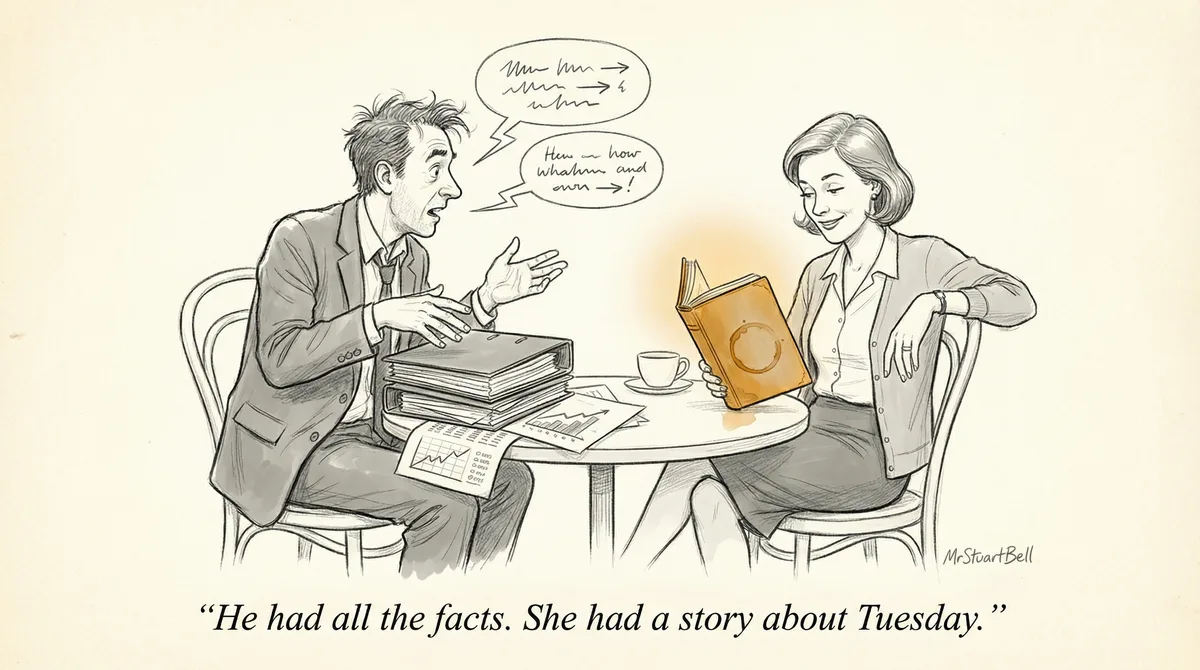
Business owners thinking about writing a book for their business often need help using personal stories to reinforce their message.
One group dismisses them, thinking, "this is a book about a service. It doesn't need stories." The other focuses too much on their journey, making it too much about themselves rather than tying it back to the reader.
Stories are powerful for two reasons. They help readers picture themselves in the situation you're describing, often mentally filling in the blanks themselves between the story and their unique position. They also help reinforce your point by building credibility and authority, as you're not just telling readers something but demonstrating where it happened.
Stories help readers picture themselves in the situation you're describing, often mentally filling in the blanks themselves between the story and their unique position.
I recently recorded a podcast with Tim and Patricia Ash, who use their financial crisis story to do just that. Their book, Debt B Gone, a guide to getting out of debt, starts by describing their journey and how it relates to the reader. They use it to create empathy by demonstrating how they've been through the same situation and credibility by sharing their results.
The good news is stories don't need to only be your own. Sharing the experience of clients or colleagues is just as beneficial, and anonymizing the details is simple to do if you're concerned about privacy.