A study from GTM Partners found that 83% of satisfied customers say they're willing to refer.
Only 29% actually do.
That's not a motivation gap. Those people genuinely want to help. They like you. They trust you. They'd send you business tomorrow if they could.
Here's the problem. They don't know what to say.
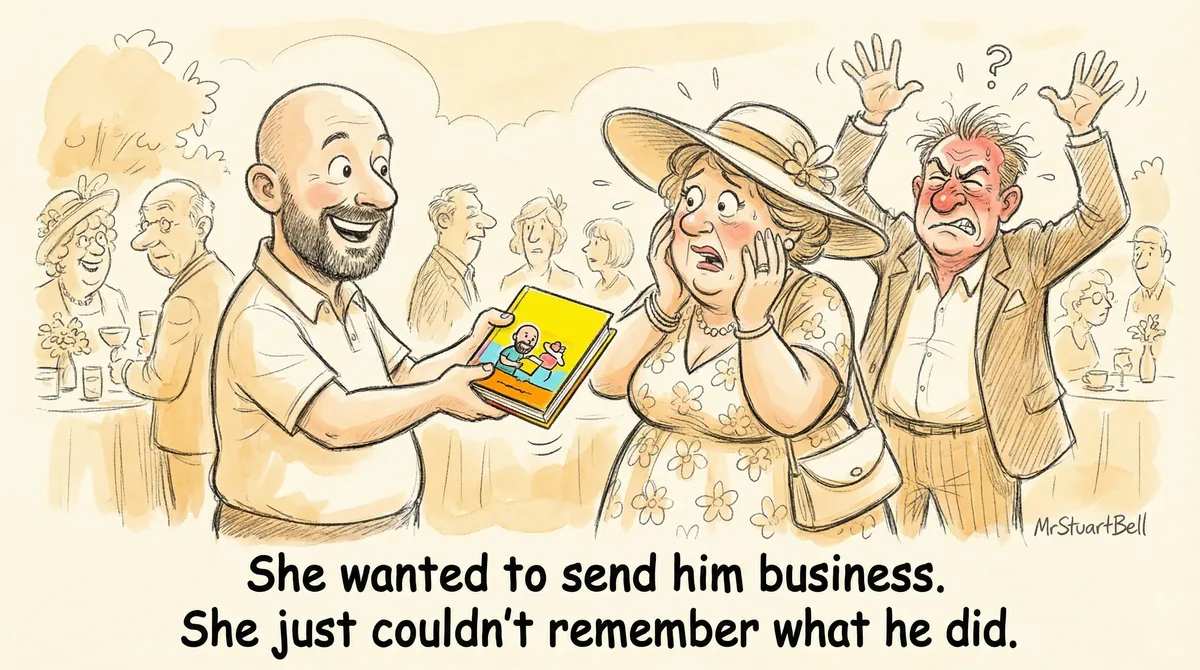
Someone at a dinner party mentions they're worried about their estate plan. Your client knows you're a great estate attorney. But in the moment, all they can come up with is, "I know a guy, let me find his number." And then they forget. Or the moment passes. Or the other person nods politely and changes the subject.
People don't fail to refer you because they don't care. They fail because you gave them nothing to work with.
The handoff problem
Think about what you're actually asking someone to do when you say "send me referrals." You're asking them to recognize a conversation that relates to your work, remember your name at the right moment, articulate what you do in a way that sounds compelling, and then convince the other person to take action.
That's four steps. Most people can't even remember where they left their keys.
The referred customers who do make it through are worth it. The GTM Partners data shows they spend 16% more and stay 37% longer than customers who come in through other channels. So the prize at the end of this is real. You're just making it nearly impossible for anyone to get there.
A trigger phrase and something to hand over
This is the framework I keep coming back to. If you want referrals to actually happen, you need to give people two things: a trigger phrase and something tangible.
The trigger phrase is the specific thing to listen for. Not "if you know anyone who needs a financial advisor" but "if you hear someone worrying about whether they can retire on time." One is vague. The other paints a picture your referral partner can actually recognize in a real conversation.
The tangible thing is what they hand over. A business card sits in a wallet until it goes through the wash. A book sits on a kitchen counter for months until the person finally picks it up. One of those has staying power.
"You need to read this" is a complete sentence. It doesn't require your referral partner to explain what you do, pitch your services, or remember your elevator speech. The book does the explaining. The referral partner just has to get it into the right hands.
Why the gap exists
92% of consumers trust recommendations from people they know over any form of advertising. That's the good news. The desire to listen to referrals is already there.
The bad news is that most professionals treat referrals like a wish instead of a system. They say things like "your referrals mean so much to us" and think that's a strategy. It's not. It's a thank-you card trying to be a growth plan.
Everyone wants to refer you. Your clients, your partners, your friends. They just need you to make it easy. Give them a phrase to listen for and something to put in someone's hands, and you turn every conversation they have into a potential door opener.
Close the gap
The difference between 83% willing and 29% doing isn't complicated.
The willing ones don't have a tool.
Give them one.
A book with a clear title that says exactly who it's for and what problem it solves. A trigger phrase they can remember without thinking. A reason to say "you need to read this" instead of "you should call my guy."
Your best clients already want to send you business. Stop hoping they'll figure out how and give them something worth sharing.