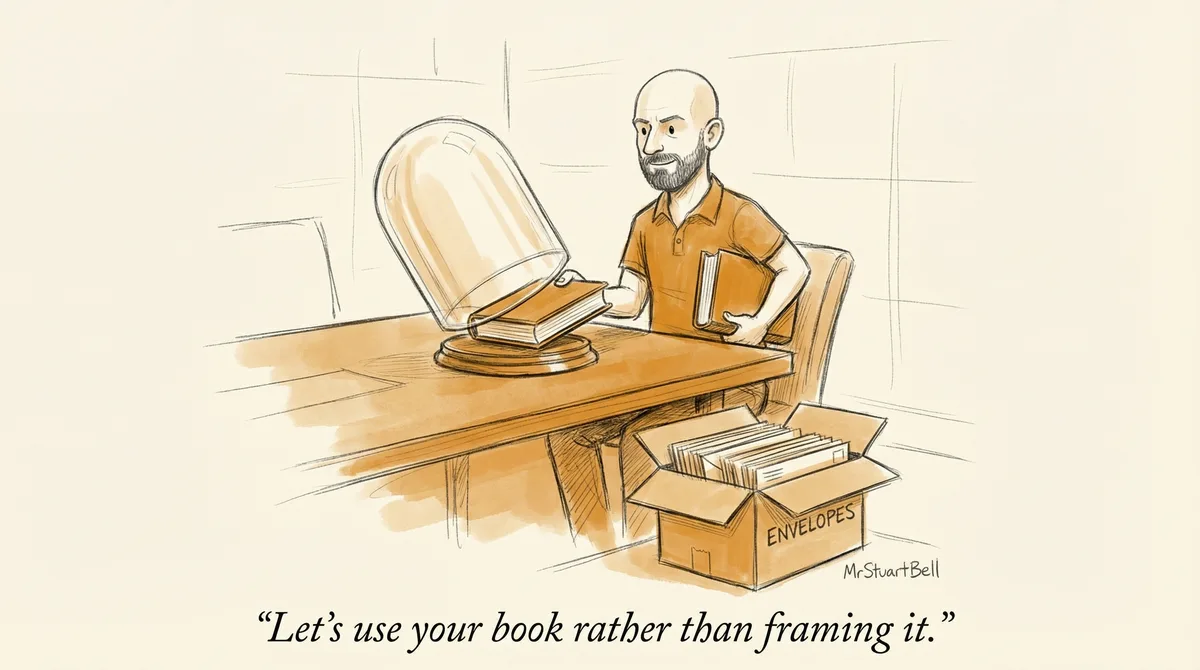
The best thing about finishing your book isn't having a book.
It's having a reason to reach out to every prospect you've been meaning to talk to.
I was on a call last week with Kendall Pouland. Kendall runs a great company that helps construction firms optimize their processes. Her book, Construction Without Chaos, just came off the press, so we spent the whole call talking about what to do with it.
Within 30 minutes, we'd mapped out a plan. Mailing physical copies with handwritten notes to her top 100 prospects, using the book as a door opener at industry events, turning each chapter into a standalone blog post that bridges back to the book, and reactivating old leads who never converted.
Same book. Dozens of ways to start real conversations with the right people.
Your book isn't the finish line. It's the starting gun.
The conversation-first launch
Here's what most people get wrong about launching a book. They think about Amazon rankings and social media announcements. They miss the obvious play.
Your book is an excuse to talk to people you already know.
That's exactly what Kendall's doing. She's not just hoping strangers find her book online. She's taking five copies to the next industry event and handing them directly to the people she wants to work with. She's mailing one to the prospect she met at a conference six months ago with a note that says, "I finally finished this. Thought of you."
That's not cold outreach. That's a warm conversation with a reason attached.
I've seen this pattern enough times across nearly 1,200 books to know it works. The business owners who treat their book as a starting point, not an achievement, are the ones who fill their calendars. The ones who put it on a shelf and wait for the phone to ring are still waiting.