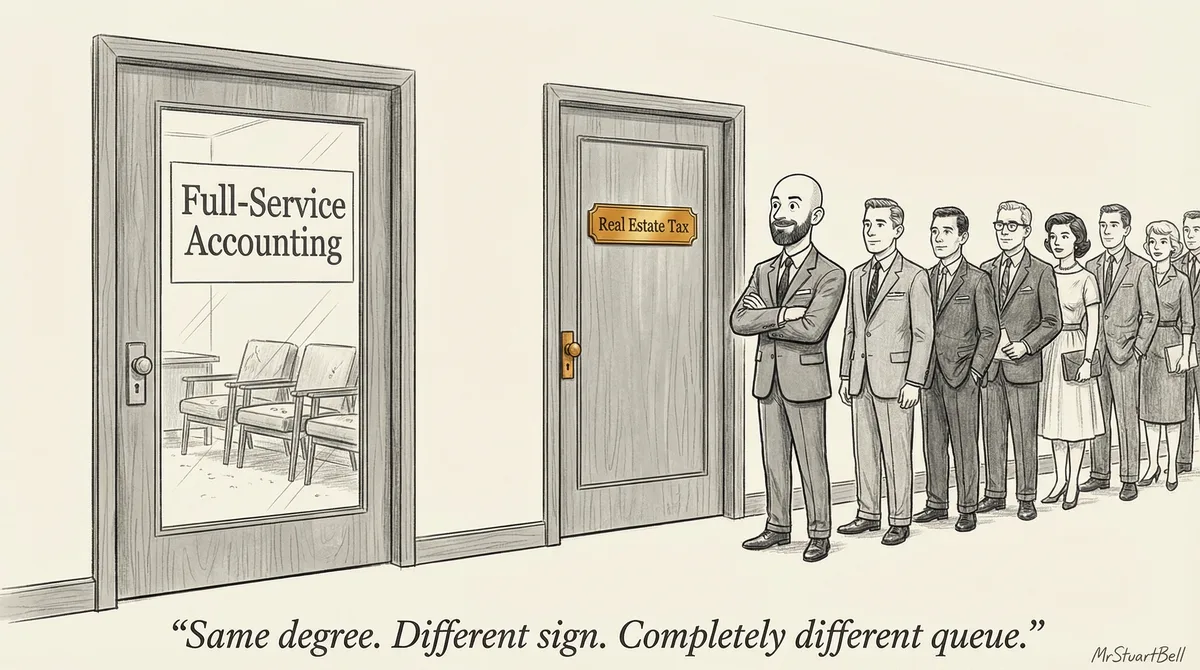
I came across a Winding River Consulting panel with Brandon Hall and Randy Crabtree. They were talking about how they built their firms. Hall CPA does real estate tax. Tri-Merit does specialty tax credits. That's it. That's the whole strategy.
It reminded me of someone I'm working with right now who did the exact same thing. Dave Spray runs Export Advisors out of Houston. His entire business is one obscure corner of the tax code called the IC-DISC, a program that helps U.S. exporters convert ordinary income into qualified dividends. He's been doing it since 2006. Nothing else. Just that.
Three tax professionals. Three narrow lanes. All three became the name in their space.
Your niche already exists inside your client base. You just haven't committed to it yet.
The Scary Part Isn't Picking. It's Staying General.
Most professionals I talk to think the risk is in specializing. That they'll lose clients. That they'll miss opportunities. That picking a lane means the other lanes disappear.
Here's the thing. The risk is actually on the other side. Every year you stay general, someone in your market is getting more specific. They're becoming the name for real estate tax or IC-DISC savings or R&D credits. And once they own that space in people's minds, you're not competing with them. You're invisible next to them.
Hall CPA didn't become "the real estate tax firm" overnight. But every piece of content, every talk, every referral conversation reinforced the same message. Dave didn't become the IC-DISC guy by accident either. He spotted a gap that most CPA firms couldn't be bothered to fill, and he built everything around it, including a book, a podcast, and a dedicated website. Cisco did something similar with a 45-page book that's probably made them millions. That's how specificity compounds.
I wrote about this same pattern with specialist law firms beating the big names. It plays out exactly the same way in accounting.