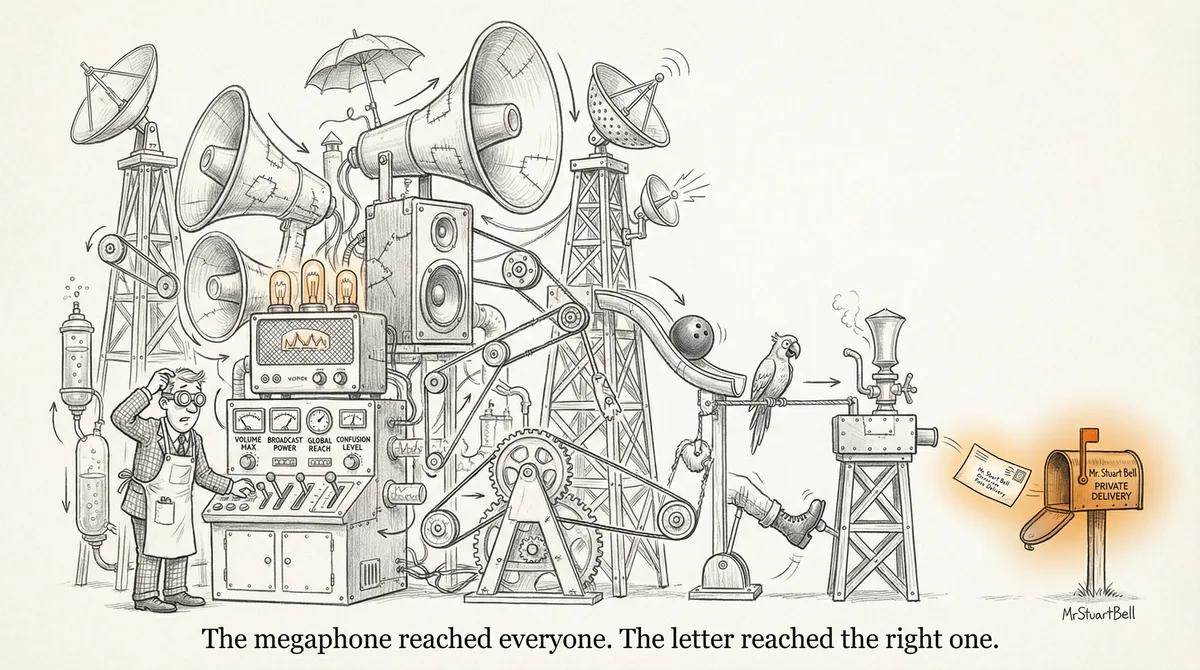
Targeting a smaller audience feels like leaving money on the table. But trying to speak to everyone means no one hears you clearly.
I recently had a great conversation with therapist Megan Cannon that perfectly illustrates why "everyone" is the worst target audience you can pick.
Her initial thought was to write a book for "anyone struggling with anxiety."
The Problem With That
- Too vague to connect with any specific person
- Anxiety manifests differently for different groups
- The message gets diluted trying to cover everything
- Nobody thinks "this is FOR ME"
- It's impossible to plan your follow-up because you don't know who they are
The breakthrough: Focus specifically on men who resonate with the idea that responding to anxiety is a choice, not a life sentence.
Same core service. Same expertise. Completely different impact.
She's not turning away other clients. She's deciding which conversations to start with this work.
We All Make This Mistake
We make this exact mistake with marketing all the time:
- "We serve small business owners" (which ones?)
- "We help entrepreneurs succeed" (at what specifically?)
- "Anyone who needs our service can work with us" (why would they pick you?)
The thinking goes: cast a wider net, catch more fish.
The reality: vague messages get ignored. Specific messages get responses.
Here's what most people get backwards:
- Narrow targeting doesn't shrink your audience
- It makes your message sharp enough to cut through
- Most clients only see the messages you send them
- People outside your target will still reach out if the value is clear
Megan's practice will help far more people by targeting more precisely in each campaign. And those people will feel like she's reading their mind because she knows the conversation ahead of time.
That's not a limitation. It's strategy.
P.S. Choosing a single target audience is just the starting point. But it's the one decision that makes everything else easier.