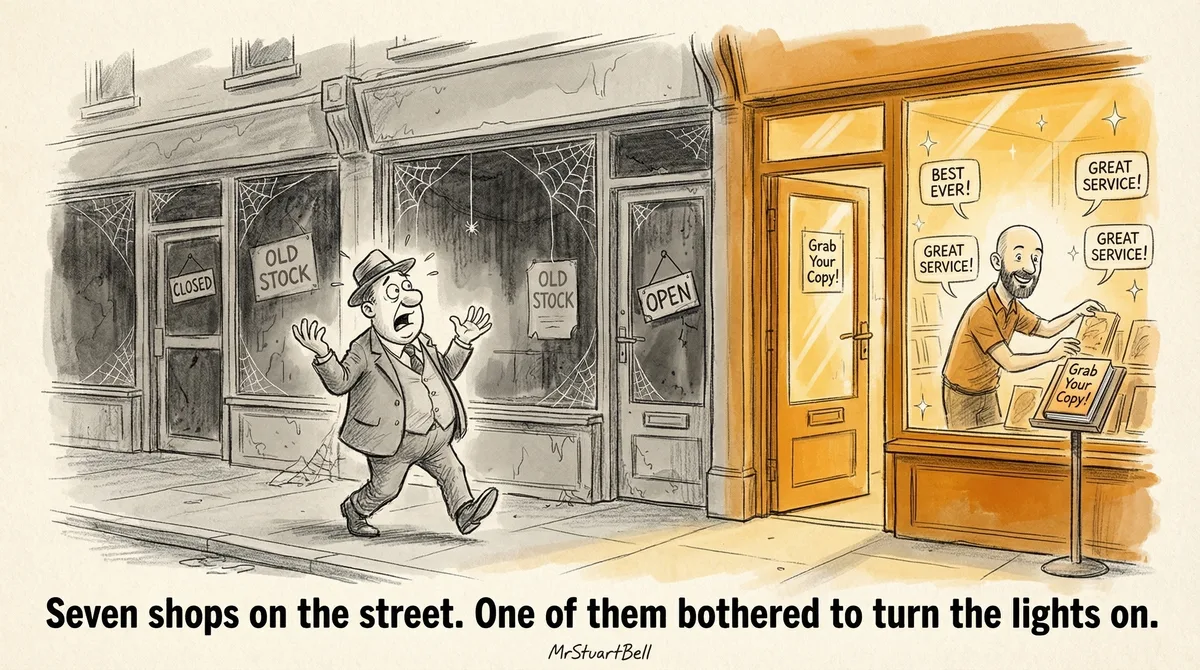
BrightLocal's 2026 Local Consumer Review Survey tells a story that should change how you think about marketing. 97% of consumers now read reviews before choosing a local business. 47% won't even consider you if you have fewer than 20 reviews. And 74% only care about reviews from the last three months.
Those aren't scary numbers. They're encouraging ones.
Your customers aren't avoiding you. They're actively looking for reasons to pick you. They're searching for evidence, reading testimonials, checking your track record. They want to feel confident before they call. They're practically begging you to give them permission to trust you.
Most businesses never do.
Your customers are actively looking for reasons to pick you. The question is whether you've given them any.
The Permission Gap
Here's the thing. The same study found that only 35% of small businesses even have a Google Business Profile. Which means two out of three businesses are invisible in the one place nearly every consumer is looking.
But this isn't really about Google reviews. It's about a pattern I see with almost every business owner I work with. They've got years of expertise. Real results. Genuine insight into their clients' problems. Happy customers who would vouch for them in a heartbeat.
None of it is visible to the person searching for help right now.
Your credentials are on your About page. Your testimonials are in a PDF somewhere. Your best thinking is locked in your head or scattered across a dozen LinkedIn posts from last year. It's the same problem I wrote about in why expertise won't speak for itself, and nothing's changed.
What Customers Are Actually Looking For
The BrightLocal data reveals something important about what "proof" means to a buyer. It's not just star ratings. 42% of consumers won't use a business that ignores its reviews. 89% expect you to respond. They're looking for signs that a real person is behind the business. Someone who cares. Someone who's paying attention.
They want evidence you've done this before. Evidence you understand their problem. Evidence you're not just another name in a list. As I've written before, nobody checks your pilot's license. They assume you're qualified. What they're really deciding is whether you get them.
Reviews are one form of that evidence. But they're limited. You don't control what gets said, what shows up first, or whether someone scrolls past the one unhappy customer to find the forty happy ones. And 74% of consumers only trust recent reviews, so that glowing testimonial from 2023 isn't doing what you think it is.