Chapters
Show Highlights
- Your book can pre-educate prospects about complex services before they contact you
- Patients who read your book first come to consultations already understanding your approach
- A book helps potential clients self-select rather than wasting your time with poor-fit prospects
- Technical procedures become easier to explain when broken down in written form first
- Better conversations happen when people understand what you do before they meet you
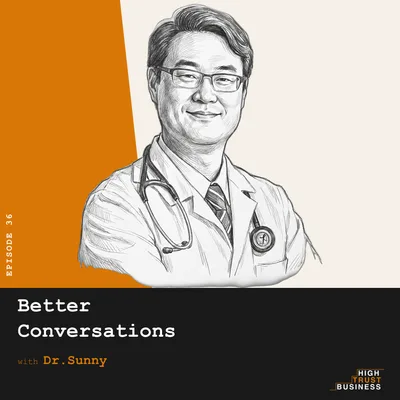
Most medical practices struggle to explain complex procedures to potential patients. Dr. Sunny Kim found a better way.
Sunny runs Progressive Rehabilitation in Cedar Rapids, Iowa, specializing in non-surgical treatments for spine, sports, and musculoskeletal pain. His challenge? Explaining relatively new, technical procedures to people who've never heard of them.
His solution was writing 'The Ultimate Non-Surgical Knee Pain Solution.' Instead of trying to educate people during expensive consultation time, his book does the heavy lifting first.
The result? Patients show up already understanding what he does and why it might help them. No more confused prospects. No more starting from zero in every consultation. Just better conversations with people who've already decided they're interested.
Transcript
AI transcript provided as supporting material and may contain errors.
"Foreign."
Stuart: Welcome to another episode of the book More show. Another interview with one of our authors here and it's a. It's a great pleasure to catch up with Dr. Sunny Kim. I'd watched Sunny's book go through the process maybe three or four months ago now, but this is the first time we've actually got to speak. So it's great, great opportunity to catch up on what's been going on over there. Dr. Kim's in Cedar Rapids in Iowa, nearly said Idaho, then in Iowa, and is a medical practitioner. The book that he wrote is the ultimate non surgical knee pain solution. So, Dr. Kim, welcome to the call.
Dr.Sunny: Hi. Hi there. Thank you for having me.
Stuart: No problem at all. I think this is going to be a great opportunity for people to listen into how you wrote the book and what, what you've been doing to use it over the last couple of months. I just thought it makes sense for people to give. Oh, sorry. For you to give a background to people. Maybe talk briefly about what the practice is, what the book is, and maybe what led you to write this particular book.
Dr.Sunny: Sure. So my medical practice is in Cedar Rapids, Iowa. It's called progressive rehabilitation medicine. And we're particularly interested in the non surgical management of chronic pain with a special emphasis on regenerative medicine. So we treat things like neck pain, back pain, knee pain, shoulder pain without the use of invasive surgery. And what we're doing is we're tapping into the body's natural ability to heal itself. Because if you think about it, in the history of medicine or surgery, there's absolutely nothing that practitioners have done to actually heal somebody. The healing actually occurs within ourselves using the cells within our bodies. And what we're doing is we're just tapping into that.
Stuart: That's such a great point, isn't it? Because as an outsider, as a layperson, you tend to think of the. The outcome or the intervention as being the thing that does the healing. But it's a great position to think about it and far more accurate to think that what you're doing in the intervention is creating the situation, creating the circumstances for the body to, to heal and repair the damage that's been done.
Dr.Sunny: Absolutely well stated.
Stuart: You find? I think the title itself is a fantastic title. When someone is in a situation of having knee pain, the ultimate non surgical knee pain solution can telegraph exactly what the message of the book is. Have you found that writing this particular book has kind of predisposed people that you end up speaking with patients that eventually come to you? Does it predispose them Slightly. Or educate them in that, in that framework, as an outsider, it might be something or as a patient, it might be something that I'm not necessarily familiar with. So has the book done a job of doing some of that baseline work for you to set the scene?
Dr.Sunny: Yes, absolutely. So a lot of patients are looking for the, for non surgical options. And a lot of patients, they're not fully aware of all the different options. They're just being told that if you done PT and steroid injections in the next step of surgery. But the problem is, of course, a lot of patients, especially nowadays with the Internet and talking to their friends and different modes of communication, they're finding out that surgery sometimes doesn't go so smoothly. So I do, I do observe that there's somewhat of a predisposition for readers of my book to want to approach it non surgically.
Stuart: I imagine of all of the. With any business there's a better suited client that, that walks through the door and a less better suited client that walks through the door. So I imagine that having people educate themselves slightly or take those first steps at least to understand what the program is must smooth the journey a little bit. As they're coming from clients who are just walking into the door to clients who actually end up becoming patients. That. Is that an easier conversation? Is it? From a business process point of view, are you finding it a little bit smoother to transition them from inquiries into patients?
Dr.Sunny: Yes, absolutely. So what the book I've observed has done is pretty much create the framework for the patients to addressed a lot of their concerns. And they may have heard bits and pieces of some of the concepts that I talk about in my book. But the resources that they've been tapping into, it's usually hearsay or word of mouth or stuff that's on the Internet. So the book creates a framework to help organize those thoughts for them so that they can make a much more educated decision.
Stuart: And I imagine that as, as a patient, I'm working with someone quite close at the moment who we're going to do a, a series of podcasts with. We're writing a book about the immigration process for bringing spouses and fiances across. So different environment, but similar structure in the sense that there's so much information available out there, but so much of it is hearsay, that it's really quite a benefit to people reading that there's a authoritative, comprehensive source of information rather than trying to piece it together themselves. I can imagine anyone that's reading it is getting that sense of certainty as well, so not only is it building your authority in the area, but it's almost reassuring them that a decision that they perhaps made or on the cusp of making is the right one, because you're given a lot of background to their situation and the problem that they're going through. Do you have any feedback or do you get much feedback from people with that type of message to say that the book not only has provided information, but reassurance?
Dr.Sunny: Yes, yes. Because a lot of patients, they don't have maybe the education or background or the skill sets to critically analyze a lot of the material that's out there. So what we're bringing forth to them is decades of experience. And as long as they're good with trusting me on that, then we've just done decades of research for them. And that would be very difficult for a layperson to try to, you know, decipher what's real or legit on the Internet. And that's the main mode of information that people are. Are tapping into. But as you know, the. There's a lot of false information, misinformation and disinformation on. On the Internet.
Stuart: Right.
Dr.Sunny: And so what we're trying to do is to break it down, make it easier and simpler for them to understand and to put the material in a context so that they can come to a better decision and come to a better decision and take action for something that's been bothering them for many, many years.
Stuart: I was talking to David Curt in the last. I think as this show goes up, it will have been the last interview show that went up a few weeks ago. I was talking to David about that point that as a business owner, sometimes it's difficult to separate out complex knowledge from the simple knowledge. And we undervalue the simple knowledge a little bit because we're in it day to day. So some of the things that seem very straightforward and basic to us, it's easy to forget that an outsider just beginning the journey to collect that information will still. There's still a desperate need, a sort of a voracious appetite for the more simpler steps. But the point that you just raised as well is equally valid at the other end of the spectrum, there's for subjects that are more complicated or more in depth or involved, like the surgical practice around knee pain as the example, to be able to distill that and bring it together for someone and then present it in a way that's easy to consume, that's almost the other end of the spectrum. It's not like we're trying to oversimplify and just provide people with the basic information. It's that there's a lot of complicated input information out there as well. So distilling that into something that's easy for them to consume really adds value at that end of the kind of quality of information level as well. I think it's a great skill and something that a lot of business owners don't necessarily remember is that they have that experience and that skill to be able to do that job of being the trusted source of information and presenting it in a way that's easy for an outsider layperson to consume. So not get carried away in the technical details of it too much, but still distill that technical information into a way that's easy to consume. I can, I imagine that there's quite an appreciation of people reading the information that is in that format that is in a way that's easy for them to understand and is positioned at their level.
Dr.Sunny: Yes, absolutely. And communication is a funny thing, right? Because when we communicate, it should be a two way street. And with communication, oftentimes there's a misunderstanding that occurs when maybe one or even two words are not understood by the person listening. And that can completely throw off the entire communication. But let's face it, most people, if they don't understand a word, they just kind of assume that they have a certain preconceived notion of what that word means and may not speak up and ask what that word truly means within the context of the conversation. And that just throws off the understanding of the material. I'll give. For example, we had a patient who came in and she was really upset. She was really upset because she was reading her MRI report of her knee and the radiologist said that there was warping. Okay, there was warping. So the patient was really upset and said, oh my gosh, my new knee, because she had a knee replacement, is warped. My new knee. Her interpretation was the metal was warped. Well, what the radiologist was referring to was that metal, when you put it through an mri, the image becomes warped because mri, the metal and the magnetic field do not interact very well and the image actually becomes distorted. And so he's using the term of warp in the sense that the image was distorted by the metal in the knee and not that the metal was warped. So as you can imagine, a simple word misunderstanding of one word completely changes the conversation.
Stuart: And you can imagine that from the person who was saying that is using it as an insider phrase that's used all the time. There's a clear understanding the person receiving the information that the lady hearing it is has no. No concept that she's about to misunderstand the word warped. So everyone's there from 100% certainty about what they just said, but both parties are then, as you say, coming from completely the opposite direction. I think that's an interesting concept to pick up on briefly on the book itself, in the sense that many of the books that we help people write are in the conversational format. The thinking being just as you said. It's the way of being able to communicate complex elements of the discipline, speciality in a way that's more conversational and more accessible to the reader, because the reader is coming to it from the point of view of just joining the conversation, not necessarily having all of their inside language. So I think the nature of the books in a conversational format means that slightly easier to get across because there's a conversational element to the. To the content that is often easier then to put it into context. So rather than something that's written purely narrative, where the word warped metal within the knee might just be glossed across relatively quick because there's a broader point to make. The likelihood of it being elaborated on in a conversation is slightly more. Because it is a conversation with one of our interviewers, Susan, for example, where you're more likely to. The nuance of it is more likely to come out. So I think it's a great point to think about whenever someone's writing. Think about it from the point of view of the reader rather than from the point of view of trying to establish too much authority and use big technical terms that might be misconstrued on the other side.
Dr.Sunny: Absolutely, yeah. I mean, if you write a book like a doctoral dissertation, you're gonna lose everybody.
Stuart: Right.
Dr.Sunny: We've got to bring it down to a more interactive format.
Stuart: I think as well, the thought that, as you just said, that the comparison people, I think a lot of the times compare it to a kind of traditional textbook, maybe particularly on the more. The more technical disciplines where we work with. So doctors, financial guys particularly, there's a lot of insider language that's often used. And because the business owner, the author, a lot of what you read is that type of technical piece. Because you're at that higher level, it's very easy to position it on the wrong side and think that you have to be overly technical and almost caveat every sentence with three or four more technical sentences. I know I fall into this trap quite a lot because there's Very rarely one answer to anything. But I think positioning the books or understanding that the books work best as the start of a conversation. So you're not trying to comprehensively cover everything, but it's to give someone enough understanding and enough knowledge and give them the confidence that they're either definitely on the right tracks and therefore continue to the next step, or definitely on the wrong track. So go investigate something else. But understanding that it's the start of the conversation really helps, I think, to position it as that as the start of the conversation. And obviously there's somewhere else you can go to find out more, which is the back of a copy that are leading people to the next step. But I think that sets it up in a much, much better way. One of the things I was going to ask is oftentimes people will talk about the unexpected benefits of the book. So they kind of go into it expecting to write one particular thing and sometimes there's other outcomes. Have you seen that at all? Has it been picked up in a way that you didn't expect it to be picked up on?
Dr.Sunny: Sure, absolutely. So our treatment methods discussed in the book is specifically targeting chronic knee pain. But of course, patients are wondering about their friends with other problems. So we often get patients asking about whether or not this method will work, or their aunt with rotator cuff tear, or their friend with Ms. So it's helped to initiate that conversation and to expand upon the different treatment opportunities for other conditions.
Stuart: I think as well, given from this position or starting from the position of giving. So the relationship with the patient is starting from the point of view of you giving them a lot of valuable information to broadly position the treatment, the practice, I think that helps to widen the conversation. It makes it more likely that they're going to think about other people who may be suffering as well. And I think that's one of the great benefits of the books. I've mentioned it a few times before, that it really does begin the conversation and kind of lead with the giving hand and without any expectation of anything back. The majority of people we talk to, we make the suggestion that they don't charge for the books. It's given away to build the practice and to set the conversation going that will later lead to sales. But as the person requesting the copy in the first place, to be given something which elsewhere might be sold for, for whatever the number of dollars is, but they'll be expected to pay for it, to give them something, I think opens up their mind to thinking about other people and how it might sit More broadly, one of the things that people often not so much struggle with, but there's a lot of focus on writing the book in the first place, of getting it created and then the follow up thought of okay, now I have it, how do I use it? That sometimes trips people up as they get a little bit too focused on the process and not the use. So I don't run people through how your using it within the practice. Are you physically giving it away or is it an online opt in to collect leads that way?
Dr.Sunny: Sure. We have two main mechanism which is an online subscription so the patient would be able to download it as an ebook. And then the other method is when the patient actually comes in and if the patient is a good candidate for some of our care, we'll often present the book to them, give it to the book, give the book away to them with other information. So that includes testimonials and magazine publications and a little thank you card and we'll package that and we'll give it to them fantastic. As their informational package. And that has been received very, very well because oftentimes, especially in a medical consultation that the patient does not fully grasp everything that was said or they may have some questions down the road later. So then they'll just have that information that they can review at home. And that has been very, very successful in terms of getting patients to understand the value of our care and to sign up for treatment.
Stuart: I guess as well it differentiates from the competition. I mean the nature of what you do, I guess is a little bit more specific. I imagine there's not someone offering the same solution on every street corner there. But even so, I would imagine that the patients receiving that package have an expectation of prior doctor visit elsewhere and to be presented with something that's packaged together in, in an appealing comprehensive way that is positioned to give them the opportunity to understand more about it rather than kind of forcing them into making a decision straight away or making people feel, and not stupid but perhaps pressuring them slightly on a, on an intellectual level and say well obviously this is the thing you want to do. I can imagine that's, that's very well received. I know Dan Kennedy, there's a kind shock and awe package for high ticket items that, that he's taught for, for many years, kind of over delivering on the expectations and, and really packaging a lot of stuff into the shock and awe package that people are overcome with to a certain degree. That's not always practical for businesses, but there's definitely an opportunity for almost every business to create some variation of that. So thinking about the, the journey, the onboarding from the customer's point of view, what opportunities are there to deliver a little bit extra at a stage in the process when they're not necessarily expecting anything extra. I imagine, as you said, that really helps with not encouraging them to take the next step, but. Yeah, encouraging them to take the next step.
Dr.Sunny: Absolutely. Our package looks pretty good when we hand it to the patient. So we've had more than one patient tell us, I can take this for free. I said, yeah, that's for you to keep. So on another level, you know, we're giving them something of value. And so I think that that helps in terms of them feeling comfortable with the practice.
Stuart: And it's such a great opportunity to kind of step out from the Norway and kind of break their, their expectation pattern of, of what's happening. As you said, the patient's been in there for a period of time, in a time that's maybe slightly stressful anyway because they're in pain, they're getting presented with information that they're not necessarily that familiar with. So I can imagine there's quite a lot of overload to a certain degree in the process. So to be able to break that pattern and, and give something for free and, and get people to it almost kind of brings them back into the room a little bit and gives an opportunity for that conversation to take on a little bit more power and continue almost after they leave. Because I imagine that for every person that's mentioned it to you, they've also mentioned it to several other people. And the benefit of the book and the package as a whole, then out there doing work for you after the, the initial consultation is finished and done with, imagine there's a little bit of a unmeasurable long term benefit of getting these out into the community.
Dr.Sunny: Yes, absolutely. We've even had patients come back to pick up more packets because they had so many friends who want to know more about what he was talking about. And I had a patient pick up six packets and he just started giving them to his friends.
Stuart: And that's, I mean, that's pretty outstanding, isn't it? There's not many marketing opportunities that you've got out there whereby the customers then, then grab it and run with it. And I mean, we're not suggesting that these books are things that will go viral as such, but there's not that many opportunities that you have to, to make an investment into something that then the customers come and take and kind of actively promoting it on, on your behalf. That element of sharing the books into other communities. I'm not sure whether you've had any opportunity or whether there's anything local where it makes sense, but have you had opportunity to share the book into other groups? So I guess I'm thinking things like other rehabilitation organizations that might be in the area often talk about the terms of kind of complementary, non competing. So for we had the example a little while ago we were talking about Weismans for Pets for dog owners and the book there was given to local veterinarian practices to give away and add value to their customers. Is there anything similar in the area there? I don't know whether you've had a chance to explore that avenue.
Dr.Sunny: So I looked at that and it started with us mailing out copies of the book for all, all new patients with appointments. And so I guess the next level would be, you know, just having complementary copies on the shelves at different offices, other medical groups or even other medical facilities or in the hospital. But what I've observed is sometimes when the book is presented before the visit, the patient kind of feels a little bit lost because they don't understand what the context is. But it tends to be a lot more effective and powerful when it's presented like after the consultation. That's just been my experience and that's a great point.
Stuart: I don't think it's necessarily come up on one of the calls before because I mean we talk about the books often as it's a catch all term for a thing, but really the use case for each one is very, very different and someone writing something that is very kind of early stage lead generation that doesn't necessarily require context is quite different from your experience of it not being as effective when that context isn't presented. I think for anyone listening in, thinking about how they're writing or the book that they're thinking of writing, thinking about what the context is in which it will be received is a great additional step to kind of really amplify the effectiveness. And whether it's a case of you need to test it first and see what the results are or whether you can assume what those results are before you go in or maybe even the case for some people listening where that context will be important, but perhaps they've got a way of position of sharing that context as the books delivered. I know we work with an osteopathic practice in the UK who do shockwave therapy. So again a non invasive therapy for as a non surgical alternative over here. So they were working with a local hospital that didn't have the facilities, but who wanted to refer people through. So they were seeing an amount of success because I think the key differences you just identified, they were having a third party present the book, but rather than just picking it up off the shelf in the practice, in the hospital, rather they were being presented it by the doctor and a bit of context was being set at that point. So I think it's a great point that hasn't come up before, that the book by itself is a tool, but the context in which it's presented is really. That's kind of cements the. The next step.
Dr.Sunny: Absolutely. You know, because a lot of, a lot of patients are like, who's this Dr. Kim? How come I haven't heard about him? Right. But then when you meet me and it becomes very, very real. Right. And then we have that conversation, we have the consultation, it just makes everything, it just brings everything back down to home and makes it very real. And then when it presented at that point, well, then they take it a lot more seriously.
Stuart: Right. It's almost as if there's the meeting, then the consultation you have is almost the job that you're trying to achieve is almost just reaffirming a message that at some point they've already agreed to, because having done whatever work was necessary on their side to get to the meeting, which includes reading the book for a lot of people, then if they're there, sat in front of you, they've already made that decision internally to a certain degree that they agree with what you're saying. So to be able to just to reiterate what's in the book, what they've read already, almost a lot of the work has been not a lot of the work, but a certain amount of the work and the positioning has already been done and they're self selecting by the fact that they turned up. I think the other point is the. Or the other element is the authority piece. So we often talk about this. There's a point in time at the moment where books have an additional authority that doesn't necessarily reflect the difficulty in creating them. So 15 years ago, creating a book was difficult. You pretty much needed a publisher because self publishing wasn't really a practical option, but technology has made it much more straightforward. But as an outsider to the process, seeing someone's face on a book and reading a book that they've written still has a lot of authority carries with it a lot of authority. So the point that you made there about people beginning saying who is this Dr. Kim? And then sitting down in front of the author of the book that they've read is another benefit. The kind of. The softer benefit. Not necessarily the reason to write in the first place, but definitely an amplifier to. To the relationship. One of the things that I'd been asking the people in the last couple of calls is if there's anything that you do differently. So now being on the back end of the process, and obviously people listening to this, a lot of them are on the front end of the process. Is there anything about the writing process or the marketing process afterwards that looking back now you do differently?
Dr.Sunny: Honestly, it's worked out so darn well. I really can't think of anything. In fact, I'm so excited about it, I want to get to work on my next book, to be quite honest.
Stuart: Fantastic. Well, I mean, just for the audience listening, that wasn't a. That wasn't a seated question, but always great to hear. I think one of the things that I was. Again, we're talking with David with a couple of weeks ago, there's. He was talking to a friend or a colleague and there was some apprehension about starting. He also. It's actually just starting his third book now, but he was saying the difference between the first and the second one was there was so much, not anxiety as such, because like, you noticed his subject pretty well, but there was a certain amount of apprehension about getting started. But the second one was much more straightforward because he was comfortable with the process, kind of knew the outcome, knew what he was trying to get to. So the second one was a lot more. It was a lot easier to produce. And I think for your situation particularly, you'd mentioned that even with a book titled the Ultimate Non Surgical Knee Pain Solution, people are already referring it into different pain categories or injury categories. So there is a certain argument that you could almost just change the title on the book and target the neck pain sufferers or the back pain sufferers. I mean, obviously you want to do a little bit more, but there is a certain amount that the title identifies the group and the content could be broadly the same because the outcome is broadly the same. So being able to quickly and easily create something that's very targeted to that message, I think is a. Is another great opportunity.
Dr.Sunny: Yeah. And my thought is to have a non surgical, you know, pain relief series and keep the format very similar and have a series.
Stuart: Yeah, I mean, it's such a fantastic. We've got. There's an author that we have called Don Barden who's I think they're to their fifth book now. They've got a very similar approach in that they have a framework, they do consulting, sort of large, large company consulting. So the framework that they've got is broadly the same but having those slightly different entry points. And it really does help you create a, a multitude of funnels that are targeting each of those niche audiences in the way that's, that's most engaging with them. And the outcome at the bottom of the funnel is, is pretty similar for all of them. Obviously the specifics are different, but it's a similar solution that you're talking about. And I think that series approach where there's a commonality to the kind of the look and the feel and the, the next steps that people can take is a fantastic opportunity to, to really target that niche of people and help them through the process too to at the end of the day have a successful outcome and no pain in a way that targets them at the front end of the process in a way that's the most likely to capture their attention on the back of. I'm conscious of your time as well. I'm very appreciative of being able to catch up today. So I guess in closing there was two questions I wanted to ask, sort of the first one is, is there any advice for people listening to this and maybe on the fence or not quite sure about whether this is a good solution to them. So any advice for those guys and then the follow up questions more specifically for yourself. So is there any, anything that if you could, if you had one wish that either the book could do or something, a challenge with the book that you wish could be immediately solved? Is there anything that springs to mind there? So I guess starting with the first one, any advice to people listening to this as a way to get started?
Dr.Sunny: So my advice would be don't overthink it and just follow the procedures outlined by you guys. Because obviously this is a method that's worked well for me and there's a reason for it. The methodology works. And if you got something that works well, don't reinvent the wheel, just duplicate it. My professor entrepreneurship would always say, don't reinvent the wheel, stupid. Just copy, you know, I mean, because a lot of work went into it, right? I mean this stuff has been tested. We know it works, it's worked for me. So just don't overthink it and just be reassured that you guys are the professionals. Just similarly, when a patient comes in for a consultation, you know, there's a certain Authority that I bring to the table and you guys bring to the table similar authority in your field, I
Stuart: think I might start using that as an example in the future, or I'll share it with Betsy at least. And Susan, there's quite a few times where, as you say, people will come on board or think about coming on board, but there is a reluctance to follow the system. And I think to a certain degree that's because we're dealing with a lot of entrepreneurial people and, and trying to tell people that there's a system you just want to follow, you don't need to reinvent something new can be a bit of a challenge. But I think I'll share this with them and remind them that as you're sat with patients or in the middle of a procedure, if a patient were to look up and sort of shake his head and say, well, are you sure you want to do it that way around? I can imagine you'd look back down and say, well, who's the expert here?
Dr.Sunny: Yeah, exactly. That's precisely right.
Stuart: On the surgical side, I can imagine it comes with a. If you have a needle in your hand or a scalpel, there's a lot more authority that goes along with what you're doing.
Dr.Sunny: Right.
Stuart: The follow up question then was for yourself particularly, is there anything that has been not so much a pain point, but if you could wave a magic wand and have one problem or challenge with the book sorted out, whether that's a quick and easy way for bigger distribution or, or a promotional campaign set up. Is there anything that springs to mind on how you would better use it if there were no constraints to it?
Dr.Sunny: You know, I'm not a marketing expert, but I think what you're alluding to is different platforms and how to get it out there. And like I said for myself, I've just found it. We're just so darn busy. I found it more effective in my practice to present it after the consultation, but I certainly can see if we can get a digital copy out there and maybe put more color to it. That might be more. That might help create more leads. But here's the thing, and everyone's market is different, but with my market, it's underserved in this area. So we're just so darn busy. But I can imagine in other more competitive markets where having different avenues for creating leads will be more valuable, I just haven't had the need for that in my market.
Stuart: I was going to say, I think.
Dr.Sunny: Any more doctors?
Stuart: Yeah, I was just going to say I think anyone that listening is going to be suitably jealous of the problem of being too busy. So that's a great point. When we get off the call, I'll shoot you a quick email. In the other side of the business, one of the coaching sides of the business, we've got some information around referrals, in the positioning of referrals. So we've got a quick report called the Psychology of why People Refer. I'll get that a copy of that shot across to you as well. I think the way that you said that you're using it, whether or not it's specifically with referrals or whether it's within the context of potential patients in the path. I'll shoot you a copy of that across and it's a short read, but might be quite interesting.
Dr.Sunny: Absolutely, I look forward to that.
Stuart: Fantastic. Well, we'll close up. If people are interested in the solution or the book of the practice in general, where's the best place for people to head to find out more about yourself in the practice?
Dr.Sunny: Our website, www.prmpractice.com.
Stuart: that's great. I'll make sure there's a copy of that link in the show notes as well. So for anyone listening in, head across to either the show notes in the podcast feed or across on the website@90minutebooks.com podcast. Dr. Kim, I just want to thank you again for your time today. I think people listening to this will have got a great deal out of it and it's always great to hear people using their books and for us ourselves, we get obviously spend a lot of time with people in the process, but being able to catch up with people afterwards and, and get that feedback on how they're using it and to hear the success that you're having is one of the highlights of what we get to do. So thank you again.
Dr.Sunny: Thank you very much.