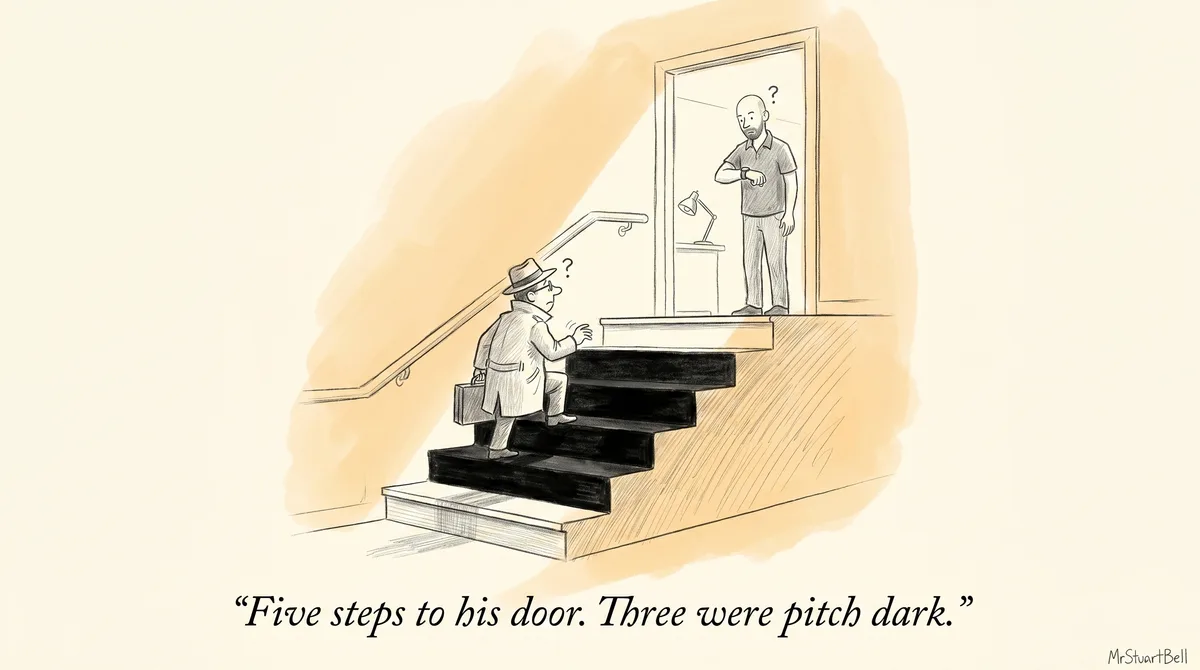
You used to handle all of this in the meeting. That's the part that changed.
I had a conversation recently with a financial advisor who couldn't figure out why his referrals weren't converting. He was getting names. People were hearing about him. But the calls weren't coming.
"They say they'll reach out," he told me. "Then nothing."
He assumed the referral was weak, or the timing was off, or they went with someone else. What he didn't see was what happened between hearing his name and deciding whether to call.
That gap has five stages. And he was invisible in three of them.
The meeting used to be enough
For years, high-trust business owners could solve everything in your conversation. You got the meeting, and you closed the gap. Connection? You built it in the room. Credibility? You demonstrated it live. Confirmation? They left the meeting convinced. You read the room, matched their energy, answered their real questions, and earned their trust across a desk.
That was the superpower. Most high-trust business owners are excellent at Conversation, but that's not what changed.
What changed is that the prospect, willingly or not, is using an AI assistant to do your Connection, Credibility, and Confirmation before and after Conversation. They show up having already researched you. They've already formed opinions. They've read what they could find, or found nothing, and made decisions based on the opinions of their own AI assistant, or the AI options forced on them by search engines.
The meeting is no longer where trust gets built. It's where trust gets confirmed, or doesn't.
Five stages, not a funnel
The High-Trust Ascent™ maps what your prospect goes through before, during, and after they talk to you. Five stages: Contact, Connection, Credibility, Conversation, Confirmation.
It's not a funnel. Funnels filter down by volume. You pour a thousand people in the top and hope fifty come out the bottom. The Ascent works differently. It's one person climbing through trust. Each stage moves them closer to the conversation, or stops them cold.
Contact is where they hear your name. Someone mentioned you, they saw a post, they found your website. You exist in their awareness. Most firms spend most of their budget here.
Connection is where they move from "I've heard of them" to "they seem like my kind of person." Your perspective does this. Your point of view on their problem, in their language. Without it, you're a name on a list.
Credibility is where they move from "I like what they say" to "I believe they can help me." Your book, your scorecard, your case studies, your content. Proof they can consume without talking to you yet. Without this, they stall.
Conversation is the meeting. You're good at this part. You've always been good at this part. The problem is that by the time someone gets here, the decision about working with you is already 80% made.
Confirmation is the one most firms don't know exists. After the Conversation, the prospect checks their instinct. They ask a spouse. A colleague. Or, increasingly, an AI assistant. "I'm thinking about hiring this advisor. What should I know?"
Contact doesn't lead straight to Conversation anymore
That financial advisor was pouring money into Contact. Networking events. LinkedIn posts. A referral program. People were hearing his name. His assumption, the same one most high-trust business owners make, was that Contact leads to Conversation. Get in front of enough people, get enough referrals, and the meetings will come. Then he'd close them, because that's what he's always done.
It used to work that way. Someone heard your name, picked up the phone, sat down with you, and you earned their trust in person. The middle stages happened inside the meeting. You made the connection. You proved the credibility. You confirmed their decision. All in one conversation.
That's not how it works anymore. The prospect's AI assistant is doing the middle stages for them, whether they asked it to or not. Search engines surface AI summaries. Chat tools compare you to competitors. By the time a prospect consciously decides to look into you, the shortlist is already made.
The meeting is no longer where trust gets built. It's where trust gets confirmed.
That advisor's referrals weren't weak. The people hearing his name were interested. They just couldn't find enough between Contact and Conversation to keep climbing. No documented perspective. No published thinking. No proof they could evaluate on their own terms. When a referred prospect searched his name, they found a bio page with credentials and a headshot. The most qualified person in the room rarely wins the client because qualifications don't build rapport. They list table stakes.