The Trusted Advisor by Maister, Green, and Galford was one of the first marketing books I remember reading, and one of the key takeaways was the Trust Equation:
(Credibility + Reliability + Intimacy) / Self-Orientation = Trust
It's a great framework for ensuring you are client-focused.
But when we're thinking of creating a conversation-starting book, attracting new clients, or converting existing prospects, can we amplify this framework with a more specific set of questions?
The Book Equation
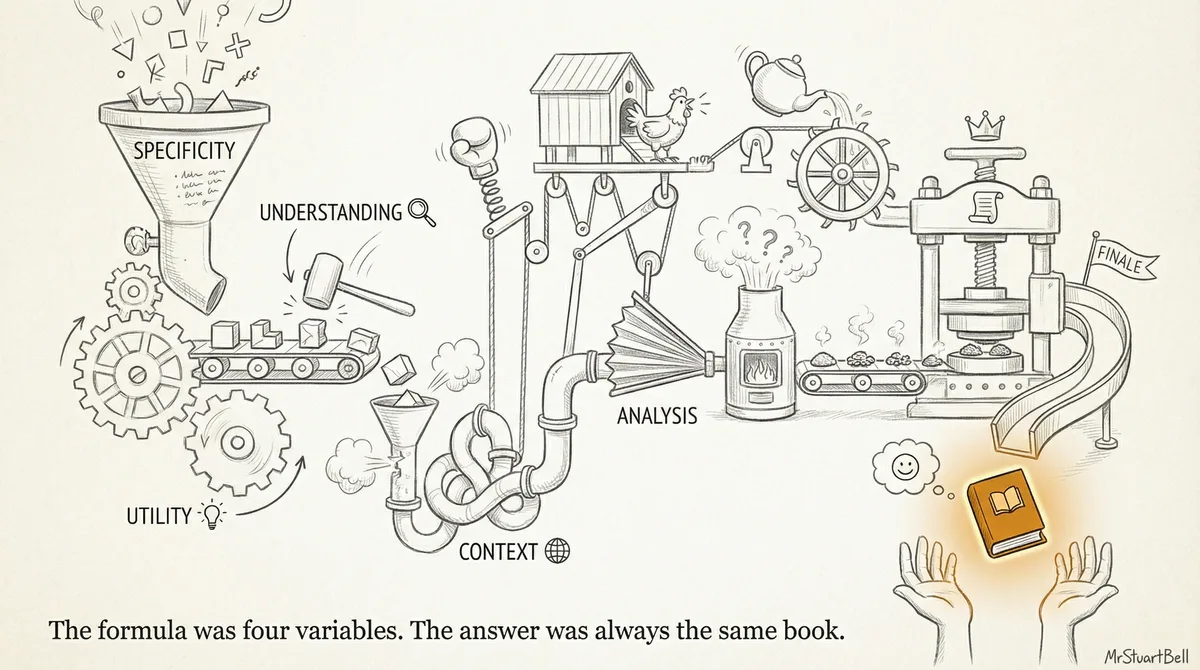
(Specificity + Utility + Understanding) / Context = Conversations
The success of your lead-generating book is directly related to its specificity to the reader's problem.
Specificity. Traditional books, where the money is in the book sale, need to include "something for everyone." But your book's job is starting conversations with individuals. The more specific you are to one reader's problem, the more powerful it becomes.
Utility. Knowing that we want to start the conversation by adding value is key to ensuring our book has utility. Answering one relevant question comprehensively, even if the scope is narrow, is better than superficially touching on many topics.
Understanding. Understand where your clients are in the process and the concerns holding them back. This allows you to share a message using language clients are familiar with in a way that supports an ideal next step.
Context. This component is in the denominator because it can diminish effectiveness. Understanding the context, what you want your book to do (get new leads, convert existing prospects), and where and how people interact with it means creating with that in mind.
Two Frameworks, One Goal
How does your book idea stack up against these two frameworks? The Trust Equation tells you how to be a trusted advisor. The Book Equation tells you how to turn that trust into conversations.