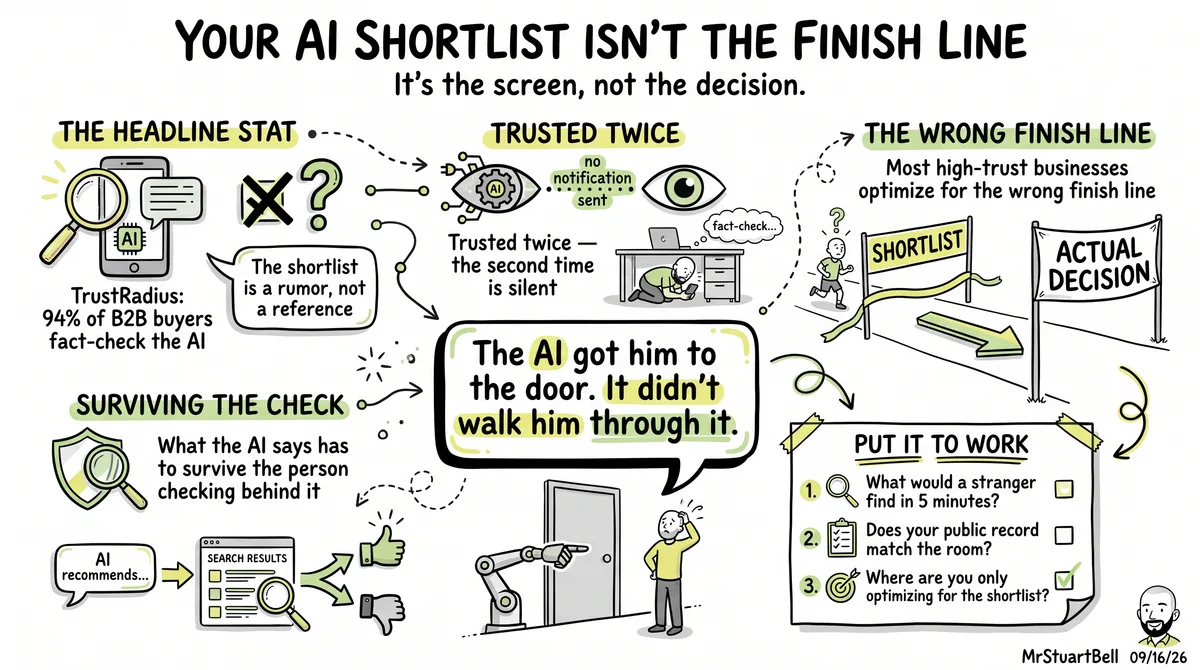
Getting onto a prospect's AI shortlist was never the finish line. It's the screen, not the decision.
TrustRadius put out their 2026 B2B Buying Disconnect Report in August. Ninety-four percent of buyers still fact-check what an AI tool tells them about a vendor before they trust it.
That's not buyers rejecting AI. That's buyers doing the same thing they've always done with a source they don't fully trust on its own: checking it against something real before they act on it.
The shortlist is a rumor, not a reference
Picture a commercial real estate broker who just got recommended by a prospect's AI assistant. She doesn't know it happened. The prospect typed something like "who handles industrial leasing in the north suburbs" into a chatbot, got three names back, and one of them was hers.
She made the list. That took her from invisible to possible in about four seconds, without a single conversation, email, or ad.
Now watch what the prospect does next, because this is the part most brokers never picture. He doesn't call her. He opens a new tab. He searches her name, skims her LinkedIn, checks three deals mentioned on her site against the county records, and reads whatever review comes up first. Five minutes, maybe less. He's not evaluating whether she's good at her job yet. He's checking whether the AI told him the truth.
The AI got him to the door. It didn't walk him through it.
That five-minute check is the whole ballgame. If what he finds matches what the AI said, she just earned a level of trust she didn't do any visible work to build, because the model already spent it on her behalf. If it doesn't match, or there's nothing there to check against, the recommendation dies quietly and she never finds out why the call never came.
You're being trusted twice, and the second time is silent
This is the part that catches high-trust business owners off guard. It isn't one decision. It's two, and you're only in the room for the second one.
The first trust decision is the AI's. It scans whatever's publicly attached to her name, decides she's a credible match, and hands the prospect a shortlist he treats as his own research. The second trust decision is his, and it happens in those five silent minutes before he ever picks up the phone. He isn't persuading himself. He's confirming what he was already told.
That's why the meeting, when it finally happens, so often feels easy or pointless before either person says a word. The confirming already happened somewhere else. The conversation is just where it becomes official.