Most of your leads aren't cold. They're just not due yet.
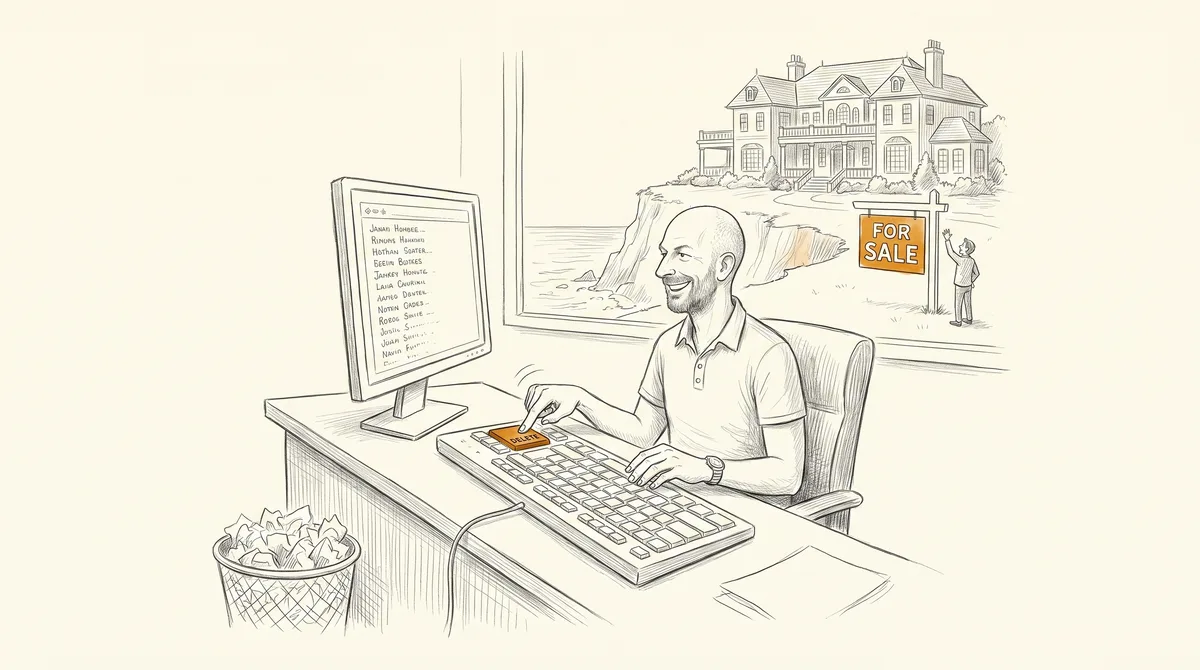
A realtor I worked with tidied up his email list. Ordinary housekeeping. His email provider had been nagging him about deliverability, so anyone who hadn't opened anything in five years got deleted.
A few months later an oceanfront property came up. The kind of listing that pays for most of a year.
The seller had been on that list for seven or eight years and had never once replied.
He got the deal. Barely. What stays with me isn't the near miss, it's that he'd already made a decision about that person years earlier, on the only evidence he had, and the evidence was wrong.
Five to seven years, not thirty days
After more than 1,200 books I can tell you the window is much longer than anyone plans for. Leads convert five, six, seven years after they first raise a hand. Some sign-ups take eight or ten.
One prospect came back to us after years of silence with, "oh, hey, Stuart, I think we talked, like, last year, but maybe I'm ready to go now." He was out by about six.
Another had sat on a list for five years before doing anything. The person who'd been sending those emails put it plainly: "Someone raised their hand at the end of last year, which was on the back of an email that we sent out. This person had been on the list for five years."
One financial advisor converted a prospect who'd first joined his list back in 2017. A monthly email asking whether they were ready to get started. That was the whole system.
Your follow-up isn't there to speed anyone up. It's there so you're still in the room when their timing finally arrives.
Dean Jackson has quoted research from an enterprise lead-handling company that puts numbers on it: just over half of all inquiries convert within eighteen months, and only 15% convert in the first ninety days. So the standard ninety-day follow-up window catches roughly one lead in seven and calls the rest a failure.
One client's own estimate lines up. Around 10% of his prospects were ready to move now. The other 90% sat somewhere between five weeks and five years out.
This is why price is the wrong filter
The argument for charging for your book is that it separates the serious people from the time-wasters. It does something else.
On the day someone finds you, the person who'll hire you in year six looks exactly like the person who'll never hire you at all. Both are curious, neither is urgent. Nothing distinguishes them yet, because the thing that will distinguish them hasn't happened to them yet.
Put a price on the book and you don't lose a sale. You lose the person whose life hadn't got there. And when it does get there, five years on, you're strangers.
I've made the case for giving the book away on its own merits. This is the harder version of the same argument. The cost of a gate isn't the download you didn't get. It's the client you'll never know you had.