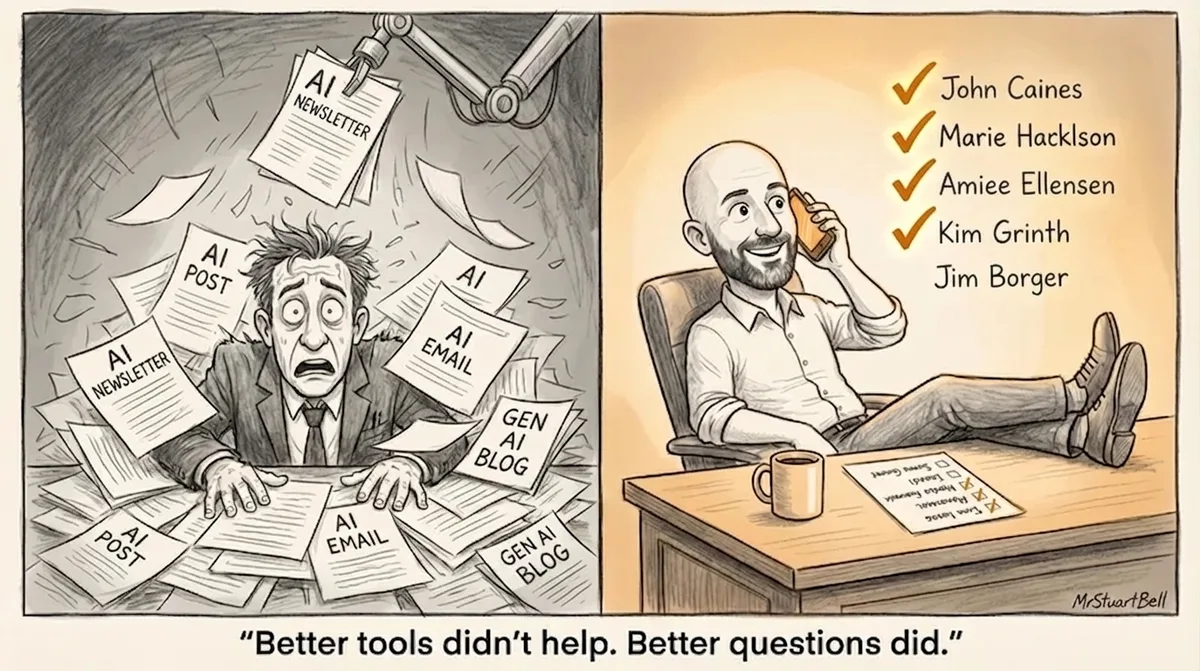
Most businesses are using AI to do the same things cheaper. The ones winning are using it to grow differently.
PwC's 2026 AI Performance Study surveyed 1,200 executives across 25 industries. The headline number: 74% of AI's economic value is going to just 20% of companies.
The usual interpretation is a tech gap. Big companies with big budgets pulling further ahead.
But, PwC's data says something different.
The 80% falling behind aren't ignoring AI. They're using it plenty. Faster emails. Automated follow-ups. ChatGPT writing the newsletter. They're doing the same things they've always done, just cheaper and quicker.
PwC found that efficiency gains aren't what separates the two groups. The single strongest predictor of AI-driven financial performance was using AI to spot growth opportunities. Not cost savings. Growth. The top performers are 2.6 times more likely to use AI to reinvent their business model than their peers.
If your clients have to talk to you before they buy, that number should get your attention.
The 80% version
You use AI to write a monthly email blast to your whole list. Same message for everyone. It goes out faster than it used to. Open rates are fine. Nothing happens.
Or you let AI generate social media posts. Or draft proposals. Or rewrite your website bio for the third time this year.
All of it is efficiency. It makes existing work cheaper. It doesn't create a single new conversation.
I wrote about the prove-it economy a few weeks ago, and PwC's data reinforces the point. AI flooded every channel with generic content. Using AI to add more generic content isn't the answer. Being specifically, provably useful to the right people is.
The 80% asks: how do I do this faster? The 20% asks: what should I be doing that I'm not?
The 20% version
Picture something different. You use AI to look at your client list and flag every person who hasn't heard from you in six months. Then cross-reference that with the ones who referred someone in the last two years. Now you've got a list of 15 people who already trust you, already sent you business, and haven't heard your voice in half a year.
That's not a newsletter. That's 15 conversations waiting to happen.
Or you use AI to analyze which of your past engagements generated the highest-value clients, and what those clients had in common before they hired you. Now you know exactly who to look for next. Not "business owners in my area." A specific type of person with a specific problem at a specific moment.
After more than 1,200 books, I can tell you this pattern doesn't change across industries. The professionals who grow aren't the ones working faster. They're the ones who know exactly who they want to be in conversation with, and build everything around that person.