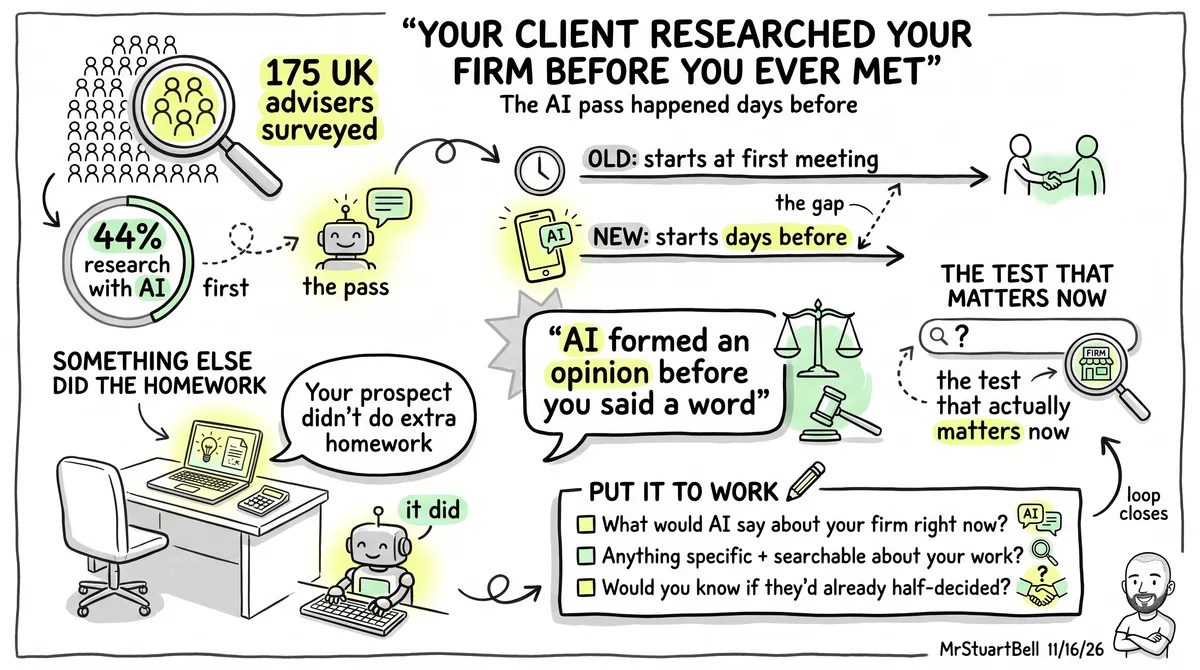
The first meeting isn't where your sales process starts anymore. The AI pass happened days before.
Wealthtime surveyed 175 UK financial advisers in August 2026 and asked what their clients actually do before showing up to a first meeting. Prepping questions came first, 59%. Checking advice they'd already been given came second, 50%. Third place is the one that should stop you: 44% of clients now use an AI tool to research the firm itself before anyone picks up the phone.
Most advisers read a stat like that and nod, then go back to polishing their pitch deck. They're still treating the first meeting as where the sales process starts. It isn't. The AI pass happened days or weeks earlier, quietly, and whatever it surfaced is already sitting in the prospect's head when they walk through your door.
An AI already formed an opinion of your firm before you said a single word to the person sitting across from you.
Your prospect didn't do extra homework. Something else did it for them
This isn't a client getting more diligent. It's a different kind of homework, one the client barely notices they outsourced. They typed a question into an AI the way they'd ask a friend who already knows the industry, and whatever came back felt like their own conclusion. That's the part that changes the math. Whatever an AI tells a prospect about you doesn't register as an outside opinion. There's no little flag that says "a chatbot told you this." It just feels like something they worked out themselves, which means they can walk into your office having already half-decided, and not even remember a tool was involved.
I worked with a financial advisor recently who spent most of our call impressed by something I wasn't even trying to sell him: how much his own note-taking tool was quietly summarizing and pulling out action points without him asking it to. He didn't connect the two. If the AI sitting inside his own software is doing that much work in the background, the AI his prospects are asking about him is doing the same kind of work before he ever gets a chance to perform in person.