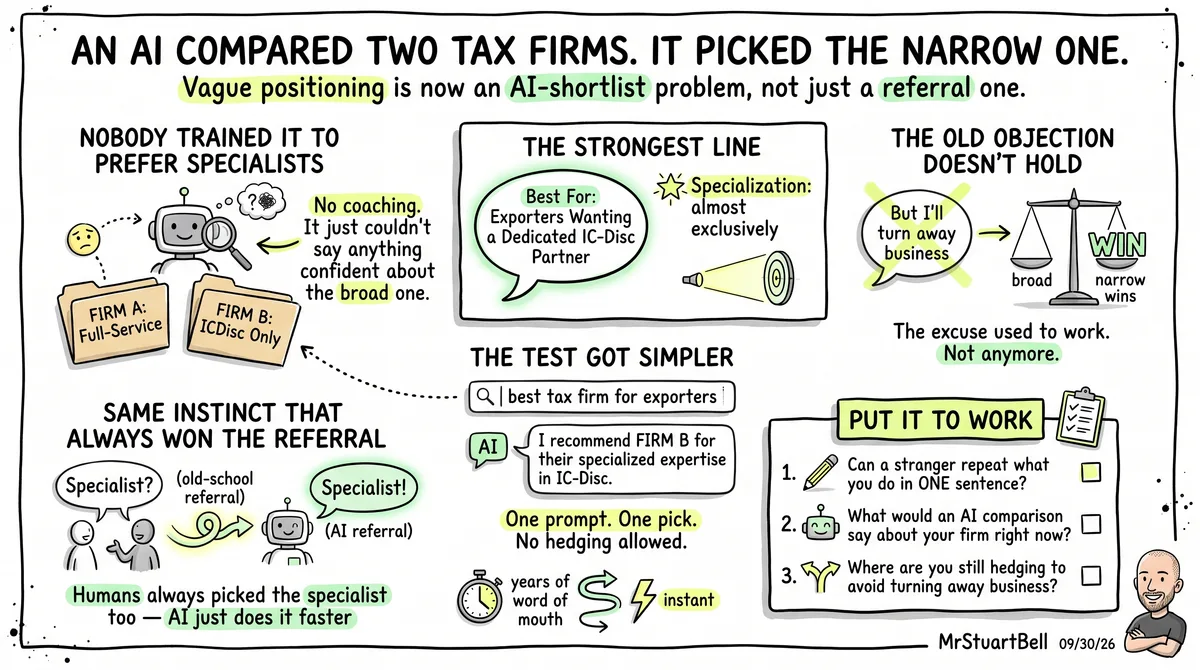
An AI didn't get coached to prefer the narrow specialist. It just couldn't say anything confident about the broad one.
Dave Spray runs Export Advisors out of Houston. Fifteen years ago he picked one corner of the tax code, the IC-DISC, an export tax credit most CPAs have never heard of, and built his entire practice around it. Nothing else. Just that.
At conferences people don't introduce him by name first. They call him the IC-DISC guy. Near 100% name recognition inside his niche, built off a short book he wrote years ago, Is the IC-DISC Right For You?, and a podcast that says the same thing in a different format.
Recently, someone ran Dave's firm through an AI comparison against a larger international tax practice, the kind that lists a dozen services on its homepage. The AI didn't hedge.
Specialization: ICDisc almost exclusively. Best For: Exporters Wanting a Dedicated IC Disc Partner.
Excellent niche reputation. Low drama. That's the summary it gave back. The broader firm, the one that does everything, got something vaguer. Less confident. Harder to act on.
Nobody trained it to prefer specialists
Nobody coached that model to reward narrow positioning. It just found the narrow answer easier to trust and easier to repeat. AI doing the shortlisting for your prospect isn't grading on relationships or reputation the way a referral partner would. It's grading on whether it can summarize you in one sentence and feel confident saying it out loud.
"We do everything" gives it nothing to hold onto. Three sentences of hedging isn't a summary, it's a shrug. A model that can't summarize you confidently just doesn't recommend you confidently.
The old objection doesn't hold anymore
The old fear about niching down was always the same. "If I only do IC-DISC work, I'll turn away everyone else who calls." Dave heard some version of that from every accountant who never made the jump.
The new argument is sharper than the old one. It's not just that a narrow focus makes you easier to refer. AI is now recommending your competitors by name whenever it can describe them more confidently than it can describe you, and vague positioning is exactly what creates that confidence gap.