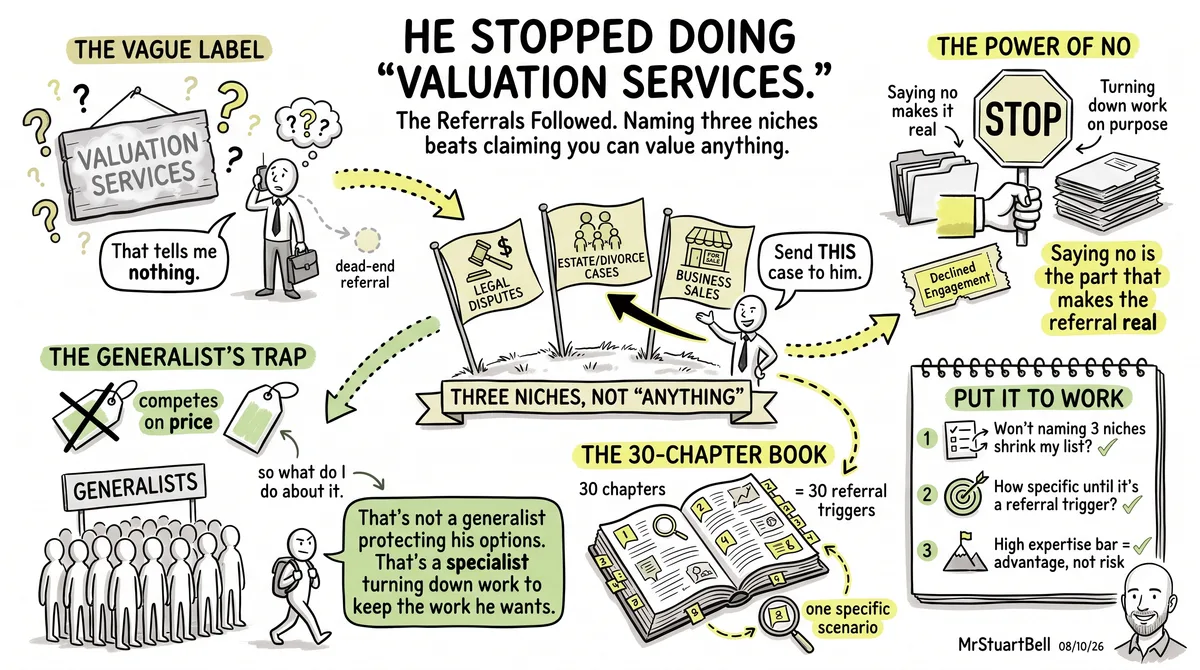
Naming three specific niches beats claiming you can value anything.
A business valuation specialist used to take whatever came through the door. Divorce valuations, partnership buyouts, the occasional gift tax filing, anything with a fee attached. Then he picked three: estates and gifts, mergers and acquisitions, and intellectual property. Nothing else made the list.
Most small valuation firms actively avoid all three. Estate and gift work means defending your methodology against IRS scrutiny. M&A valuations run on deal timelines that don't bend for anyone. IP valuations mean explaining intangible value to people who've never had to price a patent. The expertise bar on each one is high enough that generalist firms route around them and stick to straightforward business valuations instead.
That's exactly why owning all three works. The bar that scares off other firms is the same bar that keeps them from competing with him once he's in.
"Valuation services" tells a referring attorney nothing
An attorney with a client mid-acquisition doesn't search for "valuation services." Neither does one filing a contested estate, or one negotiating an IP licensing dispute before litigation. Each of them has a specific case sitting on their desk, and a specialist who names the case back to them is easier to remember than one who lists a menu.
He built part of his pipeline through audit partners in a professional referral network, the kind who run into ASC 805 valuation needs on a regular basis, purchase price allocations that come up whenever a client makes an acquisition. Big regional firms don't want the work because the fees are too small for their overhead. He does, because it lands squarely inside the one niche he already owns.
That's not a generalist protecting his options. That's a specialist turning down work to keep the work he wants.
Saying no is the part that makes the referral real
The discipline shows up just as much in what he refuses. When a straightforward business valuation would run $8,000 to $10,000, he tells the client it isn't worth the investment for a business their size and points them somewhere else, instead of taking the fee. That's a strange thing to do if you're trying to maximize revenue. It makes complete sense if you're trying to be the person referring attorneys trust to only take cases where he's actually the right fit.
Naming a lane and standing in it is a small move that changes a lot about how referrals arrive. Attorneys aren't shopping his rate against three other valuation firms. They're sending him the one case type he's already known for, because he told them exactly what that case type looks like.